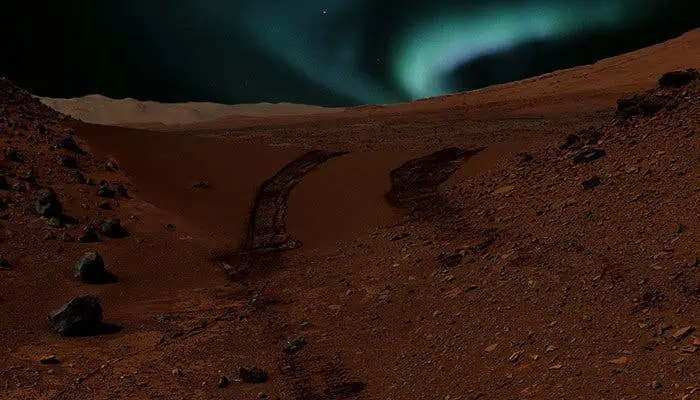
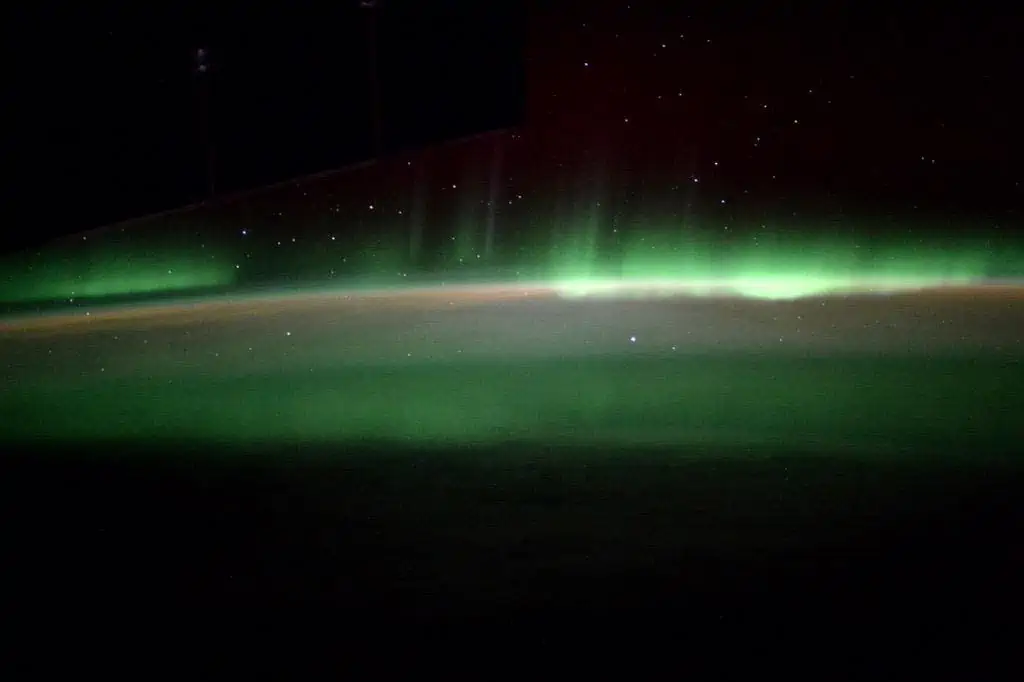
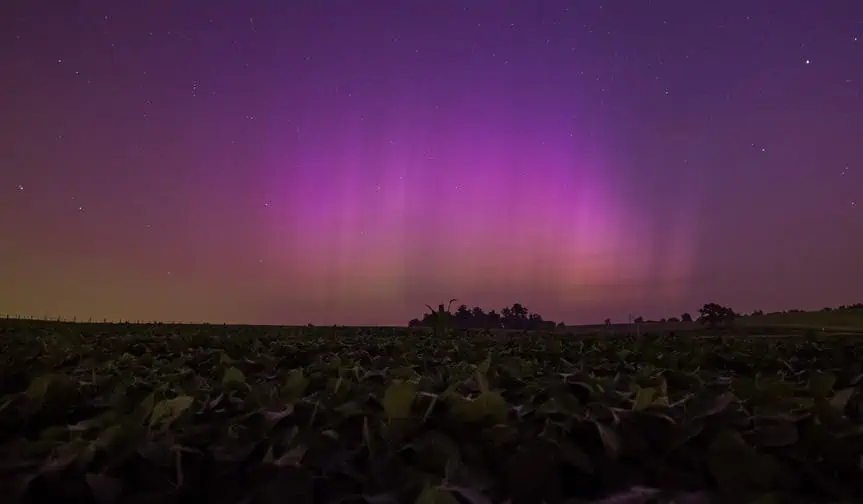
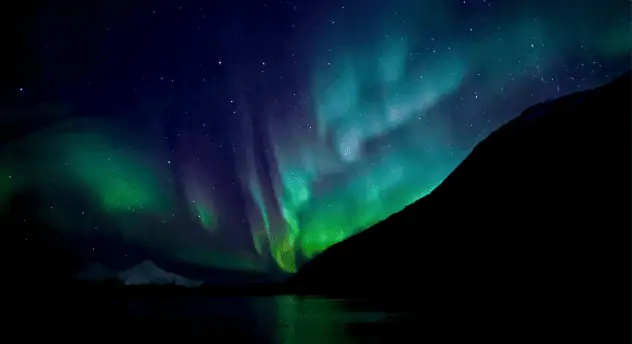
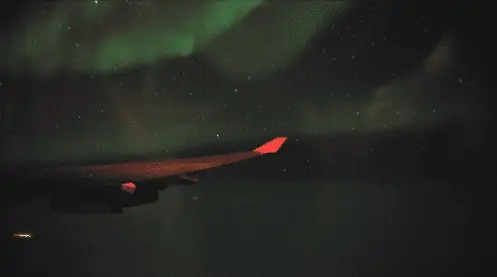
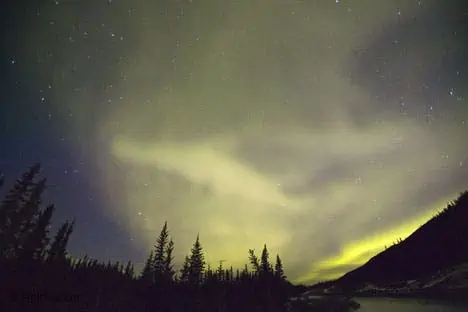
An aurora (plural: aurorae or auroras; from the Latin word aurora, "sunrise") is a natural light display in the sky particularly in the high latitude (Arctic and Antarctic) regions, caused by the collision of energetic charged particles with atoms in the high altitude atmosphere (thermosphere). The charged particles originate in the magnetosphere and solar wind and, on Earth, are directed by the Earth's magnetic field into the atmosphere. Most aurorae occur in a band known as the auroral zone,[1][2] which is typically 3° to 6° in latitudinal extent and at all local times or longitudes. The auroral zone is typically 10° to 20° from the magnetic pole defined by the axis of the Earth's magnetic dipole. During a geomagnetic storm, the auroral zone expands to lower latitudes.
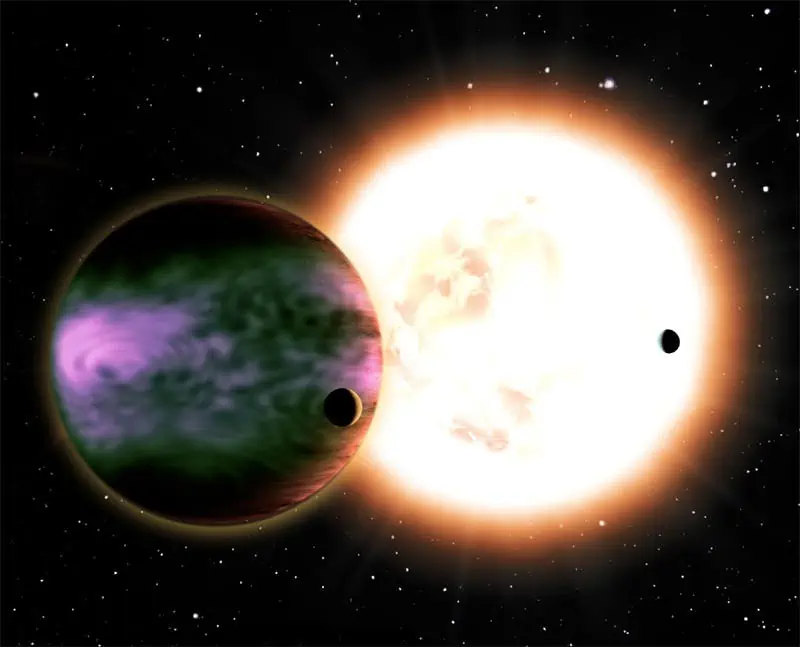
Researchers from Leicester University have shown that auroras (similar to Earth’s aurora borealis) occur on other bodies outside our solar system. Aurora borealis Aurora borealis is a natural light display occuring in high latitude areas (both north and south), caused by the collision of energetic charged particles with atoms in the high altitude atmosphere. Here’s [...]
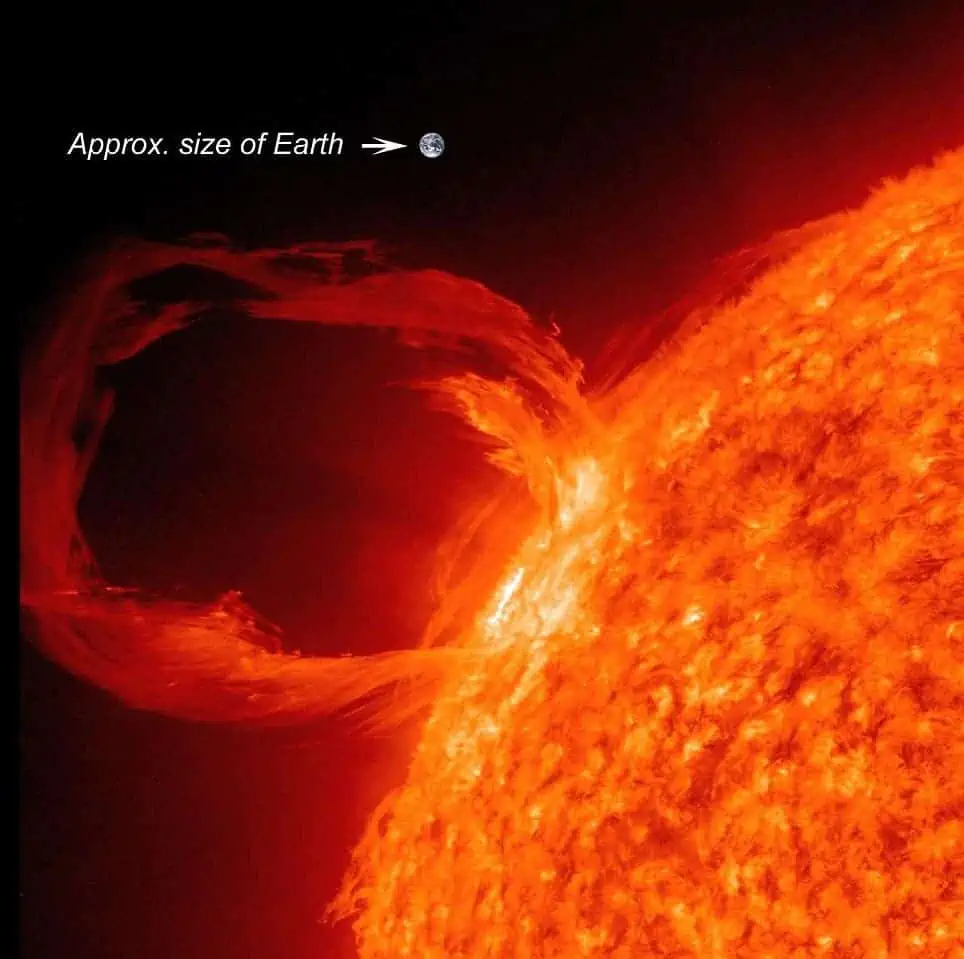
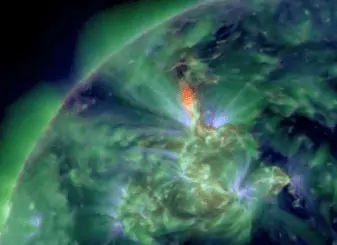
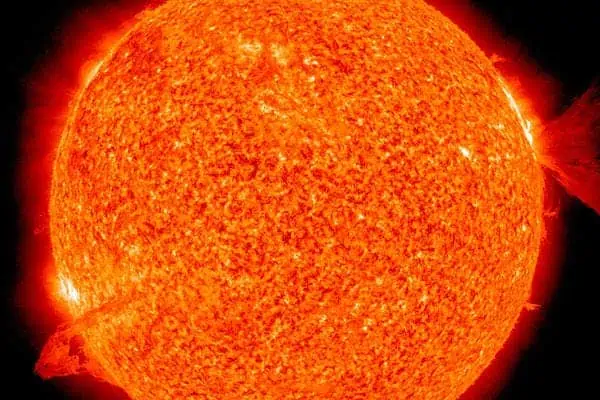
NASA released footage of an absolutely remarkable phenomena: the ejection of a massive solar filament, a type of coronal ejection, captured in all its splendor. According to the space agency, the filament has been hovering in the Sun’s atmosphere since August, and it was ejected on the 31st of August. The solar eruption was shaped [...]
The powerful X-class solar flare we’ve mentioned earlier in a blog post here on ZME Science finally reached Earth’s magnetic field on Saturday, three days after it spurred from the sun. No significant damage was reported, however the resulting geomagnetic storm put out a dazzling display for those lucky enough to find themselves in the [...]
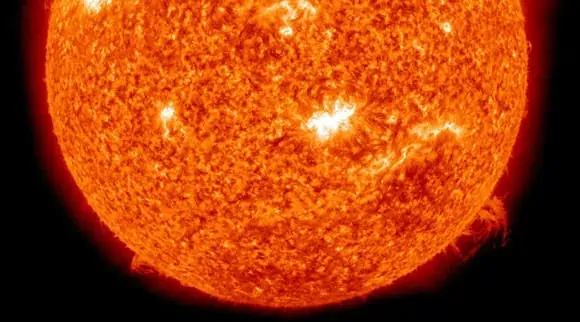
The sun recently shout out an M3.2-class solar flare in our direction, which scientists expect to hit the Earth this Saturday. The coronal mass ejection however is too weak to cause any havoc like doomsday fanatics might hope, just an incredible “fireworks” display as the charged particles hit the Earth’s magnetic field resulting in spectacular aurora [...]
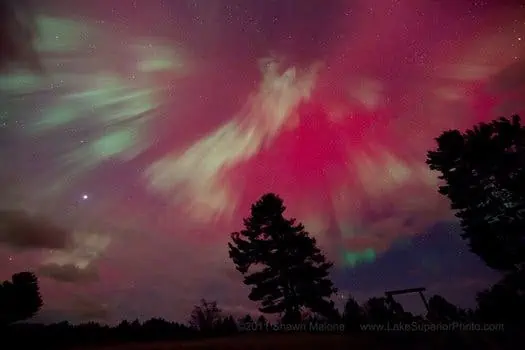
The northern hemisphere is accustomed enough to the dazzling Aurora Borealis phenomena, an event which occurs when charged particles collide with atoms from the extreme latitude atmosphere. However, yesterday almost the whole North American continent was bewildered by an incredible spectacle of lights, as Aurora Borealis apparitions were reported as far south as Kansas, Arkansas [...]
There are few more dazzling sights in the world than that of the great Norther Lights, and in a exercise of brilliant imagination scientists have depicted how an aurorae would look like on huge hot planets. Scientists ran computer models of so-called “hot-Jupiters” placed in close proximity to a sun (a few millions miles away, [...]
Aurora Borealis, a rare sight as it is, can be considered nature’s most dazzling fireworks display. What it actually means or describe, where it comes from, how is it formed, are maybe just a few questions you might have posed yourself after looking at some beautiful Northern Lights photos. The short 5 minute video below [...]
Here’s another amazing time lapse video which is certain to enchant your senses and entertain equally enough, in which the Beep Show has documented its San Francisco to Paris flight by shooting a photo every 2 miles (clicky clicky every 15 seconds?). The photos were then put together masterfully, resulting in a lovely time lapse [...]
As we were telling you recently, the biggest solar flare in the last 4 years is upon us, and while this doesn’t pose any direct danger for us, but the flare is making an impact throughout the world. Radio communications were disrupted, especially in China, but concern was generated everywhere throughout the world. However, experts [...]
On Monday the sun fired up an X class solar flare, the most powerful of its kind, the effects of which are expected to be felt by us today (Thursday) and tomorrow (Friday), and are expected to last somewhere between 24 and 48 hours. This may lead to disruptions in radio communications, interfere with satellites [...]
First of all, there’s no need to panic; solar blasts can cause geomagnetic perturbances, but they pose no direct danger for humans or any other inhabitants of our planet in a direct manner. The biggest such flare in the past four years erupted on Monday, and it’s sending jets of charged particles that will reach [...]
Tue, Jan 22, 2013
0 Comments