

ZME Science
No Result
View All Result
ZME Science
No Result
View All Result
ZME Science

Home → Environment → Climate

The difference between a climate change skeptic and a climate change denier

The two aren't interchangeable.

Tibi PuiubyTibi Puiu
August 31, 2016
in Climate, News
A A
Share on FacebookShare on TwitterSubmit to Reddit
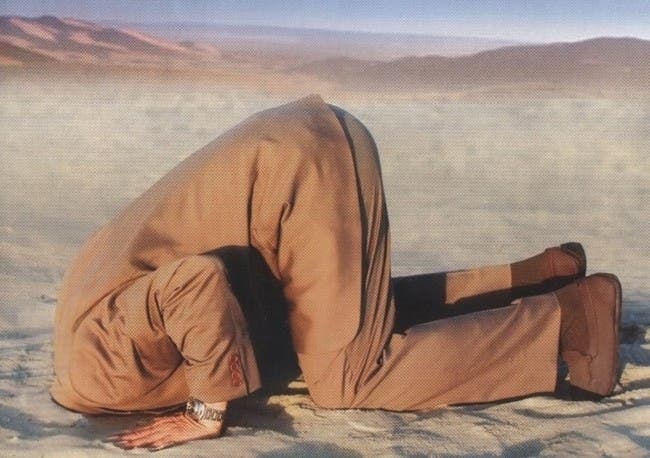
climate change denial
Credit: EcoWatch

Climate change is happening now — it’s man made and occurring at a rate that has never been encountered before apart from those seen in mass extinction events. This conclusion is backed by 97% of climate experts, yet the general public is far more polarized. While 70 percent of Americans believe that the climate is changing, only 27 percent of respondents for a recent poll agree with the overwhelming scientific consensus that human activity is the main cause of climate change.

There are various causes for this discrepancy, among them willful manipulation of the public by some mainstream media outlets backed by vested interests (for example here, here, and here but we got a whole lot more.) There’s also a worrying trend of expert dismissal and concerns that climate mitigation leads to higher taxes or business restrictions. Those who refuse to accept the scientific consensus are often labeled under an umbrella term of climate change denial, but they’re also sometimes called climate change skeptics. Often, the two terms are used interchangeably.
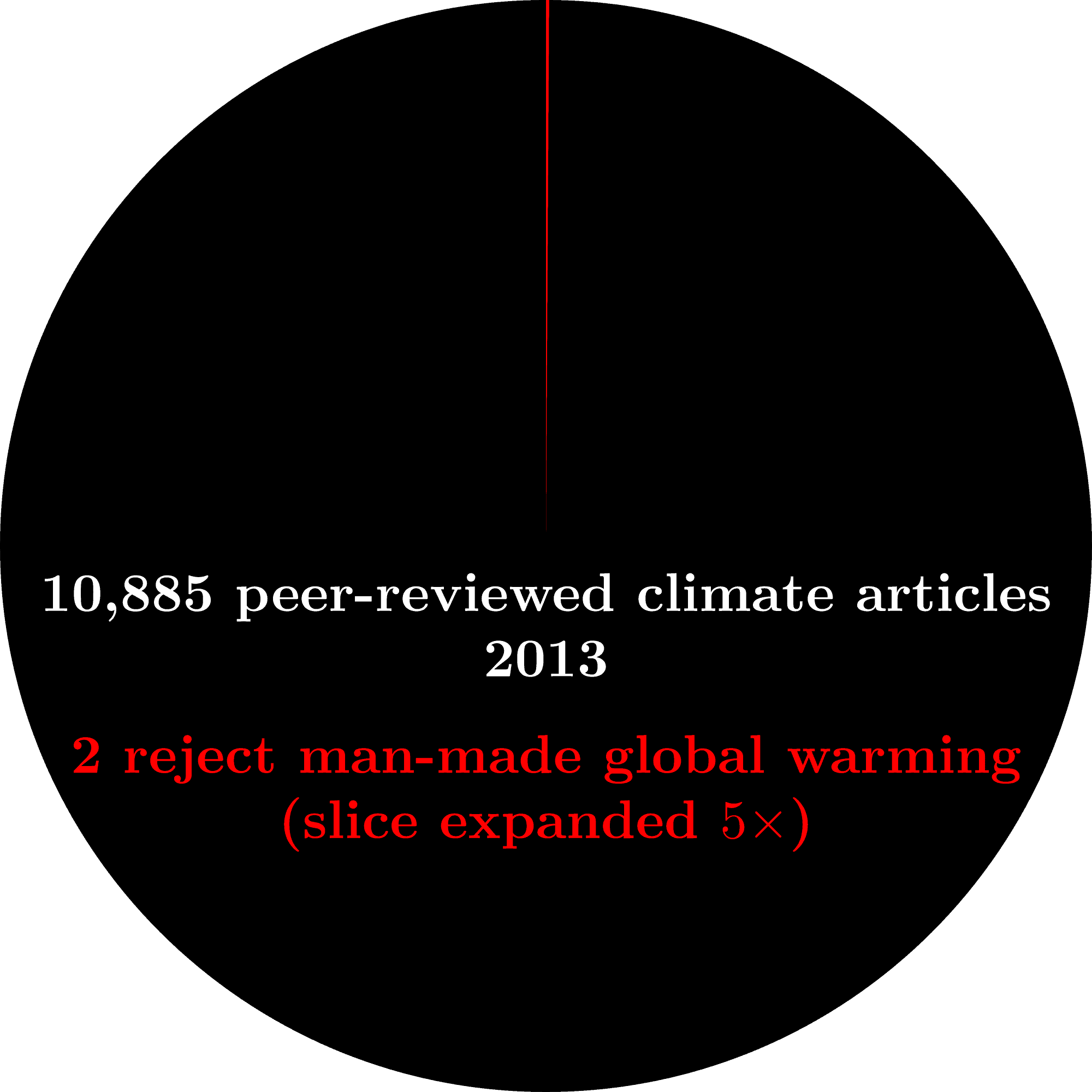
climate change denial
Credit: Wikimedia Commons

This is wrong, says a group of leading climate scientists and psychologists including Michael Mann, one of the world’s leading authorities on climate change, and Stephan Lewandowsky, the author of a famous study which found climate change denial is associated with rejecting other scientific consensuses like HIV causes AIDS or tobacco smoking causes lung cancer.

The researchers explain that while one type respects the peer-review and scientific process, and is willing to engage in sensible, fact-based discourse, the other blindly rejects facts and is politically motivated.

“People who deny scientific facts that they find challenging or unacceptable, by contrast, are by and large not skeptics,” the study’s authors write. “On the contrary, they demonstrably shy away from scientific debate by avoiding the submission of their ideas to peer review.”

To illustrate their point, the researchers mention some key differences between skepticism and outright denial. For instance, denial commonly invokes conspiracies, like the book The Greatest Hoax: How the Global Warming Conspiracy Threatens Your Future authored by Republican senator Jim Inhofe. Another feature that is common in denialist circles, but a stranger to skepticism and legitimate debate, is personal or ad hominem attacks. Some of the authors of this op-ed have been threatened by people who “would like to see them six feet under.” Those public attacks are often paralleled by prolific complaints to scientists’ host institutions with allegations of research misconduct, the authors wrote in the Journal of Social and Political Psychology.

Although Sen. Inhofe calls himself a “climate change skeptic”, he’s, in fact, a denier. Previously, Inhofe illustrated how climate change is a hoax by throwing a snowball on the senate floor. He also famously said that “only God can change the climate”. Inhofe is not only rejecting the science, but is actively persecuting climate scientists and those who do not fit his narrative.

The authors also underscore that there is room for debate in science and the public is not only welcomed but entitled to join this debate. However, this debate needs to be held in certain conditions of scientific scrutiny and politeness. “Being taken seriously is not an entitlement but a privilege that needs to be earned by participating in scientific debate by acting scientifically,” they write.

To help skeptics from the public move the conversation and science further, the authors included an Appendix to their paper which you’re welcome to visit.

RelatedPosts

A “blob” of hot water killed a million seabirds in the Pacific, researchers found
It’s all about the money: COP climate conference stumbles into arguments on who should fund climate action
NASA study suggests that one-fifth of global warming missed by historical records
Climate change deniers still receiving disproportionate attention from the media, study finds
Tags: climate changeclimate change denial

ShareTweetShare
Tibi Puiu

Tibi Puiu

Tibi is a science journalist and co-founder of ZME Science. He writes mainly about emerging tech, physics, climate, and space. In his spare time, Tibi likes to make weird music on his computer and groom felines. He has a B.Sc in mechanical engineering and an M.Sc in renewable energy systems.

Related Posts

Climate

White House Wants to Destroy NASA Satellites Tracking Climate Change and Plant Health

byMihai Andrei
5 days ago
Climate

This Is the Oldest Ice on the Planet and It’s About to Be Slowly Melted to Unlock 1.5 Million Years of Climate History

byTibi Puiu
3 weeks ago
Climate

Deadly Heatwave Killed 2,300 in Europe, and 1,500 of those were due to climate change

byMihai Andrei
1 month ago
Climate

Climate Change Unleashed a Hidden Wave That Triggered a Planetary Tremor

byMihai Andrei
2 months ago

Recent news

The UK Government Says You Should Delete Emails to Save Water. That’s Dumb — and Hypocritical

August 16, 2025

In Denmark, a Vaccine Is Eliminating a Type of Cervical Cancer

August 16, 2025
This Picture of the Week shows a stunning spiral galaxy known as NGC 4945. This little corner of space, near the constellation of Centaurus and over 12 million light-years away, may seem peaceful at first — but NGC 4945 is locked in a violent struggle. At the very centre of nearly every galaxy is a supermassive black hole. Some, like the one at the centre of our own Milky Way, aren’t particularly hungry. But NGC 4945’s supermassive black hole is ravenous, consuming huge amounts of matter — and the MUSE instrument at ESO’s Very Large Telescope (VLT) has caught it playing with its food. This messy eater, contrary to a black hole’s typical all-consuming reputation, is blowing out powerful winds of material. This cone-shaped wind is shown in red in the inset, overlaid on a wider image captured with the MPG/ESO telescope at La Silla. In fact, this wind is moving so fast that it will end up escaping the galaxy altogether, lost to the void of intergalactic space. This is part of a new study that measured how winds move in several nearby galaxies. The MUSE observations show that these incredibly fast winds demonstrate a strange behaviour: they actually speed up far away from the central black hole, accelerating even more on their journey to the galactic outskirts. This process ejects potential star-forming material from a galaxy, suggesting that black holes control the fates of their host galaxies by dampening the stellar birth rate. It also shows that the more powerful black holes impede their own growth by removing the gas and dust they feed on, driving the whole system closer towards a sort of galactic equilibrium. Now, with these new results, we are one step closer to understanding the acceleration mechanism of the winds responsible for shaping the evolution of galaxies, and the history of the universe. Links  Research paper in Nature Astronomy by Marconcini et al. Close-up view of NGC 4945’s nucleus

Astronomers Find ‘Punctum,’ a Bizarre Space Object That Might be Unlike Anything in the Universe

August 15, 2025
  • About
  • Advertise
  • Editorial Policy
  • Privacy Policy and Terms of Use
  • How we review products
  • Contact

© 2007-2025 ZME Science - Not exactly rocket science. All Rights Reserved.

No Result
View All Result
  • Science News
  • Environment
  • Health
  • Space
  • Future
  • Features
    • Natural Sciences
    • Physics
      • Matter and Energy
      • Quantum Mechanics
      • Thermodynamics
    • Chemistry
      • Periodic Table
      • Applied Chemistry
      • Materials
      • Physical Chemistry
    • Biology
      • Anatomy
      • Biochemistry
      • Ecology
      • Genetics
      • Microbiology
      • Plants and Fungi
    • Geology and Paleontology
      • Planet Earth
      • Earth Dynamics
      • Rocks and Minerals
      • Volcanoes
      • Dinosaurs
      • Fossils
    • Animals
      • Mammals
      • Birds
      • Fish
      • Amphibians
      • Reptiles
      • Invertebrates
      • Pets
      • Conservation
      • Animal facts
    • Climate and Weather
      • Climate change
      • Weather and atmosphere
    • Health
      • Drugs
      • Diseases and Conditions
      • Human Body
      • Mind and Brain
      • Food and Nutrition
      • Wellness
    • History and Humanities
      • Anthropology
      • Archaeology
      • History
      • Economics
      • People
      • Sociology
    • Space & Astronomy
      • The Solar System
      • Sun
      • The Moon
      • Planets
      • Asteroids, meteors & comets
      • Astronomy
      • Astrophysics
      • Cosmology
      • Exoplanets & Alien Life
      • Spaceflight and Exploration
    • Technology
      • Computer Science & IT
      • Engineering
      • Inventions
      • Sustainability
      • Renewable Energy
      • Green Living
    • Culture
    • Resources
  • Videos
  • Reviews
  • About Us
    • About
    • The Team
    • Advertise
    • Contribute
    • Editorial policy
    • Privacy Policy
    • Contact

© 2007-2025 ZME Science - Not exactly rocket science. All Rights Reserved.