
ZME Science
No Result
View All Result
ZME Science
No Result
View All Result
ZME Science

Home → Environment

Sit down, coal. For the first time, renewables dominate coal in the US

Coal's drop this year has truly been remarkable

Fermin KoopbyFermin Koop
June 13, 2023 - Updated on June 14, 2023
in Environment, News, Renewable Energy
A A
Edited and reviewed by Mihai Andrei
Share on FacebookShare on TwitterSubmit to Reddit

For the first time ever, renewables have outpaced coal, the most polluting energy source. The data covers a five-month period in the US, according to a review of federal data by E&E News. The milestone shows how the power sector is changing across the country, with renewables taking over fossil fuels to bring down greenhouse gas emissions.
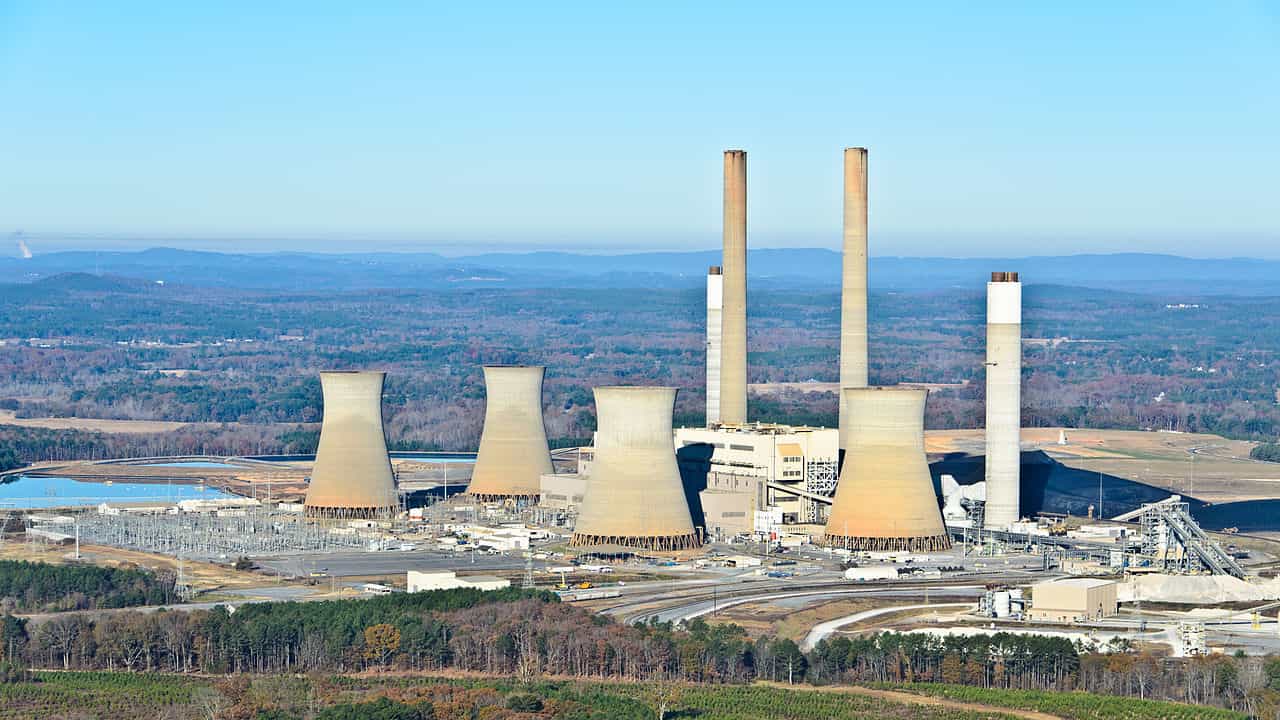
coal plants
Plant Bowen, the third largest coal-fired power station in the United States. Image credit: Wikipedia Commons.

This year, the markets witnessed a significant decline in coal-fired generation. This happened for multiple reasons. For starters, natural gas prices, were relatively low. There was also a mild winter, which reduced overall consumption — and a wave of retirements of coal plants was also reported.

“From a coal perspective, it has been a disaster,” Andy Blumenfeld, a coal energy analyst at McCloskey by OPIS, told E&E News. So while some of these factors were coincidental, this doesn’t bode well for the world’s dirtiest source of energy.

Renewables coming in

While renewable energy surpassed coal-fired power in 2020 and 2022 in the US, this was only when hydropower was included as a renewable energy source. But things are different this year. The combined generation from wind and solar in the first months reached 252 terawatt-hours (TWh), surpassing the coal output of 249 TWh.

“Our official estimates show that combined electricity generation from wind and solar exceeded generation from coal in January, February and March. Our real-time data, which is subject to revision, indicate that trend continued in April and May,” Chris Higginbotham, a spokesperson from the US Energy Information Administration, told E&E News.

In just a few years, coal’s role in generating electricity in the US has undergone a significant transformation. As recently as 2008, coal accounted for nearly half of the country’s electricity production. However, since then, the industry has been steadily declining. Across the USA, older facilities are retiring and are being replaced by a combination of gas and renewables.

Nevertheless, even considering this decline, the drop in coal’s prominence this year is truly remarkable. The industry had a brief respite last year. A surge in natural gas prices led utilities to seek alternative sources such as coal. This was linked to Russia’s invasion of Ukraine.

Since that time, there has been a big shift in the energy markets. A combination of a relatively mild winter and a decelerating US economy has led to a 3% decline in electricity demand this year. However, the production of natural gas has continued to rise steadily. Consequently, there has been an oversupply of gas, which has resulted in a decrease in prices.

RelatedPosts

King coal is dying: demand peaked in 2014 and dropping fast worldwide
The South Pole is entirely powered by diesel. This energy system could cut its use by 95%
For the first time in history, solar was Europe’s top source of electricity
Beijing shuts down its last coal power plant, replaces with natural gas

The lowest coal usage in 50 years

The US has phased out 14 gigawatts of coal capacity since last year, accounting for approximately 7% of the total coal capacity. During this time, while coal has been declining, the growth of wind and solar energy has been remarkable. According to a report by the EIA, power companies have added 22.5 gigawatts of wind and solar capacity in the 12 months.

And this isn’t just happening in the US. As of the middle of last year, various countries globally had unveiled plans for the construction of new coal power plants, with a combined capacity reaching 476 gigawatts. However, a study showed that 50% of those proposed projects are now slated for cancellation. This is excellent news for society’s attempts to stabilize and stop climate change.

Coal is a sort of low-hanging fruit when it comes to tackling climate change. Granted, natural gas is also a major problem and contributor to CO2 emissions, but it’s not nearly as bad as coal. Focusing our immediate efforts on coal will yield massive benefits in terms of reducing emissions.

Coal’s contribution to global average temperature increase stands at 0.3°C out of the 1°C global rise observed so far. There are more than 2,400 operational coal-fired plants worldwide. However, in order to prevent temperatures from exceeding the critical threshold of 1.5°C included in the Paris Agreement, all of these facilities must be phased out and shut down by 2040.

Tags: coalrenewable energy

ShareTweetShare
Fermin Koop

Fermin Koop

Fermin Koop is a reporter from Buenos Aires, Argentina. He holds an MSc from Reading University (UK) on Environment and Development and is specialized in environment and climate change news.

Related Posts

solar panels
News

For the first time in history, solar was Europe’s top source of electricity

byMihai Andrei
1 month ago
Inventions

The World’s Largest Sand Battery Just Went Online in Finland. It could change renewable energy

byMihai Andrei
2 months ago
Future

Sinking Giant Concrete Orbs to the Bottom of the Ocean Could Store Massive Amounts of Renewable Energy

byTibi Puiu
2 months ago
Agriculture

America’s Cornfields Could Power the Future—With Solar Panels, Not Ethanol

byTudor Tarita
4 months ago

Recent news

The UK Government Says You Should Delete Emails to Save Water. That’s Dumb — and Hypocritical

August 16, 2025

In Denmark, a Vaccine Is Eliminating a Type of Cervical Cancer

August 16, 2025
This Picture of the Week shows a stunning spiral galaxy known as NGC 4945. This little corner of space, near the constellation of Centaurus and over 12 million light-years away, may seem peaceful at first — but NGC 4945 is locked in a violent struggle. At the very centre of nearly every galaxy is a supermassive black hole. Some, like the one at the centre of our own Milky Way, aren’t particularly hungry. But NGC 4945’s supermassive black hole is ravenous, consuming huge amounts of matter — and the MUSE instrument at ESO’s Very Large Telescope (VLT) has caught it playing with its food. This messy eater, contrary to a black hole’s typical all-consuming reputation, is blowing out powerful winds of material. This cone-shaped wind is shown in red in the inset, overlaid on a wider image captured with the MPG/ESO telescope at La Silla. In fact, this wind is moving so fast that it will end up escaping the galaxy altogether, lost to the void of intergalactic space. This is part of a new study that measured how winds move in several nearby galaxies. The MUSE observations show that these incredibly fast winds demonstrate a strange behaviour: they actually speed up far away from the central black hole, accelerating even more on their journey to the galactic outskirts. This process ejects potential star-forming material from a galaxy, suggesting that black holes control the fates of their host galaxies by dampening the stellar birth rate. It also shows that the more powerful black holes impede their own growth by removing the gas and dust they feed on, driving the whole system closer towards a sort of galactic equilibrium. Now, with these new results, we are one step closer to understanding the acceleration mechanism of the winds responsible for shaping the evolution of galaxies, and the history of the universe. Links  Research paper in Nature Astronomy by Marconcini et al. Close-up view of NGC 4945’s nucleus

Astronomers Find ‘Punctum,’ a Bizarre Space Object That Might be Unlike Anything in the Universe

August 15, 2025
  • About
  • Advertise
  • Editorial Policy
  • Privacy Policy and Terms of Use
  • How we review products
  • Contact

© 2007-2025 ZME Science - Not exactly rocket science. All Rights Reserved.

No Result
View All Result
  • Science News
  • Environment
  • Health
  • Space
  • Future
  • Features
    • Natural Sciences
    • Physics
      • Matter and Energy
      • Quantum Mechanics
      • Thermodynamics
    • Chemistry
      • Periodic Table
      • Applied Chemistry
      • Materials
      • Physical Chemistry
    • Biology
      • Anatomy
      • Biochemistry
      • Ecology
      • Genetics
      • Microbiology
      • Plants and Fungi
    • Geology and Paleontology
      • Planet Earth
      • Earth Dynamics
      • Rocks and Minerals
      • Volcanoes
      • Dinosaurs
      • Fossils
    • Animals
      • Mammals
      • Birds
      • Fish
      • Amphibians
      • Reptiles
      • Invertebrates
      • Pets
      • Conservation
      • Animal facts
    • Climate and Weather
      • Climate change
      • Weather and atmosphere
    • Health
      • Drugs
      • Diseases and Conditions
      • Human Body
      • Mind and Brain
      • Food and Nutrition
      • Wellness
    • History and Humanities
      • Anthropology
      • Archaeology
      • History
      • Economics
      • People
      • Sociology
    • Space & Astronomy
      • The Solar System
      • Sun
      • The Moon
      • Planets
      • Asteroids, meteors & comets
      • Astronomy
      • Astrophysics
      • Cosmology
      • Exoplanets & Alien Life
      • Spaceflight and Exploration
    • Technology
      • Computer Science & IT
      • Engineering
      • Inventions
      • Sustainability
      • Renewable Energy
      • Green Living
    • Culture
    • Resources
  • Videos
  • Reviews
  • About Us
    • About
    • The Team
    • Advertise
    • Contribute
    • Editorial policy
    • Privacy Policy
    • Contact

© 2007-2025 ZME Science - Not exactly rocket science. All Rights Reserved.