

ZME Science
No Result
View All Result
ZME Science
No Result
View All Result
ZME Science

Home → Other → Campaigns

Smithsonian Wild – a database of wildlife photos 200,000 captured with automated cameras

Tibi PuiubyTibi Puiu
March 10, 2011
in Campaigns, Other
A A
Share on FacebookShare on TwitterSubmit to Reddit

RelatedPosts

Global Wildlife Populations Down by 50% in just 40 Years
Natural Geographic launches Nat Geo Wild
A fifth of Florida’s pumas were killed in car collisions
Human activity is causing cancer in many species of wildlife — and this effect is greatly underestimated

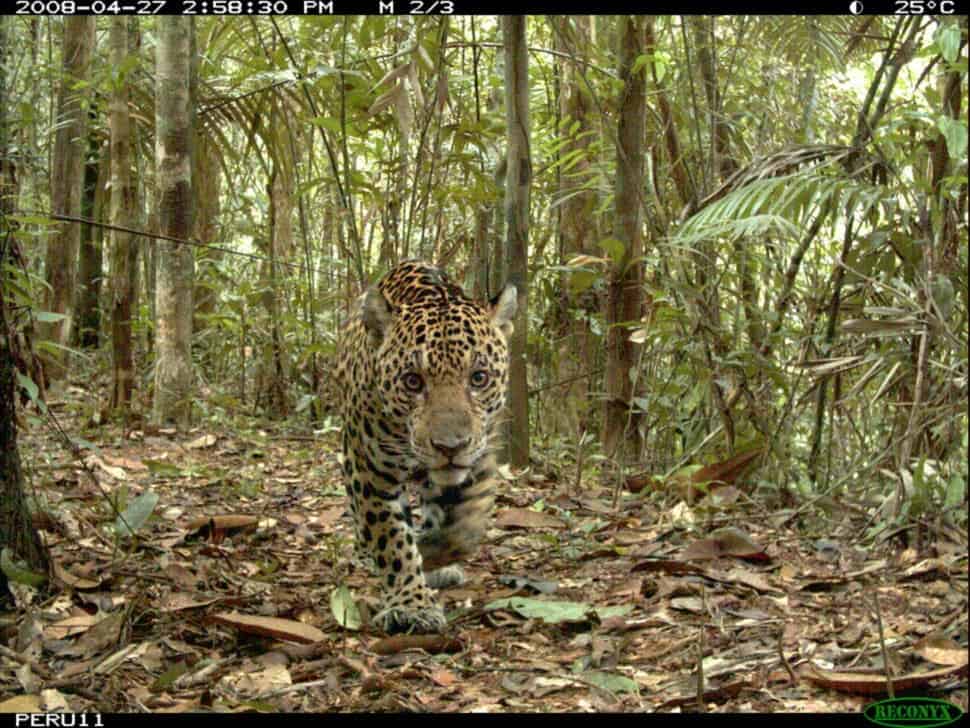
Some animals in the wild are so elusive and hard to glimpse that they’re almost impossible to capture with a camera. This is why researchers often use trip cameras with motion sensors that film or photograph whenever an animal is in the vicinity. The Smithsonian today launched a new searchable website, siwild.si.edu, that presents more than 202,000 wildlife photos captured in this manner. The website both still photos and video clips of more than 200 species of mammals and birds, and you’ll also be able to learn more about each species by clicking through the reference links leading to Encyclopedia of Life, the International Union for Conservation of Nature and the Smithsonian’s National Museum of Natural History’s own “North American Mammals” page.

“This site provides the public a glimpse of what the scientist sees when surveying remote places,” said William McShea, research wildlife biologist at the Smithsonian Conservation Biology Institute. “Not every photo is beautiful but every photo provides information that can be used to conserve wild animals. It is addictive to scroll through the photos at a single site and see the diversity that walks by a single camera in the forest.”

Tags: smithsonianSmithsonian Wildwildlife

ShareTweetShare
Tibi Puiu

Tibi Puiu

Related Posts

Animals

Wildlife in lockdown: How nature really reacted during the COVID-19 “Great Pause”

byMihai Andrei
1 year ago
he Golden Horseshoe by Laurent Ballesta has been awarded this year's Grand Title prize. Image credits: Laurent Ballesta.
Animals

Beautiful image of a horseshoe crab wins Wildlife Photographer of the Year

byFermin Koop
2 years ago
Space

JWST finds a planet with an atmosphere like no other

byJordan Strickler
3 years ago
Animals

Rainbow collars with bells save birds and mammals from getting killed by house cats

byTibi Puiu
3 years ago

Recent news

The UK Government Says You Should Delete Emails to Save Water. That’s Dumb — and Hypocritical

August 16, 2025

In Denmark, a Vaccine Is Eliminating a Type of Cervical Cancer

August 16, 2025
This Picture of the Week shows a stunning spiral galaxy known as NGC 4945. This little corner of space, near the constellation of Centaurus and over 12 million light-years away, may seem peaceful at first — but NGC 4945 is locked in a violent struggle. At the very centre of nearly every galaxy is a supermassive black hole. Some, like the one at the centre of our own Milky Way, aren’t particularly hungry. But NGC 4945’s supermassive black hole is ravenous, consuming huge amounts of matter — and the MUSE instrument at ESO’s Very Large Telescope (VLT) has caught it playing with its food. This messy eater, contrary to a black hole’s typical all-consuming reputation, is blowing out powerful winds of material. This cone-shaped wind is shown in red in the inset, overlaid on a wider image captured with the MPG/ESO telescope at La Silla. In fact, this wind is moving so fast that it will end up escaping the galaxy altogether, lost to the void of intergalactic space. This is part of a new study that measured how winds move in several nearby galaxies. The MUSE observations show that these incredibly fast winds demonstrate a strange behaviour: they actually speed up far away from the central black hole, accelerating even more on their journey to the galactic outskirts. This process ejects potential star-forming material from a galaxy, suggesting that black holes control the fates of their host galaxies by dampening the stellar birth rate. It also shows that the more powerful black holes impede their own growth by removing the gas and dust they feed on, driving the whole system closer towards a sort of galactic equilibrium. Now, with these new results, we are one step closer to understanding the acceleration mechanism of the winds responsible for shaping the evolution of galaxies, and the history of the universe. Links  Research paper in Nature Astronomy by Marconcini et al. Close-up view of NGC 4945’s nucleus

Astronomers Find ‘Punctum,’ a Bizarre Space Object That Might be Unlike Anything in the Universe

August 15, 2025
  • About
  • Advertise
  • Editorial Policy
  • Privacy Policy and Terms of Use
  • How we review products
  • Contact

© 2007-2025 ZME Science - Not exactly rocket science. All Rights Reserved.

No Result
View All Result
  • Science News
  • Environment
  • Health
  • Space
  • Future
  • Features
    • Natural Sciences
    • Physics
      • Matter and Energy
      • Quantum Mechanics
      • Thermodynamics
    • Chemistry
      • Periodic Table
      • Applied Chemistry
      • Materials
      • Physical Chemistry
    • Biology
      • Anatomy
      • Biochemistry
      • Ecology
      • Genetics
      • Microbiology
      • Plants and Fungi
    • Geology and Paleontology
      • Planet Earth
      • Earth Dynamics
      • Rocks and Minerals
      • Volcanoes
      • Dinosaurs
      • Fossils
    • Animals
      • Mammals
      • Birds
      • Fish
      • Amphibians
      • Reptiles
      • Invertebrates
      • Pets
      • Conservation
      • Animal facts
    • Climate and Weather
      • Climate change
      • Weather and atmosphere
    • Health
      • Drugs
      • Diseases and Conditions
      • Human Body
      • Mind and Brain
      • Food and Nutrition
      • Wellness
    • History and Humanities
      • Anthropology
      • Archaeology
      • History
      • Economics
      • People
      • Sociology
    • Space & Astronomy
      • The Solar System
      • Sun
      • The Moon
      • Planets
      • Asteroids, meteors & comets
      • Astronomy
      • Astrophysics
      • Cosmology
      • Exoplanets & Alien Life
      • Spaceflight and Exploration
    • Technology
      • Computer Science & IT
      • Engineering
      • Inventions
      • Sustainability
      • Renewable Energy
      • Green Living
    • Culture
    • Resources
  • Videos
  • Reviews
  • About Us
    • About
    • The Team
    • Advertise
    • Contribute
    • Editorial policy
    • Privacy Policy
    • Contact

© 2007-2025 ZME Science - Not exactly rocket science. All Rights Reserved.