

ZME Science
No Result
View All Result
ZME Science
No Result
View All Result
ZME Science

Home → Health → Anatomy News

Researchers develop scaffold implant that mimics the spinal cord

It might provide relief to millions of people suffering from spinal cord injuries.

Rupendra BrahambhattbyRupendra Brahambhatt
September 29, 2022
in Anatomy News, Biology, Health, Inventions, Materials, Mind & Brain, Neurology, News
A A
Share on FacebookShare on TwitterSubmit to Reddit

According to a World Health Organization (WHO) report, approximately half a million people worldwide suffer a spinal cord injury (SCI) each year as a result of accidents and other causes. Over 17,500 cases of total SCI cases are reported annually in the US alone, and since the spine is a delicate body part with very little power of regeneration, the injury is typically troubling for a long time. 

There is no known treatment strategy that guarantees sure and permanent relief from SCI. However, now a team of researchers at the University of Aveiro in Portugal has created a biomaterial that offers a promising way to treat SCIs. The biomaterial is composed of graphene and can be used to develop scaffold implants that would replace damaged parts of the spine in the event of a spinal cord injury. 
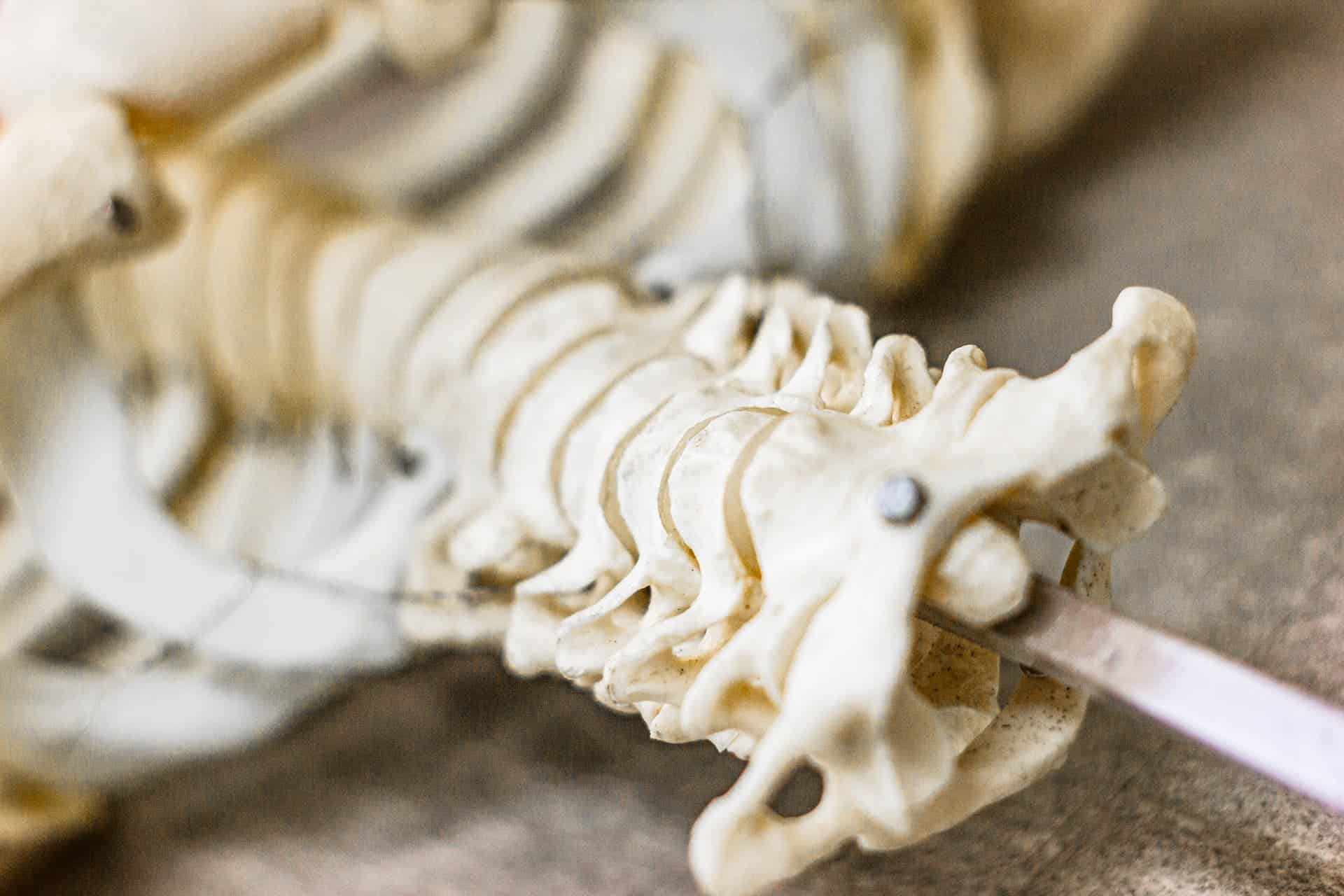
Image credits: Alan Calvert/Unsplash

The potential of graphene-based scaffold implant

The special biomaterial is developed under NeuroStimSpinal, a research project funded by European Union’s Horizon 2020 research and innovation program. The primary goal of this project is to develop a neural tissue scaffold that could offer effective treatment to patients suffering from SCI.

In their study, the researchers reveal that a mixture of a graphene-based material and an extracellular matrix gives rise to a 3D scaffold having structural properties similar to that of the human spinal cord.  

Interestingly, the matrix which is also referred to as the “decellularised extracellular matrix” by researchers has a high amount of protein and it is produced by human body cells. It provides strength to the scaffold. The graphene part on the other side is electrically responsive and facilitates the movement of electrical impulses along the scaffold.

The researchers claim that their implant is porous and does not restrict the movement of spinal fluids, plus it is also biodegradable just like the real structure.   
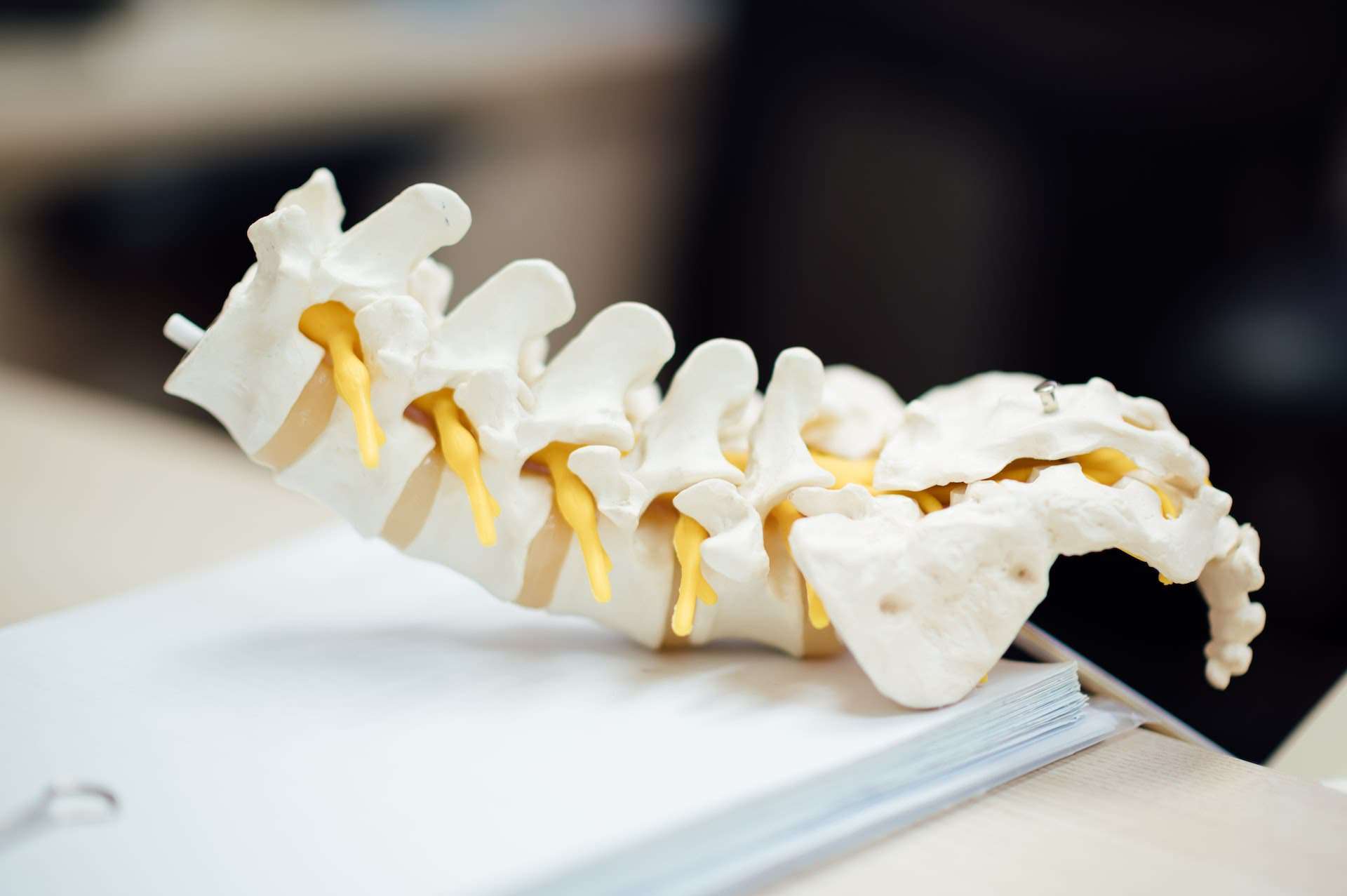
The model of a section of the spinal cord. Image credits: CHUTTERSNAP/Unsplash

The researchers also performed an interesting lab experiment that successfully demonstrated the ability of the scaffold to support the growth of nerve cells. They placed neural stem cells inside the implant and ran an electrical signal through the scaffold. The stem cells inside the implant were able to give rise to glial cells and neurons — the two types of cells that form the nerve tissue that makes up the spinal cord.      

RelatedPosts

World’s smallest radio shows graphene advantage
Breakthrough: first time monolayer graphene made in bulk
Novel Production Technique Could Make Graphene 1000 times cheaper
Graphene light sensor is 1,000 more sensitive than current options

These findings suggest that the scaffold could be used to take the place of any damaged part of the spinal cord. Moreover, it could function in a way similar to the replaced injured part and also enable the nerve cells in the injury region to regenerate. Therefore, allowing a patient to resume his or her natural body functions without any external support.  

The scaffold is yet to prove its power

The graphene-based scaffold is indeed a promising solution to SCI but similar ideas have been proposed in the past as well. For instance, In 2020, a team of researchers at China’s Jilin University proposed polymer-based scaffold treatment methods that aimed at repairing and regenerating damaged spinal cord tissues. Similarly, this year in June, scientists at the National and Kapodestrian University of Athens came up with a study that highlighted the role of collagen-based scaffolds in treating SCIs in animals.

None of these strategies (including the current one that mentions graphene scaffolds) have been successfully tested on animal models so far — let alone humans.
A rib cage. Image credits: Ta Z/Unsplash

The researchers also admit that it will take about a decade or so before the scaffolds are available for use in humans. One of the authors of the study and principal researcher at the University of Aveiro, Paula Marques told Nanowerk:

“I see real hope. My only frustration is that we can’t move forward faster with this research – spinal cord injury has such a big impact on human life.”

The researchers are now planning to test the miniature version of the scaffold implants on rats. If their tests turn out to be successful, this might change the way how SCIs are treated, forever. 

The study is published on the European Commission website.

Tags: grapheneSCI scaffold implantspinal cord injury

ShareTweetShare
Rupendra Brahambhatt

Rupendra Brahambhatt

Rupendra Brahambhatt is an experienced journalist and filmmaker covering culture, science, and entertainment news for the past five years. With a background in Zoology and Communication, he has been actively working with some of the most innovative media agencies in different parts of the globe.

Related Posts

Chemistry

Scientists make diamonds from scratch in only 15 minutes

byTibi Puiu
1 year ago
The graphene tattoo patch that can treat cardiac arrhythmia.
Biology

This graphene tattoo shows promise as a treatment for cardiac arrhythmia

byRupendra Brahambhatt
2 years ago
Materials

Graphene can now be used to cool your clothes

byMihai Andrei
5 years ago
Materials

Flash-baking waste could make for stronger concrete and protect the environment

byAlexandru Micu
6 years ago

Recent news

The UK Government Says You Should Delete Emails to Save Water. That’s Dumb — and Hypocritical

August 16, 2025

In Denmark, a Vaccine Is Eliminating a Type of Cervical Cancer

August 16, 2025
This Picture of the Week shows a stunning spiral galaxy known as NGC 4945. This little corner of space, near the constellation of Centaurus and over 12 million light-years away, may seem peaceful at first — but NGC 4945 is locked in a violent struggle. At the very centre of nearly every galaxy is a supermassive black hole. Some, like the one at the centre of our own Milky Way, aren’t particularly hungry. But NGC 4945’s supermassive black hole is ravenous, consuming huge amounts of matter — and the MUSE instrument at ESO’s Very Large Telescope (VLT) has caught it playing with its food. This messy eater, contrary to a black hole’s typical all-consuming reputation, is blowing out powerful winds of material. This cone-shaped wind is shown in red in the inset, overlaid on a wider image captured with the MPG/ESO telescope at La Silla. In fact, this wind is moving so fast that it will end up escaping the galaxy altogether, lost to the void of intergalactic space. This is part of a new study that measured how winds move in several nearby galaxies. The MUSE observations show that these incredibly fast winds demonstrate a strange behaviour: they actually speed up far away from the central black hole, accelerating even more on their journey to the galactic outskirts. This process ejects potential star-forming material from a galaxy, suggesting that black holes control the fates of their host galaxies by dampening the stellar birth rate. It also shows that the more powerful black holes impede their own growth by removing the gas and dust they feed on, driving the whole system closer towards a sort of galactic equilibrium. Now, with these new results, we are one step closer to understanding the acceleration mechanism of the winds responsible for shaping the evolution of galaxies, and the history of the universe. Links  Research paper in Nature Astronomy by Marconcini et al. Close-up view of NGC 4945’s nucleus

Astronomers Find ‘Punctum,’ a Bizarre Space Object That Might be Unlike Anything in the Universe

August 15, 2025
  • About
  • Advertise
  • Editorial Policy
  • Privacy Policy and Terms of Use
  • How we review products
  • Contact

© 2007-2025 ZME Science - Not exactly rocket science. All Rights Reserved.

No Result
View All Result
  • Science News
  • Environment
  • Health
  • Space
  • Future
  • Features
    • Natural Sciences
    • Physics
      • Matter and Energy
      • Quantum Mechanics
      • Thermodynamics
    • Chemistry
      • Periodic Table
      • Applied Chemistry
      • Materials
      • Physical Chemistry
    • Biology
      • Anatomy
      • Biochemistry
      • Ecology
      • Genetics
      • Microbiology
      • Plants and Fungi
    • Geology and Paleontology
      • Planet Earth
      • Earth Dynamics
      • Rocks and Minerals
      • Volcanoes
      • Dinosaurs
      • Fossils
    • Animals
      • Mammals
      • Birds
      • Fish
      • Amphibians
      • Reptiles
      • Invertebrates
      • Pets
      • Conservation
      • Animal facts
    • Climate and Weather
      • Climate change
      • Weather and atmosphere
    • Health
      • Drugs
      • Diseases and Conditions
      • Human Body
      • Mind and Brain
      • Food and Nutrition
      • Wellness
    • History and Humanities
      • Anthropology
      • Archaeology
      • History
      • Economics
      • People
      • Sociology
    • Space & Astronomy
      • The Solar System
      • Sun
      • The Moon
      • Planets
      • Asteroids, meteors & comets
      • Astronomy
      • Astrophysics
      • Cosmology
      • Exoplanets & Alien Life
      • Spaceflight and Exploration
    • Technology
      • Computer Science & IT
      • Engineering
      • Inventions
      • Sustainability
      • Renewable Energy
      • Green Living
    • Culture
    • Resources
  • Videos
  • Reviews
  • About Us
    • About
    • The Team
    • Advertise
    • Contribute
    • Editorial policy
    • Privacy Policy
    • Contact

© 2007-2025 ZME Science - Not exactly rocket science. All Rights Reserved.