

ZME Science
No Result
View All Result
ZME Science
No Result
View All Result
ZME Science

Home → Environment → Animals

There’s a sanctuary for orphaned kangaroos in Australia, and it’s awesome

Mihai AndreibyMihai Andrei
March 18, 2015 - Updated on April 29, 2023
in Animals, Pieces
A A
Share on FacebookShare on TwitterSubmit to Reddit

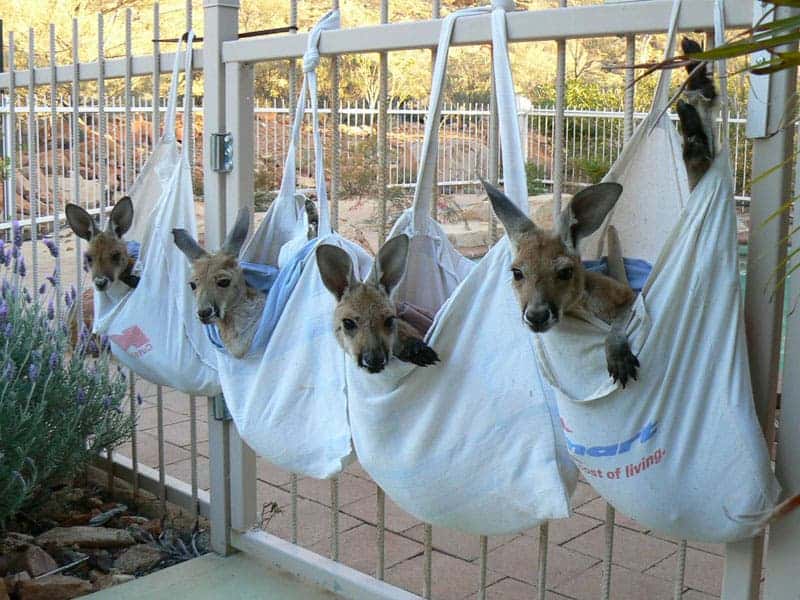
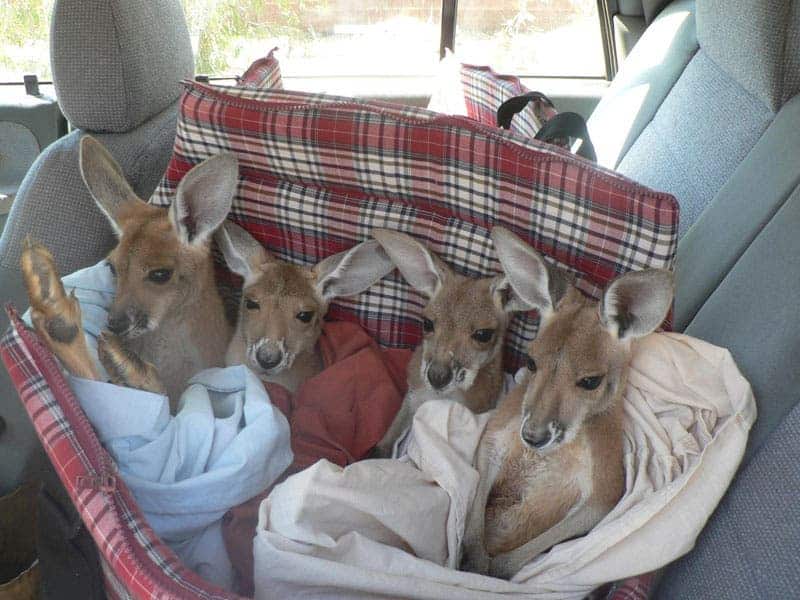
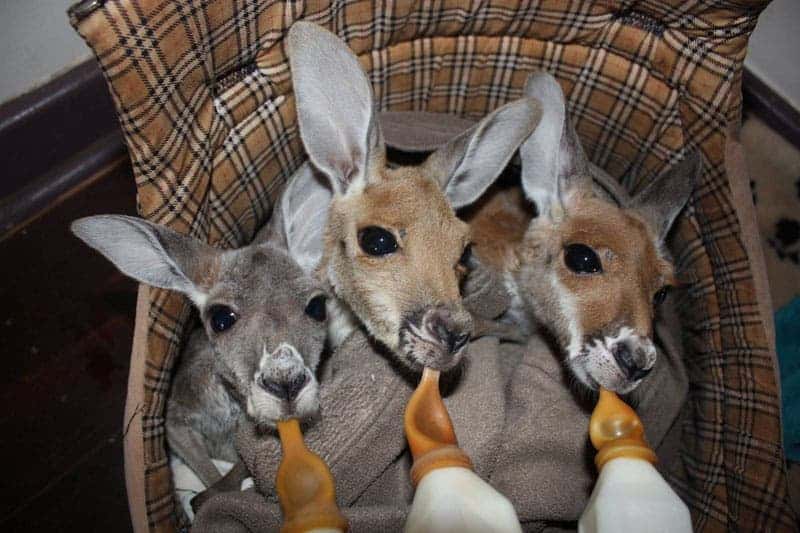
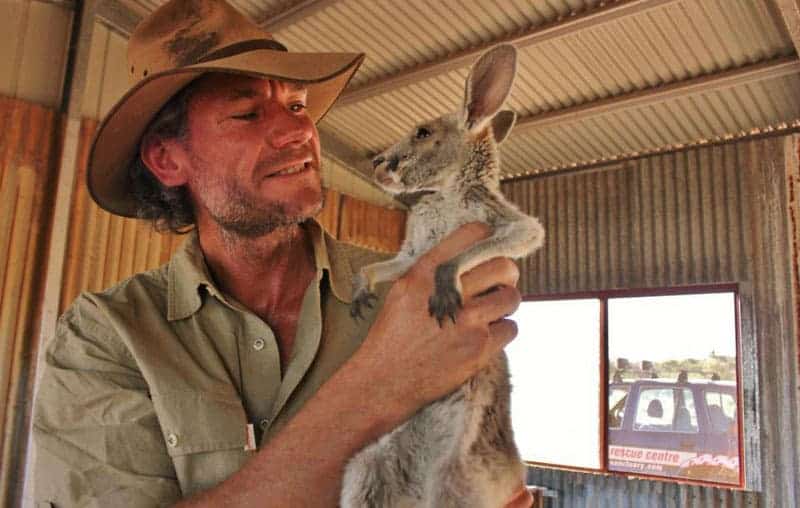
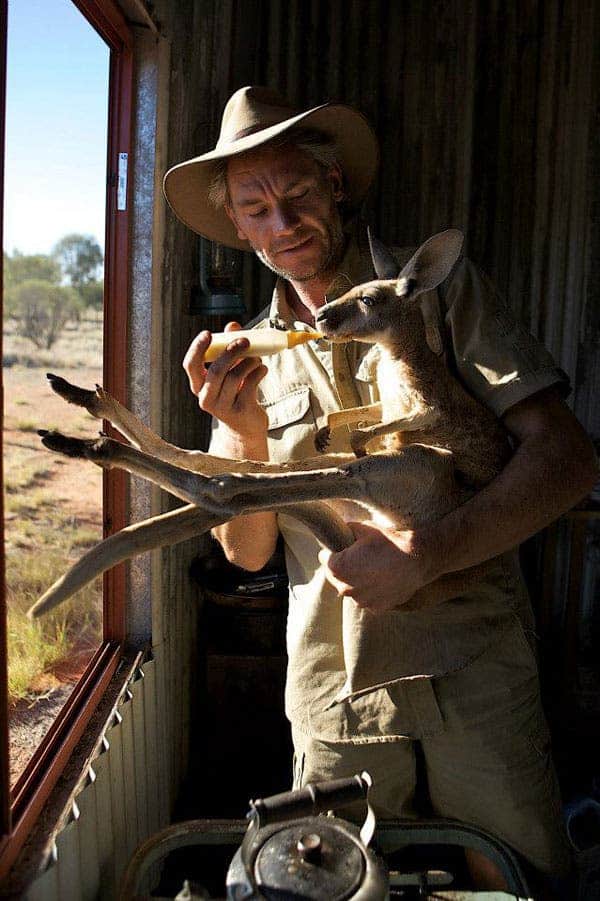
In 2005 Chris ‘Brolga’ Barns set up a baby kangaroo rescue centre in central Australia’s Alice Springs. The main goal was to help orphaned baby kangaroos, whose parents had been struck by vehicles in Australia. Often Chris would find the orphans at the side of the road still in their mother’s pouch – even if she had been killed.
The Kangaroo Sanctuary Alice Springs
Website | Facebook | Donate

“Building a sanctuary has been my goal since founding a baby kangaroo rescue centre in 2005. By that stage I’d found one too many joeys [baby kangaroos] orphaned when traffic on Australia’s roads killed their mothers, and I’d decided something needed to be done,” Chris told The Telegraph in 2014.
RelatedPosts

This guy on Youtube makes knives from foods, sand, and other crazy materials
Chernobyl in photos — what does the exclusion area look like 35 years after the disaster?
A medieval scribe curses a cat for peeing on his manuscript
An American politician streamed Among Us on Twitch. She almost broke the viewership record

It took him years of hard work, but finally, in 2009-2011, he managed to open a proper sanctuary, which now hosts 28 kangaroos and a camel. The BBC actually did a series on him and his sanctuary called Kangaroo Dundee.

“The sanctuary finally opened in 2009, but never in my wildest dreams did I expect it to become as well-known as it has through the BBC series Kangaroo Dundee. I’m pretty level-headed about the fame because for me, the animals have always come first.”
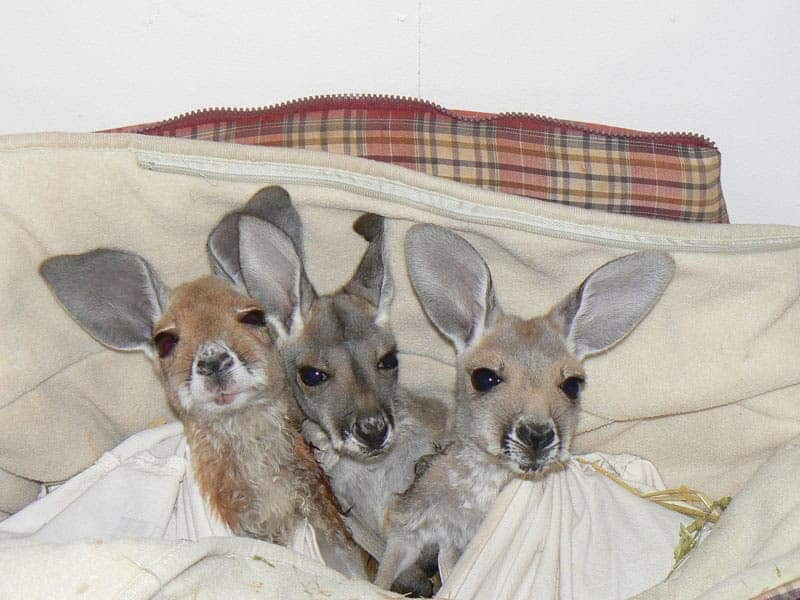
His animal-related career began at Pearl Coast Zoo in Broome, Western Australia, where he was a bird keeper. Later he was a zookeeper at Tipperary in the Northern Territory. It was at Pearl Coast Zoo however, when Barns had his first experience with an orphaned joey:

“My first experience with an orphan kangaroo joey was in 1989 when I was a 17 yr old Zookeeper at Pearl Coast Zoo in Western Australia. Her name was Josie Jo – a beautiful Western Grey joey being raised at the zoo staff quarters where I lived. The adventure of having a joey in the house and helping raise her made me realise that all I wanted to do in life was be the best ‘kangaroo mum’.” [source]

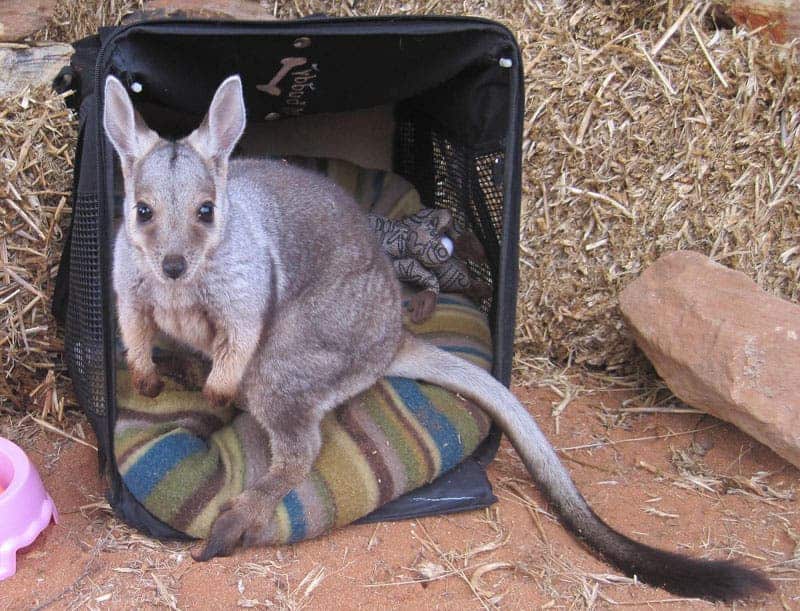
Brolga’s next step is to build Central Australia’s first wildlife hospital on the grounds of his Sanctuary. Donations are welcome to help him with his current work and his dream of building a hospital, so if you enjoy his story and want to make a difference for the wild kangaroos in Australia, please consider donating to the cause.
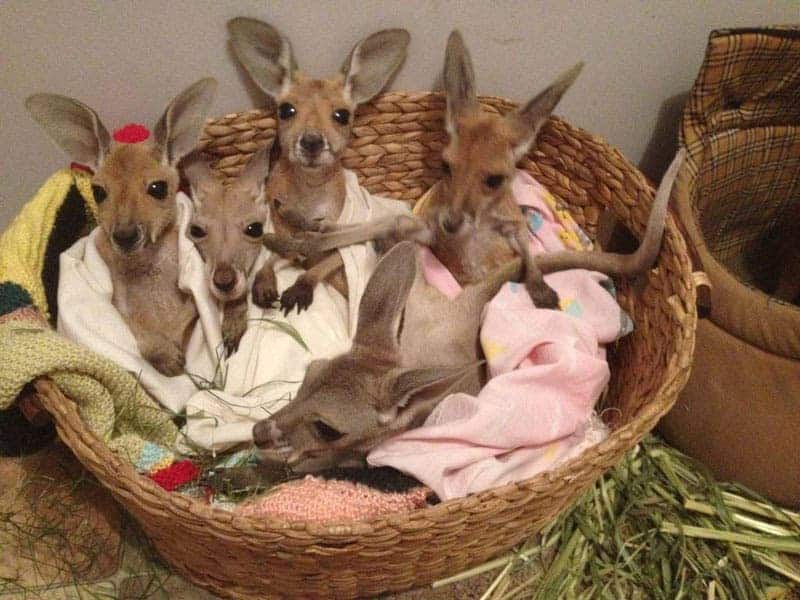
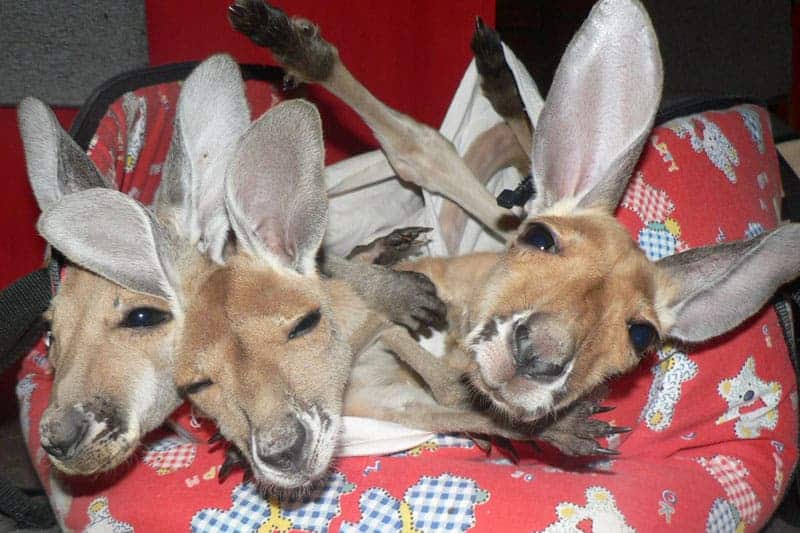
The Australian government estimates that 34.3 million kangaroos lived in Australia in 2011, but many of the smaller species are rare and endangered. Still, even if kangaroos are not endangered as a whole, but that doesn’t mean that they don’t need help – especially since we are the ones causing their problems.
Sources:

– The Kangaroo Sanctuary Alice Springs
– The Kangaroo Sanctuary Alice Springs on Facebook
– BBC Two: Kangaroo Dundee
– BBC TV Blog: Kangaroo Dundee – Sharing my life
– The Telegraph: My perfect weekend – Chris Barns, kangaroo sanctuary owner

(via) Twisted Sifter

Tags: animal sanctuarykangaroosocial media

Share4TweetShare
Mihai Andrei

Mihai Andrei

Dr. Andrei Mihai is a geophysicist and founder of ZME Science. He has a Ph.D. in geophysics and archaeology and has completed courses from prestigious universities (with programs ranging from climate and astronomy to chemistry and geology). He is passionate about making research more accessible to everyone and communicating news and features to a broad audience.

Related Posts

Mind & Brain

How Handing Smartphones to Kids Before They Turn 13 May Damage Their Mental Health for Life

byTibi Puiu
4 weeks ago
Mind & Brain

Selfies are wrong; and also not right

byAdam Taor
1 month ago
Science

Almost Half of Teens Say They’d Rather Grow Up Without the Internet

byMihai Andrei
3 months ago
Health

Using screens in bed increases insomnia risk by 59% — but social media isn’t the worst offender

byTibi Puiu
5 months ago

Recent news

The UK Government Says You Should Delete Emails to Save Water. That’s Dumb — and Hypocritical

August 16, 2025

In Denmark, a Vaccine Is Eliminating a Type of Cervical Cancer

August 16, 2025
This Picture of the Week shows a stunning spiral galaxy known as NGC 4945. This little corner of space, near the constellation of Centaurus and over 12 million light-years away, may seem peaceful at first — but NGC 4945 is locked in a violent struggle. At the very centre of nearly every galaxy is a supermassive black hole. Some, like the one at the centre of our own Milky Way, aren’t particularly hungry. But NGC 4945’s supermassive black hole is ravenous, consuming huge amounts of matter — and the MUSE instrument at ESO’s Very Large Telescope (VLT) has caught it playing with its food. This messy eater, contrary to a black hole’s typical all-consuming reputation, is blowing out powerful winds of material. This cone-shaped wind is shown in red in the inset, overlaid on a wider image captured with the MPG/ESO telescope at La Silla. In fact, this wind is moving so fast that it will end up escaping the galaxy altogether, lost to the void of intergalactic space. This is part of a new study that measured how winds move in several nearby galaxies. The MUSE observations show that these incredibly fast winds demonstrate a strange behaviour: they actually speed up far away from the central black hole, accelerating even more on their journey to the galactic outskirts. This process ejects potential star-forming material from a galaxy, suggesting that black holes control the fates of their host galaxies by dampening the stellar birth rate. It also shows that the more powerful black holes impede their own growth by removing the gas and dust they feed on, driving the whole system closer towards a sort of galactic equilibrium. Now, with these new results, we are one step closer to understanding the acceleration mechanism of the winds responsible for shaping the evolution of galaxies, and the history of the universe. Links  Research paper in Nature Astronomy by Marconcini et al. Close-up view of NGC 4945’s nucleus

Astronomers Find ‘Punctum,’ a Bizarre Space Object That Might be Unlike Anything in the Universe

August 15, 2025
  • About
  • Advertise
  • Editorial Policy
  • Privacy Policy and Terms of Use
  • How we review products
  • Contact

© 2007-2025 ZME Science - Not exactly rocket science. All Rights Reserved.

No Result
View All Result
  • Science News
  • Environment
  • Health
  • Space
  • Future
  • Features
    • Natural Sciences
    • Physics
      • Matter and Energy
      • Quantum Mechanics
      • Thermodynamics
    • Chemistry
      • Periodic Table
      • Applied Chemistry
      • Materials
      • Physical Chemistry
    • Biology
      • Anatomy
      • Biochemistry
      • Ecology
      • Genetics
      • Microbiology
      • Plants and Fungi
    • Geology and Paleontology
      • Planet Earth
      • Earth Dynamics
      • Rocks and Minerals
      • Volcanoes
      • Dinosaurs
      • Fossils
    • Animals
      • Mammals
      • Birds
      • Fish
      • Amphibians
      • Reptiles
      • Invertebrates
      • Pets
      • Conservation
      • Animal facts
    • Climate and Weather
      • Climate change
      • Weather and atmosphere
    • Health
      • Drugs
      • Diseases and Conditions
      • Human Body
      • Mind and Brain
      • Food and Nutrition
      • Wellness
    • History and Humanities
      • Anthropology
      • Archaeology
      • History
      • Economics
      • People
      • Sociology
    • Space & Astronomy
      • The Solar System
      • Sun
      • The Moon
      • Planets
      • Asteroids, meteors & comets
      • Astronomy
      • Astrophysics
      • Cosmology
      • Exoplanets & Alien Life
      • Spaceflight and Exploration
    • Technology
      • Computer Science & IT
      • Engineering
      • Inventions
      • Sustainability
      • Renewable Energy
      • Green Living
    • Culture
    • Resources
  • Videos
  • Reviews
  • About Us
    • About
    • The Team
    • Advertise
    • Contribute
    • Editorial policy
    • Privacy Policy
    • Contact

© 2007-2025 ZME Science - Not exactly rocket science. All Rights Reserved.