

Newly discovered Super-Earth has a permanent dark side just like the Moon
It's possible that most habitable planets in the Milky Way are tidally locked.
It's possible that most habitable planets in the Milky Way are tidally locked.

Ocean world or lava world? We're not certain yet.

When you look at a lot of planets, you're bound to find some unusual ones — but this one is ...
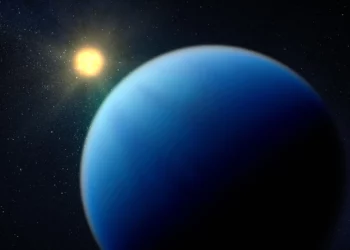
In the wise words of George Constanza, it's shrinkage.

It's the first time something like this has been discovered.

Star-mapping data and direct imaging could lead to even more exoplanet discoveries.

More than 5,000 exoplanets have been discovered and confirmed. But figuring out what they look like has been tricky.
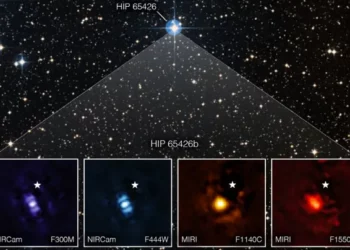
Unlike other observations of alien worlds, this is a direct image. It sets the stage for more exciting exoplanet research.

Scientists have direct photographic evidence of a Jupiter-like protoplanet forming through an until now unproven mechanism.

The 5,000th exoplanet could just be the beginning.

The planet is close enough

WASP-103b bucks the trend when it comes to planet shape.

AI can reliably spot molecules on exoplanets – and might one day even discover new laws of physics

Exoplanet composition may be much more varied and weird than we thought.

The magnetic connection of the stars and unseen orbiting planets tipped off the astronomers.

The revolving disk holds enough matter to seed three moons the size of Earth's.

When talking about planetary ring systems, Saturn and Jupiter likely spring to mind -- they are our closest ringed neighbors, ...
![An artist's conception of HD 209458 b, an exoplanet whose atmosphere is being torn off at more than 35,000 km/hour by the radiation of its close-by parent star. This hot Jupiter was the first alien world discovered via the transit method, and the first planet to have its atmosphere studied. [NASA/European Space Agency/Alfred Vidal-Madjar (Institut d'Astrophysique de Paris, CNRS)]](https://cdn.zmescience.com/wp-content/uploads/2020/11/247271_web-1-350x250.webp)
A new study highlights the importance of solar flares and space weather in reducing the habitability of exoplanets.

Scientists hope to verify their observations with the upcoming James Webb Space Telescope in 2021.

Astronomers have discovered a free-floating planet, not associated with any parent star wandering our galaxy.

Isn't this a plot twist?
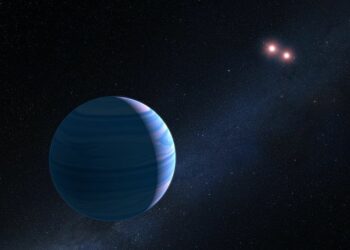
It's not perfect yet, but it's still effective.

We might have to revise the commonly accepted image of planets orbiting a parent star.

Observations suggest that the exoplanet and its parent star are strikingly similar to Earth and the Sun.

On this ultra-hot gas giant, the weather report for today is cloudy, with a chance of molten iron falling from ...

The planet could fall into its host star in the next decade.

The search of other worlds is a field of science on the cusp of a revolution. By unpacking the exoplanet ...

The ESA’s CHEOPS telescope has finally launched kick-starting the next phase in exoplanet investigations.

As the Hans Sigrist Prize is claimed by Ignas Snellen for groundbreaking exoplanet research, the message is clear--the search for ...

The last decade of space exploration has exceeded even our wildest expectations. And this is only the beginning.

The number of planets in the universe is extremely mind-boggling.

K2-18 b is probably the most Earth-like planet we've discovered so far.

Christened LHS 3844b, the exoplanet is 1.3 times larger than our planet and orbits its star in 11 hours.

The planet is so close to its host star that it only has a 5.36 day-long orbit. At this distance, ...

The solar system is very different from our own.

The map is amazing.

Researchers had hoped that at least 300 of them would be the size of our home planet. Well, they found ...

The novel method can reveal spicy new insights into the lives of planets orbiting stars far, far away.


Helium was predicted to be one of the most common elements of exoplanets, but was only recently observed for the ...


The method is a lot like tracing the ripples made by a rock thrown in a pond.

A cloudless exoplanet has become a benchmark for astronomers to gauge sodium content in alien worlds.

It took abnormally look considering helium is the 2nd most abundant element in the universe.

It will have time to find just a couple more candidate exoplanets.

Three of the newly-discovered planets are so-called super-Earths.

Space exploration made easy.

This odd world hundreds of light-years away could teach us about how planets in our solar system formed.

Who knows -- this might make a great second home.

A ninth planet 10 times bigger than Earth might be lurking far away within the solar system.