ZME Science
No Result
View All Result
ZME Science
No Result
View All Result
ZME Science

Home → Other → Great Pics

China Rover Releases HD Pictures of the Moon

Dragos MitricabyDragos Mitrica
February 2, 2016
in Great Pics, News, Space
A A
Share on FacebookShare on TwitterSubmit to Reddit

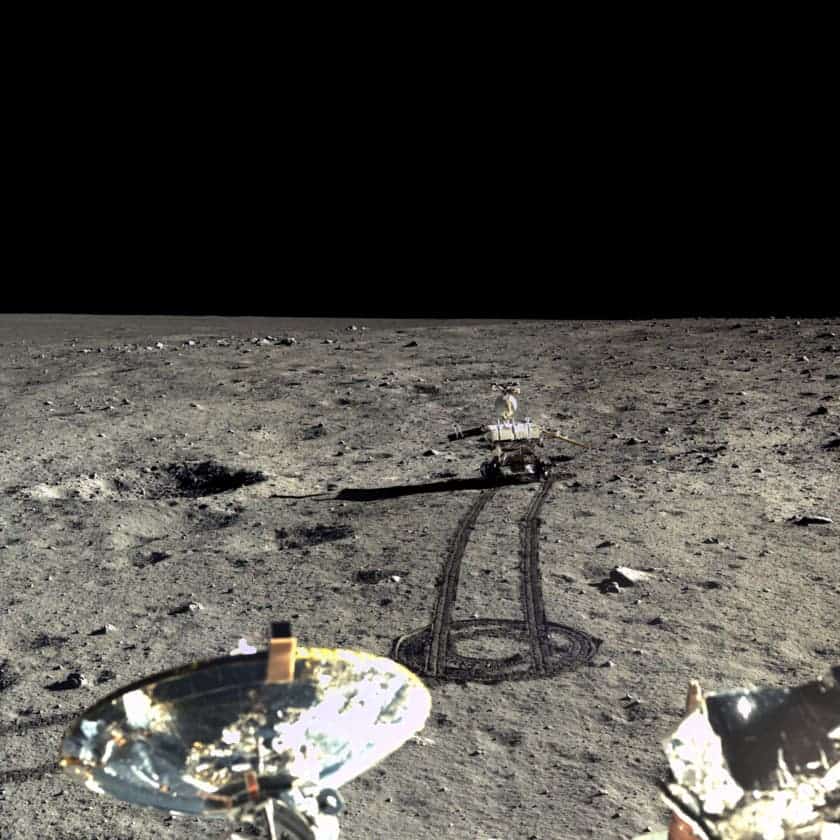
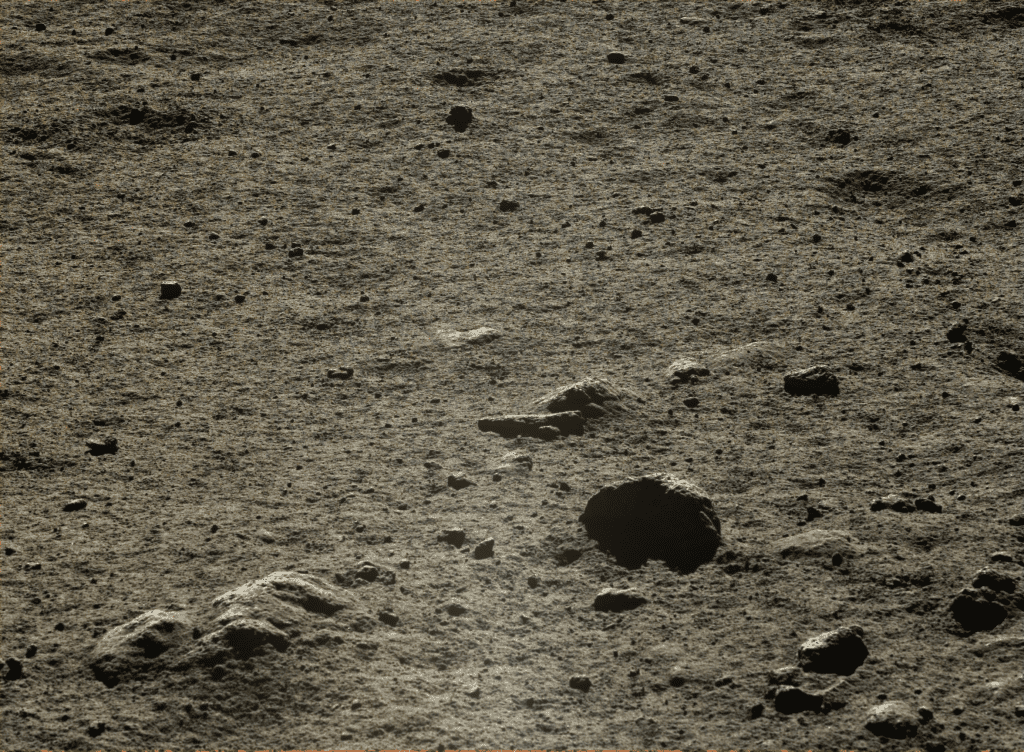
China’s National Space Administration released a trove of images from their lunar rover and they’re spectacular. We’re talking hundreds of tantalizing, HD and never-before-seen images of the Moon!
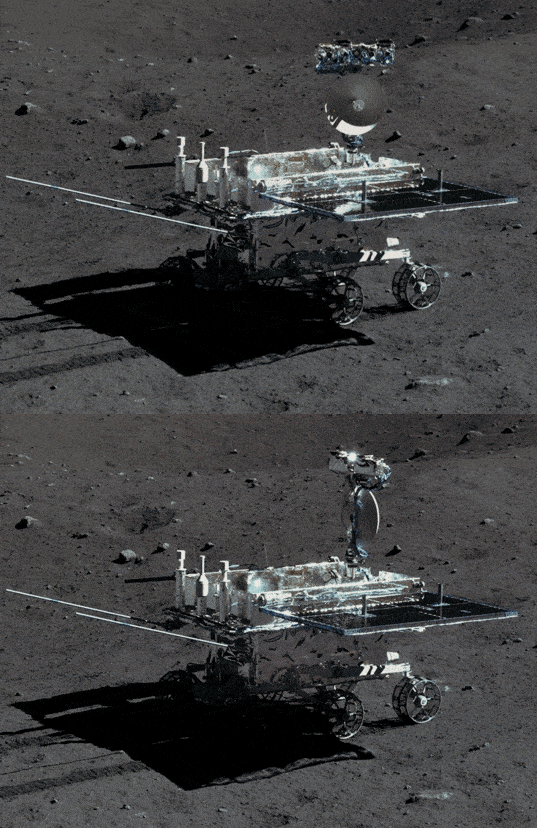
All image credits: Chinese Academy of Sciences / China National Space Administration / The Science and Application Center for Moon and Deepspace Exploration / Emily Lakdawalla

You can set up an account on China’s Science and Application Center for Moon and Deepspace Exploration website and have a look for yourself, view and download all the pictures you like – but the website is in Chinese, and the whole process may be a bit cumbersome. So we’ve ran through the collection and some photos already selected by others so you don’t have to bother. You can also see a much larger collection here and here.
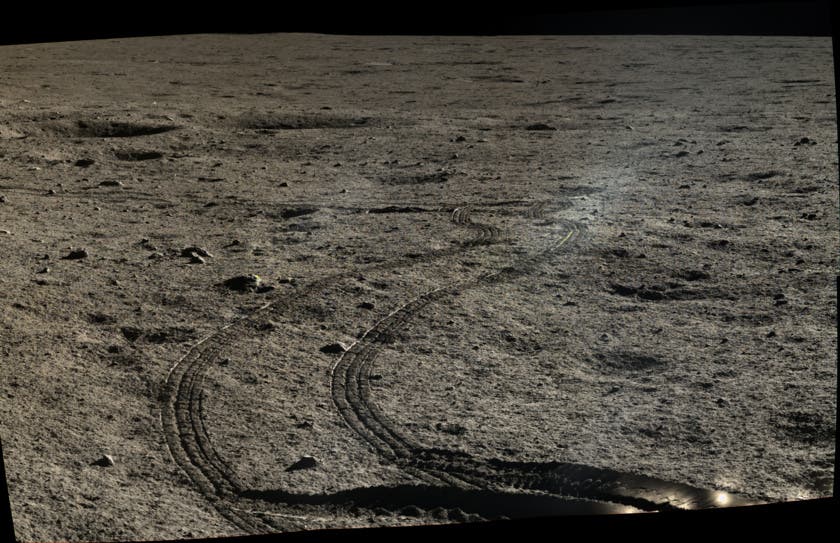
China sent its first unmanned lunar probe, the Yutu, or “Jade Rabbit,” to the moon in 2013 as part of its Chang’e-3, thus becoming the first country after the USA and Russia to land on the Moon. The rover Yutu (translation: Jade Rabbit) reached the Moon’s surface on 14 December 2013 becoming the first soft landing on the Moon since 1976. Its scientific purposes were pretty straightforward: lunar surface topography and geological survey, lunar surface material composition and resource survey, Sun-Earth-Moon space environment detection, and lunar-based astronomical observation.

After a rough start which was considered a failure, Yutu started to deliver time and time again.

RelatedPosts

Does the Moon actually affect our sleep? The answer is likely no, study shows
China’s ethnic cleansing could prevent 4.5 million Uyghur births by 2040. Researchers say this is genocide
NASA and amateur space enthusiast find lost Indian moon lander
600,000 year old discovered tool mill provies new Homo Erectus insights

“We have for the first time detected multiple subsurface layers (on the moon),” said lead author Xiao Long, professor of the China University of Geosciences in Wuhan, attributing these layers to ancient lava flows and the weathering of rocks and boulders into regolith, or loose layers of dust, over the past 3.3 billion years or so.
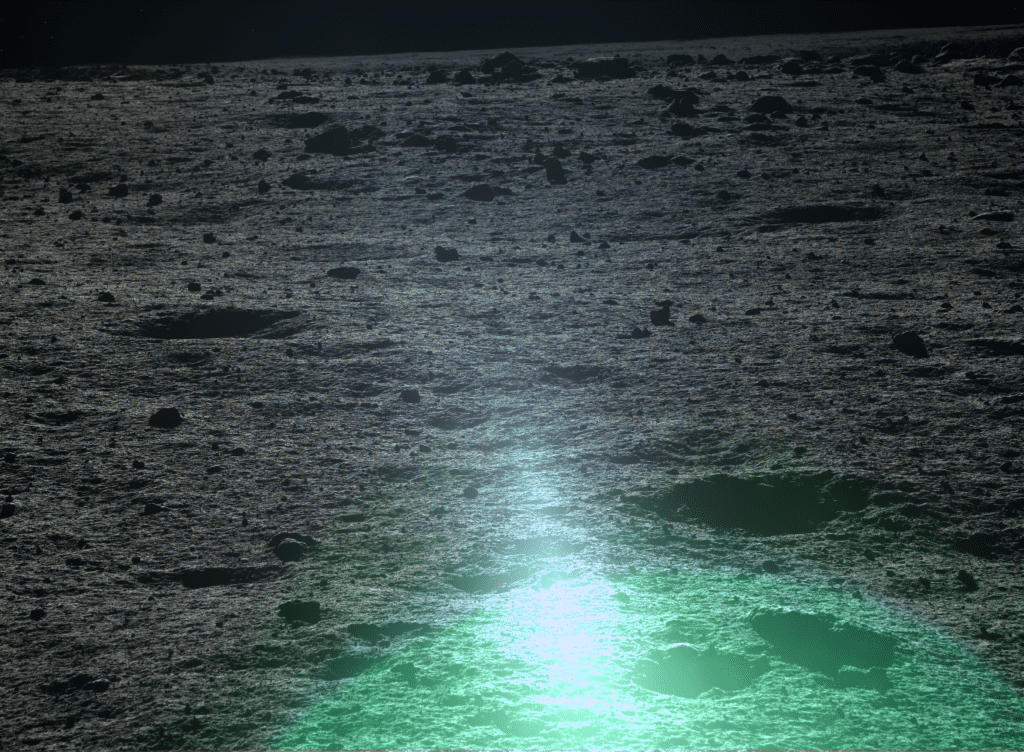
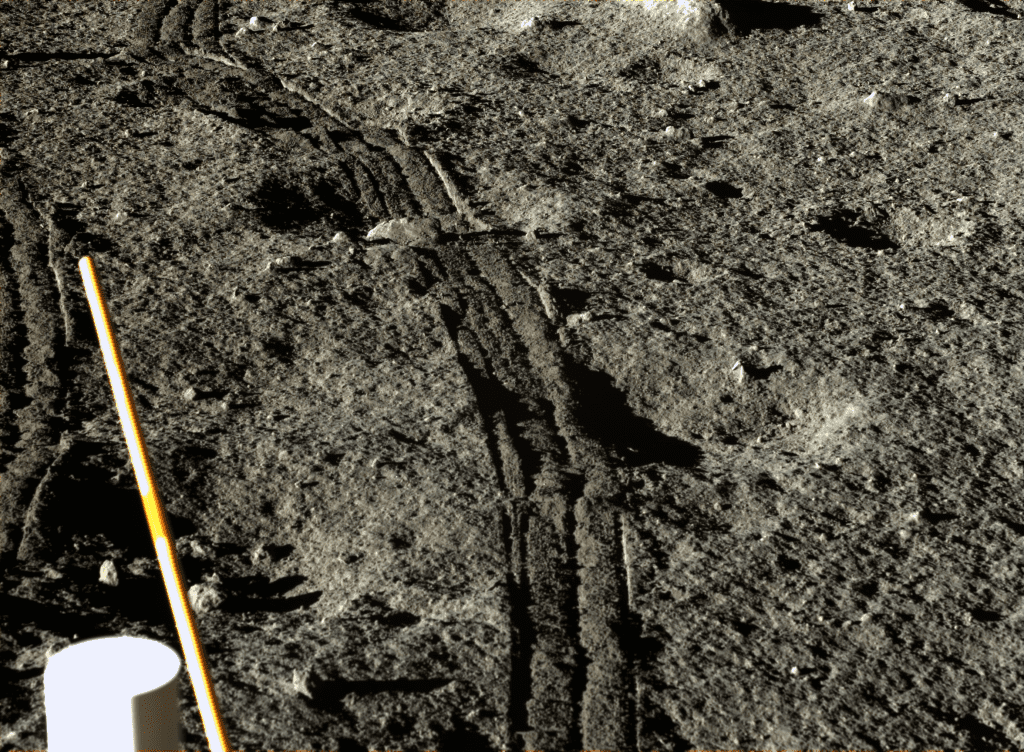
The rover also discovered a new and intriguing type of rock on the Moon.

“The diversity tells us that the Moon’s upper mantle is much less uniform in composition than Earth’s. And correlating chemistry with age, we can see how the moon’s volcanism changed over time,” said Bradley Joliff of the Washington University of St Louis, the only American partner in the Chinese team.

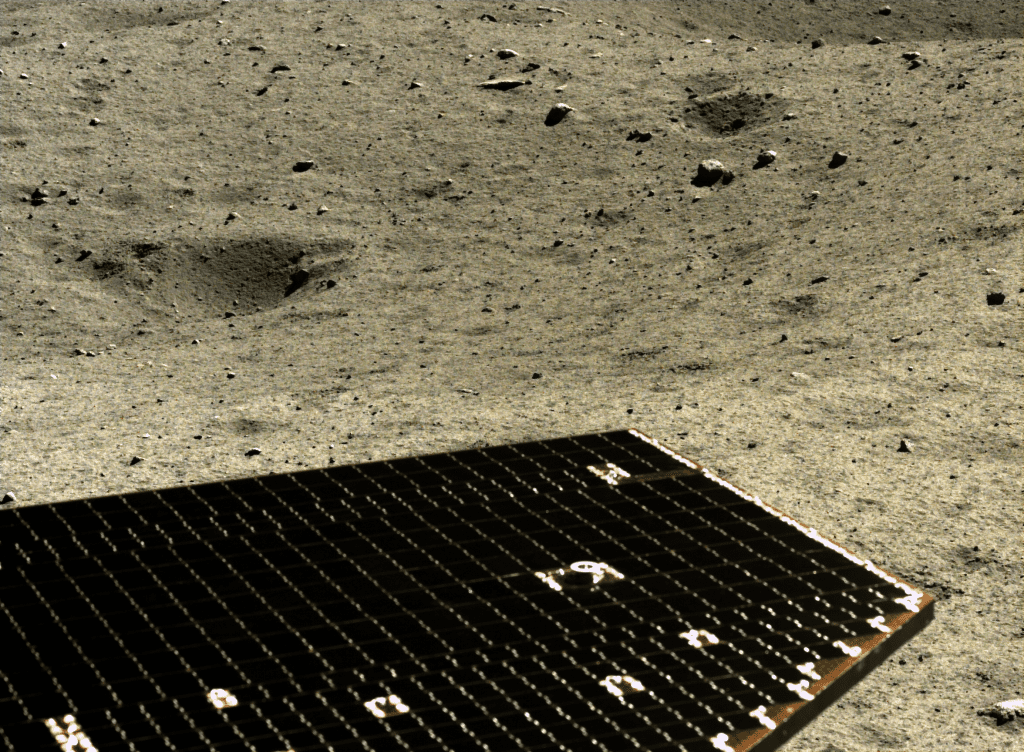
However, information about how the mission is going remains very limited. Unlike NASA and the European Space Agency, China reveals very little about how their mission is going. To be honest, I’m surprised they even released so many photos but for the time being, let’s enjoy the lovely photos.

Tags: chinaMoonroverYutu

Share4TweetShare
Dragos Mitrica

Dragos Mitrica

Dragos has been working in geology for six years, and loving every minute of it. Now, his more recent focus is on paleoclimate and climatic evolution, though in his spare time, he also dedicates a lot of time to chaos theory and complex systems.

Related Posts

ancient map 400 years old with China at its center
Culture & Society

The 400-Year-Old, Million-Dollar Map That Put China at the Center of the World

byMihai Andrei
3 weeks ago
News

Nearly Three-Quarters of New Solar and Wind Projects Are Being Built in China

byRhett Ayers Butler
3 weeks ago
News

This $8750 Watch Was Designed for Space and Could Finally Replace Apollo-era Omega Watches

byTudor Tarita
1 month ago
Future

China Resurrected an Abandoned Soviet ‘Sea Monster’ That’s Part Airplane, Part Hovercraft

byTibi Puiu
2 months ago

Recent news

The UK Government Says You Should Delete Emails to Save Water. That’s Dumb — and Hypocritical

August 16, 2025

In Denmark, a Vaccine Is Eliminating a Type of Cervical Cancer

August 16, 2025
This Picture of the Week shows a stunning spiral galaxy known as NGC 4945. This little corner of space, near the constellation of Centaurus and over 12 million light-years away, may seem peaceful at first — but NGC 4945 is locked in a violent struggle. At the very centre of nearly every galaxy is a supermassive black hole. Some, like the one at the centre of our own Milky Way, aren’t particularly hungry. But NGC 4945’s supermassive black hole is ravenous, consuming huge amounts of matter — and the MUSE instrument at ESO’s Very Large Telescope (VLT) has caught it playing with its food. This messy eater, contrary to a black hole’s typical all-consuming reputation, is blowing out powerful winds of material. This cone-shaped wind is shown in red in the inset, overlaid on a wider image captured with the MPG/ESO telescope at La Silla. In fact, this wind is moving so fast that it will end up escaping the galaxy altogether, lost to the void of intergalactic space. This is part of a new study that measured how winds move in several nearby galaxies. The MUSE observations show that these incredibly fast winds demonstrate a strange behaviour: they actually speed up far away from the central black hole, accelerating even more on their journey to the galactic outskirts. This process ejects potential star-forming material from a galaxy, suggesting that black holes control the fates of their host galaxies by dampening the stellar birth rate. It also shows that the more powerful black holes impede their own growth by removing the gas and dust they feed on, driving the whole system closer towards a sort of galactic equilibrium. Now, with these new results, we are one step closer to understanding the acceleration mechanism of the winds responsible for shaping the evolution of galaxies, and the history of the universe. Links  Research paper in Nature Astronomy by Marconcini et al. Close-up view of NGC 4945’s nucleus

Astronomers Find ‘Punctum,’ a Bizarre Space Object That Might be Unlike Anything in the Universe

August 15, 2025
  • About
  • Advertise
  • Editorial Policy
  • Privacy Policy and Terms of Use
  • How we review products
  • Contact

© 2007-2025 ZME Science - Not exactly rocket science. All Rights Reserved.

No Result
View All Result
  • Science News
  • Environment
  • Health
  • Space
  • Future
  • Features
    • Natural Sciences
    • Physics
      • Matter and Energy
      • Quantum Mechanics
      • Thermodynamics
    • Chemistry
      • Periodic Table
      • Applied Chemistry
      • Materials
      • Physical Chemistry
    • Biology
      • Anatomy
      • Biochemistry
      • Ecology
      • Genetics
      • Microbiology
      • Plants and Fungi
    • Geology and Paleontology
      • Planet Earth
      • Earth Dynamics
      • Rocks and Minerals
      • Volcanoes
      • Dinosaurs
      • Fossils
    • Animals
      • Mammals
      • Birds
      • Fish
      • Amphibians
      • Reptiles
      • Invertebrates
      • Pets
      • Conservation
      • Animal facts
    • Climate and Weather
      • Climate change
      • Weather and atmosphere
    • Health
      • Drugs
      • Diseases and Conditions
      • Human Body
      • Mind and Brain
      • Food and Nutrition
      • Wellness
    • History and Humanities
      • Anthropology
      • Archaeology
      • History
      • Economics
      • People
      • Sociology
    • Space & Astronomy
      • The Solar System
      • Sun
      • The Moon
      • Planets
      • Asteroids, meteors & comets
      • Astronomy
      • Astrophysics
      • Cosmology
      • Exoplanets & Alien Life
      • Spaceflight and Exploration
    • Technology
      • Computer Science & IT
      • Engineering
      • Inventions
      • Sustainability
      • Renewable Energy
      • Green Living
    • Culture
    • Resources
  • Videos
  • Reviews
  • About Us
    • About
    • The Team
    • Advertise
    • Contribute
    • Editorial policy
    • Privacy Policy
    • Contact

© 2007-2025 ZME Science - Not exactly rocket science. All Rights Reserved.