

ZME Science
No Result
View All Result
ZME Science
No Result
View All Result
ZME Science

Home → Other

‘2012’ – most absurd science fiction movie ever

Mihai AndreibyMihai Andrei
January 4, 2011
in Other, Space
A A
Share on FacebookShare on TwitterSubmit to Reddit

RelatedPosts

Orion maiden test launch set for 2014, manned flight pushed to 2021
Astronomers find unique water-rich exoplanet similar in mass with Saturn
Mars Rover getting last touches
A Journey through Multiverses, Hidden Dimensions, and Many Worlds
We're all going to die in 2012; because the Aztecs said so...

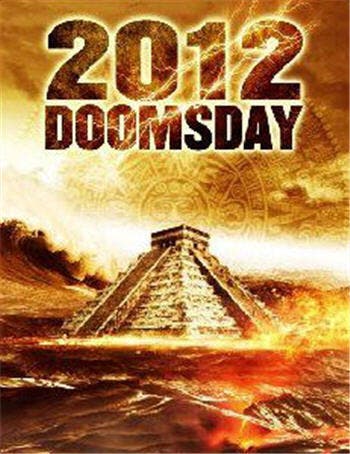
I’m gonna be honest with you – I didn’t see ‘2012’; honestly, I tried to. I started watching it two times, but it was just too stupid – and not the kind of funny stupid, the kind that just takes all the pleasure of watching (if you have a slight idea about what they’re saying in there). A number of NASA specialists however, decided they have to be more patient than me and watched it from start to end. Their conclusion ? It is the most absurd science fiction movie ever to be made.

The film that grossed more than £490 million at the box office and stared John Cusack, Danny Glover, Thandie Newton and Chiwetel Ejiofor may have been a success from an income point of view, but it had a whole lot of people worrying about absurd things; a whole number of concerned viewers actually called NASA and asked for an explanation. The response was loud and clear: it is a perfect example of bad science on the big screen.

‘The film makers took advantage of public worries about the so-called end of the world as apparently predicted by the Mayans of Central America, whose calendar ends on December 21st, 2012,’ he added.

Researchers from NASA have criticized other movies, such as Armageddon, The 6th Day, Volcano and Chain Reaction for their inaccurate scientific content, but they also said that movies that have had success can be also accurate, citing Gattaca and Blade Runner as examples.

Tags: nasaScience Fiction

ShareTweetShare
Mihai Andrei

Mihai Andrei

Dr. Andrei Mihai is a geophysicist and founder of ZME Science. He has a Ph.D. in geophysics and archaeology and has completed courses from prestigious universities (with programs ranging from climate and astronomy to chemistry and geology). He is passionate about making research more accessible to everyone and communicating news and features to a broad audience.

Related Posts

Future

NASA Captured a Supersonic Jet Breaking the Sound Barrier and the Image Is Unreal

byTibi Puiu
4 months ago
News

NASA’s Curiosity Rover Spotted Driving Across Mars From Space for the First Time

byTibi Puiu
4 months ago
Climate

Trump’s Budget Plan Is Eviscerating NASA and NOAA Science

byMihai Andrei
4 months ago
News

Astronauts are about to grow mushrooms in space for the first time. It could help us live on Mars

byTibi Puiu
5 months ago

Recent news

The disturbing reason why Japan’s Olympic athletes wear outfits designed to block infrared

August 19, 2025
Erin Kunz holds a microelectrode array in the Clark Center, Stanford University, on Thursday, August 8, 2025, in Stanford, Calif. The array is implanted in the brain to collect data. (Photo by Jim Gensheimer)

Brain Implant Translates Silent Inner Speech into Words, But Critics Raise Fears of Mind Reading Without Consent

August 19, 2025

‘Skin in a Syringe’ Might be the Future of Scar Free Healing For Burn Victims

August 18, 2025
  • About
  • Advertise
  • Editorial Policy
  • Privacy Policy and Terms of Use
  • How we review products
  • Contact

© 2007-2025 ZME Science - Not exactly rocket science. All Rights Reserved.

No Result
View All Result
  • Science News
  • Environment
  • Health
  • Space
  • Future
  • Features
    • Natural Sciences
    • Physics
      • Matter and Energy
      • Quantum Mechanics
      • Thermodynamics
    • Chemistry
      • Periodic Table
      • Applied Chemistry
      • Materials
      • Physical Chemistry
    • Biology
      • Anatomy
      • Biochemistry
      • Ecology
      • Genetics
      • Microbiology
      • Plants and Fungi
    • Geology and Paleontology
      • Planet Earth
      • Earth Dynamics
      • Rocks and Minerals
      • Volcanoes
      • Dinosaurs
      • Fossils
    • Animals
      • Mammals
      • Birds
      • Fish
      • Amphibians
      • Reptiles
      • Invertebrates
      • Pets
      • Conservation
      • Animal facts
    • Climate and Weather
      • Climate change
      • Weather and atmosphere
    • Health
      • Drugs
      • Diseases and Conditions
      • Human Body
      • Mind and Brain
      • Food and Nutrition
      • Wellness
    • History and Humanities
      • Anthropology
      • Archaeology
      • History
      • Economics
      • People
      • Sociology
    • Space & Astronomy
      • The Solar System
      • Sun
      • The Moon
      • Planets
      • Asteroids, meteors & comets
      • Astronomy
      • Astrophysics
      • Cosmology
      • Exoplanets & Alien Life
      • Spaceflight and Exploration
    • Technology
      • Computer Science & IT
      • Engineering
      • Inventions
      • Sustainability
      • Renewable Energy
      • Green Living
    • Culture
    • Resources
  • Videos
  • Reviews
  • About Us
    • About
    • The Team
    • Advertise
    • Contribute
    • Editorial policy
    • Privacy Policy
    • Contact

© 2007-2025 ZME Science - Not exactly rocket science. All Rights Reserved.