

ZME Science
No Result
View All Result
ZME Science
No Result
View All Result
ZME Science

Home → Science → Biology

The chicken came before the egg – hen lays ‘eggless’ chick in Sri Lanka farm

Tibi PuiubyTibi Puiu
April 20, 2012
in Biology, Offbeat
A A
Share on FacebookShare on TwitterSubmit to Reddit

RelatedPosts

Did a study claim there’s no link between eggs and cholesterol? It might be biased
Need to ward off pesky mosquitoes? Sleep with a chicken over your head
Medieval Christian monks may have sped up the evolution of the modern chicken
Why did the chicken cross the (Silk) Road? Scientists find first evidence of chickens bred for eggs

The age-old question of who came first – the chicken or the egg – has been pondered countless times, and put great thinkers throughout history in a predicament. An oddity of nature which recently occurred on a Sri Lankan farm may offer clues towards answering the riddle. There a hen gave birth to a chick without an egg, which is normally formed and healthy, according to veterinarians.
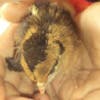
Instead of laying the egg and incubating it in a nest, the egg was incubated inside the hen for 21 day and hatched inside the mother, which died from the internal wounds. A later examination showed that the fertilized egg had developed within the hen’s reproductive system but stayed inside the hen’s body until it hatched.

Two years ago, researchers  from Scotland and England used a supercomputer called HECToR to analyze in high detail a chicken eggshell and determined the vital role of a protein used to kick-start the egg’s formation – a protein only found in a chicken. The protein had been identified earlier by scientists and was known to be linked to egg formation, now described as a catalyst. At the time, this was deemed as a scientific proof that the chicken definitely came before the egg.

First heard on BBC.

Tags: chickeneggs

ShareTweetShare
Tibi Puiu

Tibi Puiu

Tibi is a science journalist and co-founder of ZME Science. He writes mainly about emerging tech, physics, climate, and space. In his spare time, Tibi likes to make weird music on his computer and groom felines. He has a B.Sc in mechanical engineering and an M.Sc in renewable energy systems.

Related Posts

News

Scientists uncover world’s smallest dinosaur eggs. They’re no larger than a grape

byTibi Puiu
10 months ago
Biology

Why did the chicken cross the (Silk) Road? Scientists find first evidence of chickens bred for eggs

byTibi Puiu
1 year ago
A collage of chicken portraits from the CHICken photography project.
Animals

Feathered and fabulous: photographers show the overlooked beauty of chickens

byRupendra Brahambhatt
1 year ago
Animals

The chicken whisperers? Humans can surprisingly decipher chicken emotions from their clucks

byTibi Puiu
2 years ago

Recent news

The UK Government Says You Should Delete Emails to Save Water. That’s Dumb — and Hypocritical

August 16, 2025

In Denmark, a Vaccine Is Eliminating a Type of Cervical Cancer

August 16, 2025
This Picture of the Week shows a stunning spiral galaxy known as NGC 4945. This little corner of space, near the constellation of Centaurus and over 12 million light-years away, may seem peaceful at first — but NGC 4945 is locked in a violent struggle. At the very centre of nearly every galaxy is a supermassive black hole. Some, like the one at the centre of our own Milky Way, aren’t particularly hungry. But NGC 4945’s supermassive black hole is ravenous, consuming huge amounts of matter — and the MUSE instrument at ESO’s Very Large Telescope (VLT) has caught it playing with its food. This messy eater, contrary to a black hole’s typical all-consuming reputation, is blowing out powerful winds of material. This cone-shaped wind is shown in red in the inset, overlaid on a wider image captured with the MPG/ESO telescope at La Silla. In fact, this wind is moving so fast that it will end up escaping the galaxy altogether, lost to the void of intergalactic space. This is part of a new study that measured how winds move in several nearby galaxies. The MUSE observations show that these incredibly fast winds demonstrate a strange behaviour: they actually speed up far away from the central black hole, accelerating even more on their journey to the galactic outskirts. This process ejects potential star-forming material from a galaxy, suggesting that black holes control the fates of their host galaxies by dampening the stellar birth rate. It also shows that the more powerful black holes impede their own growth by removing the gas and dust they feed on, driving the whole system closer towards a sort of galactic equilibrium. Now, with these new results, we are one step closer to understanding the acceleration mechanism of the winds responsible for shaping the evolution of galaxies, and the history of the universe. Links  Research paper in Nature Astronomy by Marconcini et al. Close-up view of NGC 4945’s nucleus

Astronomers Find ‘Punctum,’ a Bizarre Space Object That Might be Unlike Anything in the Universe

August 15, 2025
  • About
  • Advertise
  • Editorial Policy
  • Privacy Policy and Terms of Use
  • How we review products
  • Contact

© 2007-2025 ZME Science - Not exactly rocket science. All Rights Reserved.

No Result
View All Result
  • Science News
  • Environment
  • Health
  • Space
  • Future
  • Features
    • Natural Sciences
    • Physics
      • Matter and Energy
      • Quantum Mechanics
      • Thermodynamics
    • Chemistry
      • Periodic Table
      • Applied Chemistry
      • Materials
      • Physical Chemistry
    • Biology
      • Anatomy
      • Biochemistry
      • Ecology
      • Genetics
      • Microbiology
      • Plants and Fungi
    • Geology and Paleontology
      • Planet Earth
      • Earth Dynamics
      • Rocks and Minerals
      • Volcanoes
      • Dinosaurs
      • Fossils
    • Animals
      • Mammals
      • Birds
      • Fish
      • Amphibians
      • Reptiles
      • Invertebrates
      • Pets
      • Conservation
      • Animal facts
    • Climate and Weather
      • Climate change
      • Weather and atmosphere
    • Health
      • Drugs
      • Diseases and Conditions
      • Human Body
      • Mind and Brain
      • Food and Nutrition
      • Wellness
    • History and Humanities
      • Anthropology
      • Archaeology
      • History
      • Economics
      • People
      • Sociology
    • Space & Astronomy
      • The Solar System
      • Sun
      • The Moon
      • Planets
      • Asteroids, meteors & comets
      • Astronomy
      • Astrophysics
      • Cosmology
      • Exoplanets & Alien Life
      • Spaceflight and Exploration
    • Technology
      • Computer Science & IT
      • Engineering
      • Inventions
      • Sustainability
      • Renewable Energy
      • Green Living
    • Culture
    • Resources
  • Videos
  • Reviews
  • About Us
    • About
    • The Team
    • Advertise
    • Contribute
    • Editorial policy
    • Privacy Policy
    • Contact

© 2007-2025 ZME Science - Not exactly rocket science. All Rights Reserved.