

ZME Science
No Result
View All Result
ZME Science
No Result
View All Result
ZME Science

Home → Science → News

Antidepressant Paxil, thought to be safe, proven unsafe for teenagers

Fourteen years ago, a leading drug maker conducted a study which concluded that Paxil, an antidepressant, was effective and safe for teenagers. But now, a major medical journal published an analysis concluded the opposite.

Mihai AndreibyMihai Andrei
September 18, 2015
in Health, News
A A
Share on FacebookShare on TwitterSubmit to Reddit

Fourteen years ago, a leading drug maker conducted a study which concluded that Paxil, an antidepressant, was effective and safe for teenagers. But now, a major medical journal published an analysis that concluded the opposite.

A depressing antidepressant

“This paper is alarming, but its existence is a good thing,” said Brian Nosek, a professor of psychology at the University of Virginia, who was not involved in either the original study or the reanalysis. “It signals that the community is waking up, checking its work and doing what science is supposed to do — self-correct.”

David Healy, one of the authors of the reanalysis, said that adverse events in the original study involved suicidal thinking or behavior but were mislabeled. Credits: Jon Morris for The New York Times

In truth, if you’d read a study published or backed by the company that actually produces the drug, you’d be a bit skeptical, but the original study passed. The maker of Paxil, GlaxoSmithKline, stood by the original, considering what they knew in 2001 justified the results. But the authors of the new analysis claim that the Paxil study suffered from many issues, as many other clinical studies do.

Paxil, or as it is also known, Paroxetine, has some huge rates of adverse effects: nausea 26% (9%), diarrhea 12% (8%), constipation 14% (9%), dry mouth 18% (12%), somnolence 23% (9%), insomnia 13% (6%), headache 18% (17%), hypomania 1% (0.3%), blurred vision 4%(1%), loss of appetite 6% (2%), nervousness 5% (3%), paraesthesia 4% (2%), dizziness 13% (6%), asthenia (weakness; 15% (6%)), tremor 8% (2%), sweating 11% (2%) and sexual dysfunction (≥10% incidence). For a drug that’s supposed to make you feel less depressed… it sure seems very depressing. But that’s not nearly all that’s wrong with Paxil.
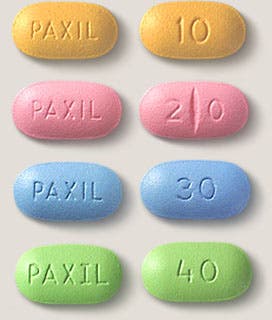
The GSK study of 2001 was instrumental in what’s called the antidepressant wars of the 2000s, which led to strong warnings on the labels, but still allowed them to be used. But over the years, it became clearer and clearer that Paxil was an addictive drug. Thousands of people taking or withdrawing from it have committed violent acts, including suicide, though no official statistics are published.

Testing drugs

Testing antidepressants is risky and hard to control. First of all, your subjects are mentally volatile, and subjected to numerous external influences which are hard to control and take into consideration. Perhaps even more dangerous, many of the subjects (generally about a third) improve their conditions on placebo alone. Also, unimportant factors (like packaging or the way the doctor speaks) can play a huge role. Such was the case with Paxil.

GSK researchers split participants into three groups: one on placebo, one on Paxil, and the other one taking imipramine, an older generic drug for depression. The Paxil group didn’t do anything better on the study’s main metric, but did better on “secondary measures” as the authors reported – mostly based on mood. This circumstantial evidence is also important, but not as important as the primary ones.

But even right after the study was published in the Journal of the American Academy of Child and Adolescent Psychiatry,  other researchers started tearing it apart. No clear effects and mislabeling side effects – serious reasons, but Paxil still stood. Now, after this analysis, it remains to be seen whether the drug will continue to be deemed as safe and used by teenagers. But the critics are adding up, and seem to reach critical mass.

RelatedPosts

Brain-to-brain interface allows first telepathic exchange of information between two humans
Mars-eye view of Earth and the Moon
How math can tell you if a picture is doctored
The Arctic seafloor is collapsing into sinkholes; thawing permafrost seems to be the cause

“When I first heard about this new analysis, I suspected it might be biased,” said Dr. Erick Turner, an associate professor of psychiatry atOregon Health & Science University, who was not involved in the report. “But I did my own analysis and found, as they did, no significant effect.” Dr. Turner added, “The only way to really know about adverse events is to dig into the patient-level data.”

The authors of the initial study have vehemently opposed this reassessment of their work.

“In summary, to describe our trial as ‘misreported’ is pejorative and wrong,” they conclude.

ShareTweetShare
Mihai Andrei

Mihai Andrei

Dr. Andrei Mihai is a geophysicist and founder of ZME Science. He has a Ph.D. in geophysics and archaeology and has completed courses from prestigious universities (with programs ranging from climate and astronomy to chemistry and geology). He is passionate about making research more accessible to everyone and communicating news and features to a broad audience.

Related Posts

Environment

The UK Government Says You Should Delete Emails to Save Water. That’s Dumb — and Hypocritical

byMihai Andrei
1 day ago
Health

In Denmark, a Vaccine Is Eliminating a Type of Cervical Cancer

byMihai Andrei
1 day ago
This Picture of the Week shows a stunning spiral galaxy known as NGC 4945. This little corner of space, near the constellation of Centaurus and over 12 million light-years away, may seem peaceful at first — but NGC 4945 is locked in a violent struggle. At the very centre of nearly every galaxy is a supermassive black hole. Some, like the one at the centre of our own Milky Way, aren’t particularly hungry. But NGC 4945’s supermassive black hole is ravenous, consuming huge amounts of matter — and the MUSE instrument at ESO’s Very Large Telescope (VLT) has caught it playing with its food. This messy eater, contrary to a black hole’s typical all-consuming reputation, is blowing out powerful winds of material. This cone-shaped wind is shown in red in the inset, overlaid on a wider image captured with the MPG/ESO telescope at La Silla. In fact, this wind is moving so fast that it will end up escaping the galaxy altogether, lost to the void of intergalactic space. This is part of a new study that measured how winds move in several nearby galaxies. The MUSE observations show that these incredibly fast winds demonstrate a strange behaviour: they actually speed up far away from the central black hole, accelerating even more on their journey to the galactic outskirts. This process ejects potential star-forming material from a galaxy, suggesting that black holes control the fates of their host galaxies by dampening the stellar birth rate. It also shows that the more powerful black holes impede their own growth by removing the gas and dust they feed on, driving the whole system closer towards a sort of galactic equilibrium. Now, with these new results, we are one step closer to understanding the acceleration mechanism of the winds responsible for shaping the evolution of galaxies, and the history of the universe. Links  Research paper in Nature Astronomy by Marconcini et al. Close-up view of NGC 4945’s nucleus
News

Astronomers Find ‘Punctum,’ a Bizarre Space Object That Might be Unlike Anything in the Universe

byTibi Puiu
2 days ago
News

Drone fishing is already a thing. It’s also already a problem

byMihai Andrei
2 days ago

Recent news

The UK Government Says You Should Delete Emails to Save Water. That’s Dumb — and Hypocritical

August 16, 2025

In Denmark, a Vaccine Is Eliminating a Type of Cervical Cancer

August 16, 2025
This Picture of the Week shows a stunning spiral galaxy known as NGC 4945. This little corner of space, near the constellation of Centaurus and over 12 million light-years away, may seem peaceful at first — but NGC 4945 is locked in a violent struggle. At the very centre of nearly every galaxy is a supermassive black hole. Some, like the one at the centre of our own Milky Way, aren’t particularly hungry. But NGC 4945’s supermassive black hole is ravenous, consuming huge amounts of matter — and the MUSE instrument at ESO’s Very Large Telescope (VLT) has caught it playing with its food. This messy eater, contrary to a black hole’s typical all-consuming reputation, is blowing out powerful winds of material. This cone-shaped wind is shown in red in the inset, overlaid on a wider image captured with the MPG/ESO telescope at La Silla. In fact, this wind is moving so fast that it will end up escaping the galaxy altogether, lost to the void of intergalactic space. This is part of a new study that measured how winds move in several nearby galaxies. The MUSE observations show that these incredibly fast winds demonstrate a strange behaviour: they actually speed up far away from the central black hole, accelerating even more on their journey to the galactic outskirts. This process ejects potential star-forming material from a galaxy, suggesting that black holes control the fates of their host galaxies by dampening the stellar birth rate. It also shows that the more powerful black holes impede their own growth by removing the gas and dust they feed on, driving the whole system closer towards a sort of galactic equilibrium. Now, with these new results, we are one step closer to understanding the acceleration mechanism of the winds responsible for shaping the evolution of galaxies, and the history of the universe. Links  Research paper in Nature Astronomy by Marconcini et al. Close-up view of NGC 4945’s nucleus

Astronomers Find ‘Punctum,’ a Bizarre Space Object That Might be Unlike Anything in the Universe

August 15, 2025
  • About
  • Advertise
  • Editorial Policy
  • Privacy Policy and Terms of Use
  • How we review products
  • Contact

© 2007-2025 ZME Science - Not exactly rocket science. All Rights Reserved.

No Result
View All Result
  • Science News
  • Environment
  • Health
  • Space
  • Future
  • Features
    • Natural Sciences
    • Physics
      • Matter and Energy
      • Quantum Mechanics
      • Thermodynamics
    • Chemistry
      • Periodic Table
      • Applied Chemistry
      • Materials
      • Physical Chemistry
    • Biology
      • Anatomy
      • Biochemistry
      • Ecology
      • Genetics
      • Microbiology
      • Plants and Fungi
    • Geology and Paleontology
      • Planet Earth
      • Earth Dynamics
      • Rocks and Minerals
      • Volcanoes
      • Dinosaurs
      • Fossils
    • Animals
      • Mammals
      • Birds
      • Fish
      • Amphibians
      • Reptiles
      • Invertebrates
      • Pets
      • Conservation
      • Animal facts
    • Climate and Weather
      • Climate change
      • Weather and atmosphere
    • Health
      • Drugs
      • Diseases and Conditions
      • Human Body
      • Mind and Brain
      • Food and Nutrition
      • Wellness
    • History and Humanities
      • Anthropology
      • Archaeology
      • History
      • Economics
      • People
      • Sociology
    • Space & Astronomy
      • The Solar System
      • Sun
      • The Moon
      • Planets
      • Asteroids, meteors & comets
      • Astronomy
      • Astrophysics
      • Cosmology
      • Exoplanets & Alien Life
      • Spaceflight and Exploration
    • Technology
      • Computer Science & IT
      • Engineering
      • Inventions
      • Sustainability
      • Renewable Energy
      • Green Living
    • Culture
    • Resources
  • Videos
  • Reviews
  • About Us
    • About
    • The Team
    • Advertise
    • Contribute
    • Editorial policy
    • Privacy Policy
    • Contact

© 2007-2025 ZME Science - Not exactly rocket science. All Rights Reserved.