

ZME Science
No Result
View All Result
ZME Science
No Result
View All Result
ZME Science

Home → Science → News

Children with autism are actually less likely to be vaccinated, new study finds

I'll be seeing you in the comment section.

Mihai AndreibyMihai Andrei
March 26, 2018
in Health, News
A A
Share on FacebookShare on TwitterSubmit to Reddit

Amidst dangerous, pseudoscientific propaganda linking vaccines to autism, a study actually found that children suffering from autism, as well as their siblings, are actually less likely to be vaccinated.
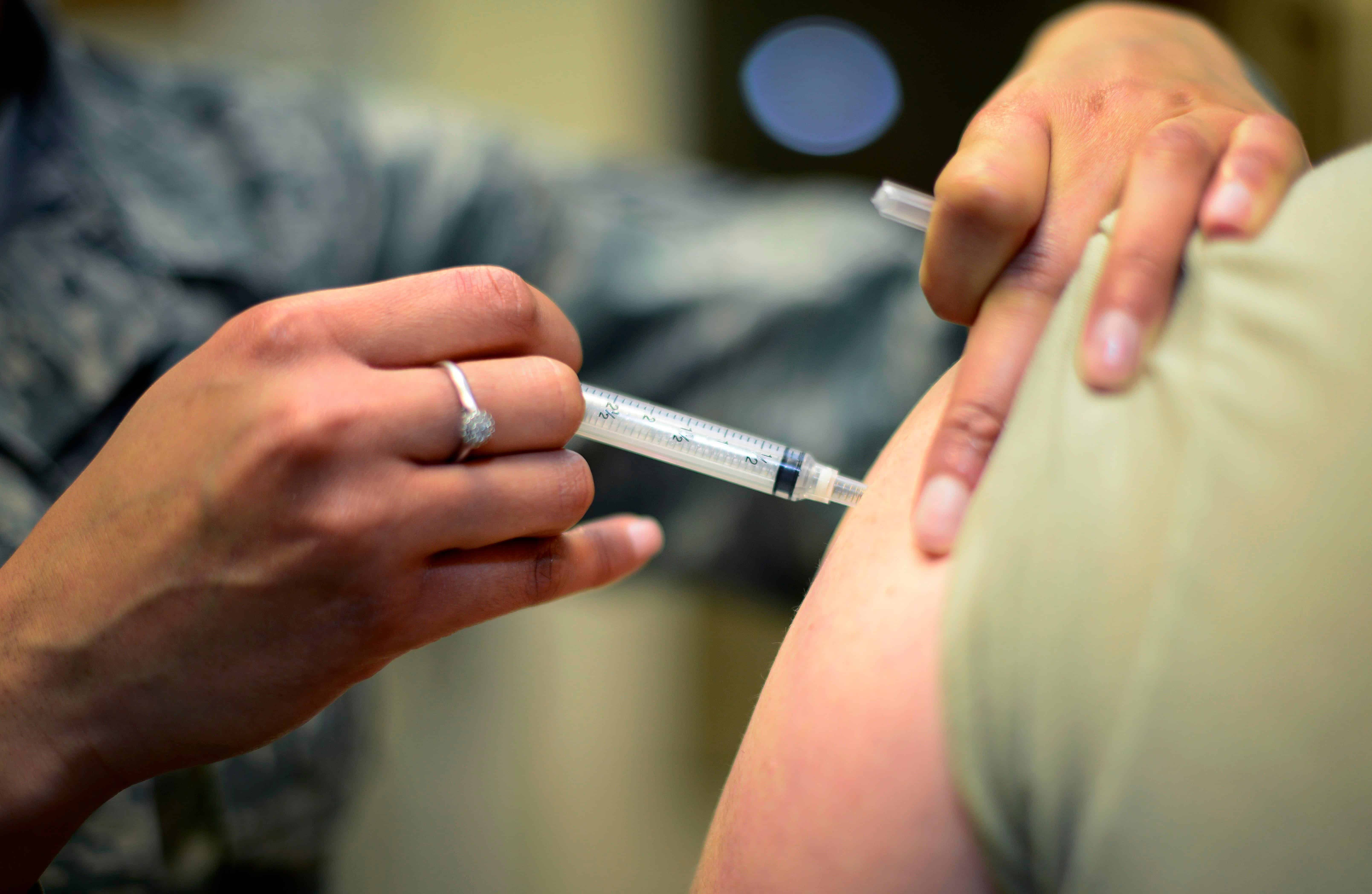
Image credits: Laughlin Military Base.

All it takes is one bad study

Before we start discussing this new study, let’s get the elephant out of the room, shall we? In 1998, a man called Andrew Wakefield published a study linking the combined measles, mumps, and rubella (MMR) vaccine to cases of colitis and autism spectrum disorders. The study led to a sharp decline in vaccination rates and spurred a number of large epidemiological studies and reviews — all of which reported no connection between vaccines and autism or colitis.

Since replicability is one of the most important pillars of science and no one could replicate Wakefield’s results, this raised questions about the validity of his findings. After these questions were raised, people started looking more closely at the study itself, and that’s when it all became clear.

A 2004 investigation by Sunday Times reporter Brian Deer identified undisclosed financial conflicts of interest on Wakefield’s part. Deer passed his investigation on to the British Medical Journal, which found that his paper was essentially a fraud — Wakefield had just falsified results to fit his desired narrative.

The British General Medical Council (GMC) also conducted an inquiry into allegations of misconduct against Wakefield and two former colleagues, finding evidence of fraudulent activities and reporting that Wakefield had simply falsified results. The Lancet, the journal in which his paper was published, issued a complete retraction. Editor-in-chief Richard Horton described it as “utterly false” and said that the journal had been “deceived”.

Wakefield was struck off the Medical Register, meaning he could no longer practice as a doctor in the UK.

Since then, no other study has ever found any connection between vaccines and autism — after all, it was just one blatantly fraudulent paper and nothing else. However, this has proven sufficient to spur a long-lasting fear of vaccines, with numerous outbreaks (including fatal cases) due to Wakefield-inspired anti-vaccine propaganda.

RelatedPosts

Yet another study shows that vaccines don’t cause autism
Polio Type 3 eradicated globally
Oxytocin is not a viable treatment for children and teenagers with autism, after all
New Hookwork Vaccine Passes Clinical Trials in Brazil

Let’s write it out clearly: extensive research has shown that vaccines don’t cause autism. Wakefield was a fraud. Anti-vaxxing is a dangerous, pseudoscientific trend that threatens the well-being of kids and adults all around the planet. There. I’ve said it. Now let’s move on to the real science.

Now, on to the good study

To this day, you can’t say vaccines and autism in the same sentence without spurring a heated debate — and yet this study managed to find a different correlation between the two. They found that kids diagnosed with the autism spectrum disease (ASD) are significantly less likely to have been vaccinated than their counterparts.

“In this large and comprehensive study, we found that after children received an autism diagnosis, the rates of vaccination were significantly lower when compared with children of the same age who did not have an autism diagnosis,” said lead author Ousseny Zerbo, PhD, postdoctoral fellow with the Kaiser Permanente Northern California Division of Research.

Zerbo and his colleagues analyzed more than 3,700 children with autism spectrum disorders diagnosed by 5 years of age, and nearly 500,000 children without ASD, as well as their younger siblings. They report that 94% of children aged 7 or older without an ASD received all recommended vaccinations between 4 and 6 years of age — compared with 82% of those with an ASD. Interestingly, this trend also carried to the siblings of children suffering from an ASD.

The study was only observational — it didn’t attempt to explore any causal relationship between the two. However, it raises a significant red flag, which will hopefully be explored in future studies. It does call for a change, promoting more dialogue between parents and doctors, and explaining that the anti-vaxx trend is just that — a trend, without any science to back it up.

“Numerous scientific studies have reported no association between childhood vaccination and the incidence of autism spectrum disorders,” said co-author Frank DeStefano, MD, MPH, Immunization Safety Office, Centers for Disease Control and Prevention. “Nonetheless, this new study suggests that many children with autism and their younger siblings are not being fully vaccinated.

“We need to better understand how to improve vaccination levels in children with autism spectrum disorder and their siblings, so they can be fully protected against vaccine-preventable diseases.”

The study has been published in JAMA Pediatrics. 10.1001/jamapediatrics.2018.0082  

Tags: autismvaccine

Share60TweetShare
Mihai Andrei

Mihai Andrei

Dr. Andrei Mihai is a geophysicist and founder of ZME Science. He has a Ph.D. in geophysics and archaeology and has completed courses from prestigious universities (with programs ranging from climate and astronomy to chemistry and geology). He is passionate about making research more accessible to everyone and communicating news and features to a broad audience.

Related Posts

Health

In Denmark, a Vaccine Is Eliminating a Type of Cervical Cancer

byMihai Andrei
2 days ago
Health

Scientists Have Identified 4 Distinct Types of Autism Each With Its Own Genetic Signature

byTudor Tarita
1 week ago
Health

This Common Ingredient in Chocolate May Outperform Tamiflu Against the Flu In New Drug Combo

byTudor Tarita
1 week ago
Health

This mRNA HIV Vaccine Produces the Virus-Fighting Antibodies That Have Eluded Researchers for 40 Years

byTudor Tarita
2 weeks ago

Recent news

The UK Government Says You Should Delete Emails to Save Water. That’s Dumb — and Hypocritical

August 16, 2025

In Denmark, a Vaccine Is Eliminating a Type of Cervical Cancer

August 16, 2025
This Picture of the Week shows a stunning spiral galaxy known as NGC 4945. This little corner of space, near the constellation of Centaurus and over 12 million light-years away, may seem peaceful at first — but NGC 4945 is locked in a violent struggle. At the very centre of nearly every galaxy is a supermassive black hole. Some, like the one at the centre of our own Milky Way, aren’t particularly hungry. But NGC 4945’s supermassive black hole is ravenous, consuming huge amounts of matter — and the MUSE instrument at ESO’s Very Large Telescope (VLT) has caught it playing with its food. This messy eater, contrary to a black hole’s typical all-consuming reputation, is blowing out powerful winds of material. This cone-shaped wind is shown in red in the inset, overlaid on a wider image captured with the MPG/ESO telescope at La Silla. In fact, this wind is moving so fast that it will end up escaping the galaxy altogether, lost to the void of intergalactic space. This is part of a new study that measured how winds move in several nearby galaxies. The MUSE observations show that these incredibly fast winds demonstrate a strange behaviour: they actually speed up far away from the central black hole, accelerating even more on their journey to the galactic outskirts. This process ejects potential star-forming material from a galaxy, suggesting that black holes control the fates of their host galaxies by dampening the stellar birth rate. It also shows that the more powerful black holes impede their own growth by removing the gas and dust they feed on, driving the whole system closer towards a sort of galactic equilibrium. Now, with these new results, we are one step closer to understanding the acceleration mechanism of the winds responsible for shaping the evolution of galaxies, and the history of the universe. Links  Research paper in Nature Astronomy by Marconcini et al. Close-up view of NGC 4945’s nucleus

Astronomers Find ‘Punctum,’ a Bizarre Space Object That Might be Unlike Anything in the Universe

August 15, 2025
  • About
  • Advertise
  • Editorial Policy
  • Privacy Policy and Terms of Use
  • How we review products
  • Contact

© 2007-2025 ZME Science - Not exactly rocket science. All Rights Reserved.

No Result
View All Result
  • Science News
  • Environment
  • Health
  • Space
  • Future
  • Features
    • Natural Sciences
    • Physics
      • Matter and Energy
      • Quantum Mechanics
      • Thermodynamics
    • Chemistry
      • Periodic Table
      • Applied Chemistry
      • Materials
      • Physical Chemistry
    • Biology
      • Anatomy
      • Biochemistry
      • Ecology
      • Genetics
      • Microbiology
      • Plants and Fungi
    • Geology and Paleontology
      • Planet Earth
      • Earth Dynamics
      • Rocks and Minerals
      • Volcanoes
      • Dinosaurs
      • Fossils
    • Animals
      • Mammals
      • Birds
      • Fish
      • Amphibians
      • Reptiles
      • Invertebrates
      • Pets
      • Conservation
      • Animal facts
    • Climate and Weather
      • Climate change
      • Weather and atmosphere
    • Health
      • Drugs
      • Diseases and Conditions
      • Human Body
      • Mind and Brain
      • Food and Nutrition
      • Wellness
    • History and Humanities
      • Anthropology
      • Archaeology
      • History
      • Economics
      • People
      • Sociology
    • Space & Astronomy
      • The Solar System
      • Sun
      • The Moon
      • Planets
      • Asteroids, meteors & comets
      • Astronomy
      • Astrophysics
      • Cosmology
      • Exoplanets & Alien Life
      • Spaceflight and Exploration
    • Technology
      • Computer Science & IT
      • Engineering
      • Inventions
      • Sustainability
      • Renewable Energy
      • Green Living
    • Culture
    • Resources
  • Videos
  • Reviews
  • About Us
    • About
    • The Team
    • Advertise
    • Contribute
    • Editorial policy
    • Privacy Policy
    • Contact

© 2007-2025 ZME Science - Not exactly rocket science. All Rights Reserved.