
Scientists found the world’s oldest heart in a 380-million-year-old fossilized fish
It belonged to a fish known as the Gogo.

Paleontologists have identified a mineralized heart inside a 380-million-year-old fossilized fish. It’s an incredibly rare find, as soft tissues tend to decompose before fossilization can take place. And it gets better. Scans of the fossil allowed the researchers to study its anatomy in 3D without having to break the delicate fossil apart.
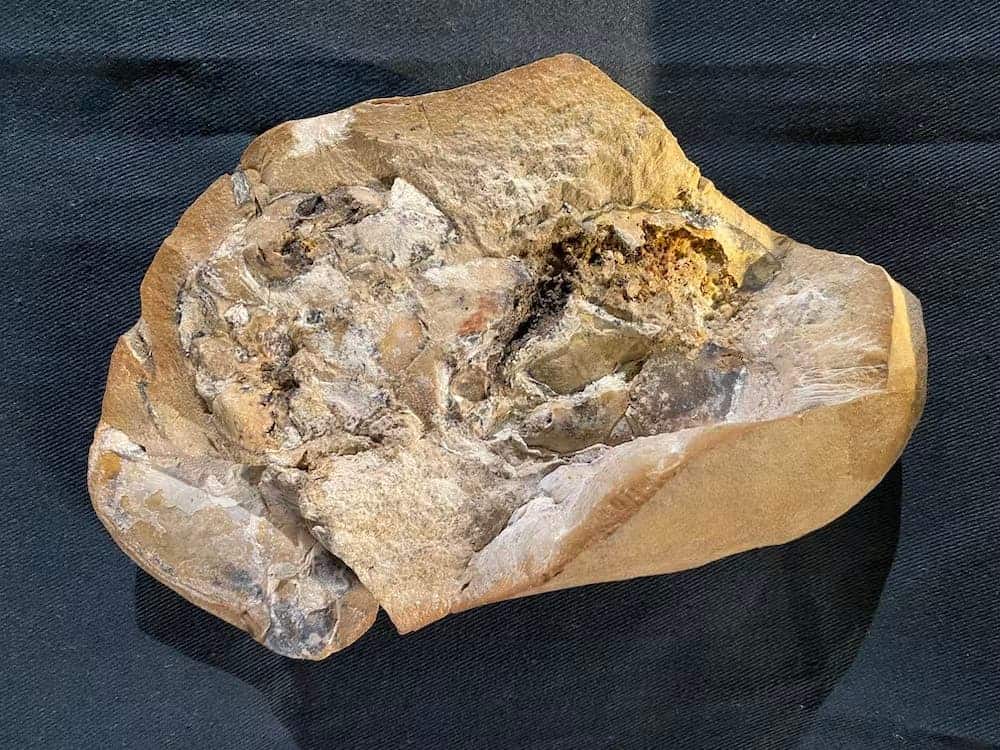
The ancient fish’s heart was an S-shaped organ with two chambers – the smaller one sitting on top of the larger one. It was much more advanced than the paleontologists expected it would be and could provide valuable information about the evolution of the head and neck region, and how these changed to accommodate jaws, the researchers explained.
“Evolution is often thought of as a series of small steps, but these ancient fossils suggest there was a larger leap between jawless and jawed vertebrates. These fish literally have their hearts in their mouths and under their gills – just like sharks today,” Kate Trinajstic, study author from Curtin University in Australia, said in a statement.
Looking at the heart
The heart belonged to a fish known as the Gogo, which is now long extinct. It’s the first of a class of prehistoric fish called placoderms – the first fish to have jaws and teeth. Placoderms could grow up to nine meters in length and were the planet’s dominant life for 60 million years, having appeared more than 100 million years before the first dinosaurs appeared.
It was found on a site known as the Gogo Formation in Western Australia. During the Devonian period, between 419 million years ago and 358 million years ago, this region was a large reef thriving with life. But things have changed since then. It’s now a fossil bed so exceptional that sometimes even soft tissues can be found very well preserved.
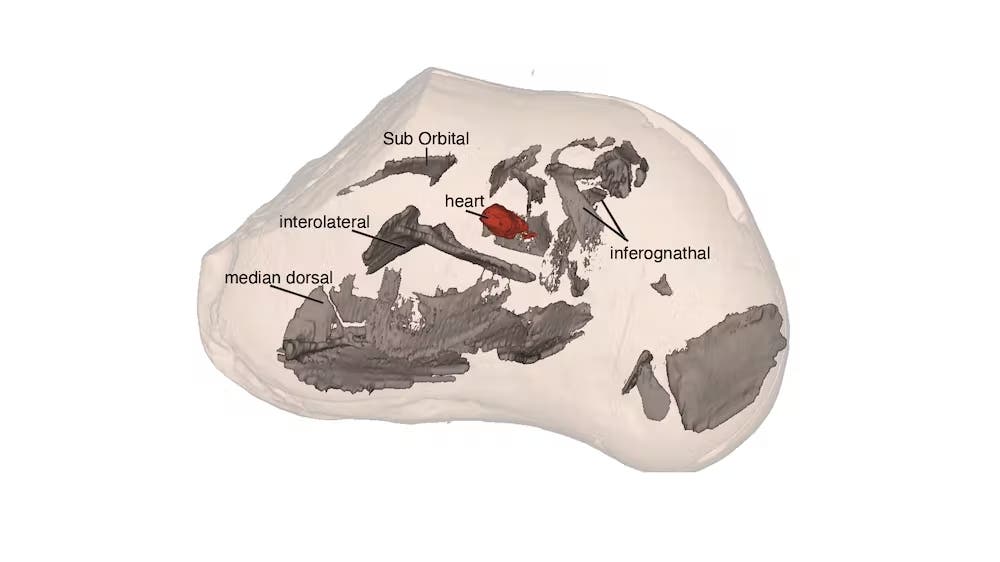
“What’s really exceptional about the Gogo fishes is that their soft tissues are preserved in three dimensions,” Per Ahlberg, study author and researcher at Uppsala University in Sweden, said in a statement. “Most cases of soft-tissue preservation are found in flattened fossils, where the soft anatomy is little more than a stain on the rock.”
The researchers said that the two chambers made the fish’s heart more efficient and were the key step that transformed it from a slow-moving fish to a fast predator. The heart was also much more forward in the body than those of more primitive fish. This is thought to be associated with the development of the Gogo’s neck, they argued.
Also interesting, the researchers said is what wasn’t there: lungs. Fish were the first animals to evolve lungs and some still use them to breathe air. Others repurposed their lungs as swim bladders. There was no sign of lungs in the fossils, suggesting the development of these organs happened in bony fish after diverging from placoderms.
Zerina Johanson of the Natural History Museum, a world leader in placoderms, not involved in the study, told the BBC that the research is an “extremely important discovery.” There are many things in the evolution placoderms that we can see in living creatures today — and that includes humans — such as the neck and the shape and arrangement of the heart and its position, she explained.
The study was published in the journal Science.


