Terahertz

In physics, terahertz radiation, also called submillimeter radiation, terahertz waves, terahertz light, T-rays, T-waves, T-light, T-lux, or THz, consists of electromagnetic waves at frequencies from 0.3 to 3 terahertz (THz). The term applies to electromagnetic radiation with frequencies between the high-frequency edge of the millimeter wave band, 300 gigahertz (3×10¹¹Hz), and the low frequency edge of the far-infrared light band, 3000 GHz (3×10¹² Hz). Corresponding wavelengths of radiation in this band range from 1 mm to 0.1 mm (or 100 Î¼m)

For more information about Terahertz check the Wikipedia article here

ZME Science posts about Terahertz

Terahertz-speed RAM and hard drives now possible through all-optical switching

Thu, Apr 4, 2013

0 Comments

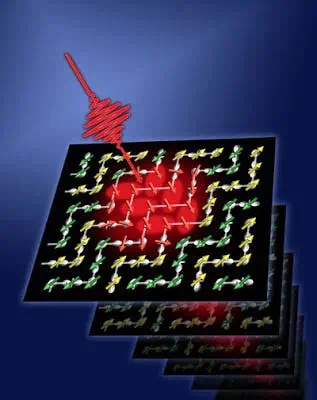
Driven by technological demand to breach the gigahertz (10^9 hertz) switching speed limit of today’s magnetic memory and logic devices, a team of researchers have devised a novel technique of switching magnetism that is at least 1000 times faster than that currently employed opening up the terahertz age (10^12 hertz). Hard drives, magnetic random access memory (RAM) and other computing [...]

Real-life, working Tricorder developed by Trekkie-scientist and made open source available

Sat, Apr 14, 2012

0 Comments

Sometime at the beginning of the year I mentioned in post that once stepping into the age of Terahertz electromagnetic waves (T-rays), which can penetrate any molecule and and then interpret it for identification, we will come to know a slew of new, grand applications, from surveillance , to medical, but possibly the most interesting [...]

Star Trek’s tricorder – SciFi to reality after T-ray breakthrough

Thu, Jan 26, 2012

0 Comments

In the popular TV series, Star Trek, one of the most fascinating devices featured, out of the whole myriad of blasters and tractor beams, is the tricorder,  a portable medical scanner and communication device which could detect biological phenomena such as increased blood flow around tumorous growths just by sweeping a person. The closest thing [...]

Subscribe for FREE!

Popular This Week

Drop us a line!

Tip us on news, scientific reports and studies, scientific advances, science art, interesting phenomena or any kind of science related material. Just write to andrei@zmescience.com.