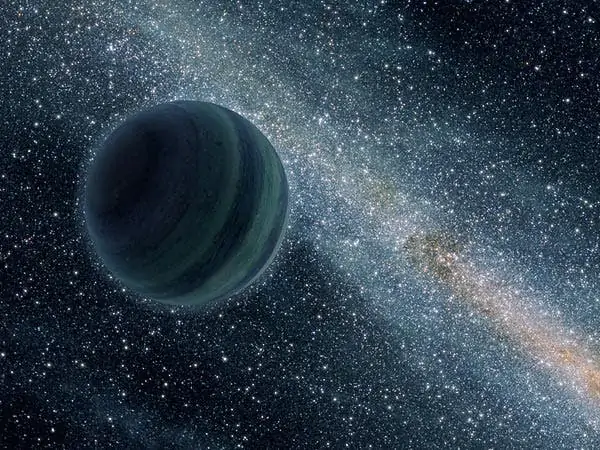
rogue planet

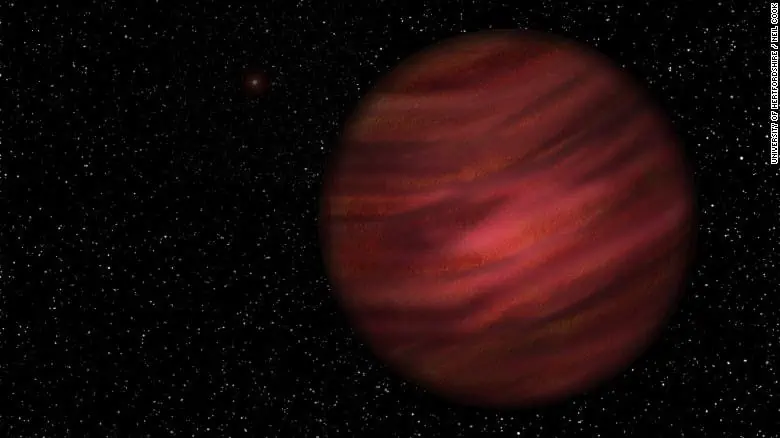
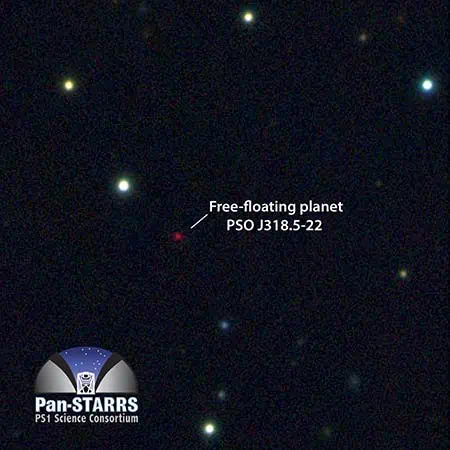
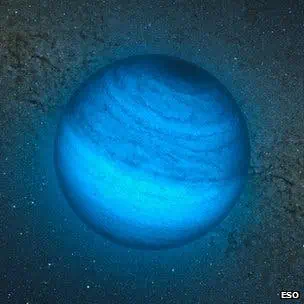
A rogue planet — also known as an interstellar planet, nomad planet, free-floating planet or orphan planet — is a planetary-mass object which has either been ejected from its system or was never gravitationally bound to any star, brown dwarf or other such object, and that therefore orbits the galaxy directly.[1][2][3] Astronomers agree that either way, the definition of planet should depend on its current observable state and not its origin.

For more information about rogue planet check the Wikipedia article here

ZME Science posts about rogue planet

“Eye of Sauron” star hosts rogue planet

Wed, Jan 9, 2013

0 Comments

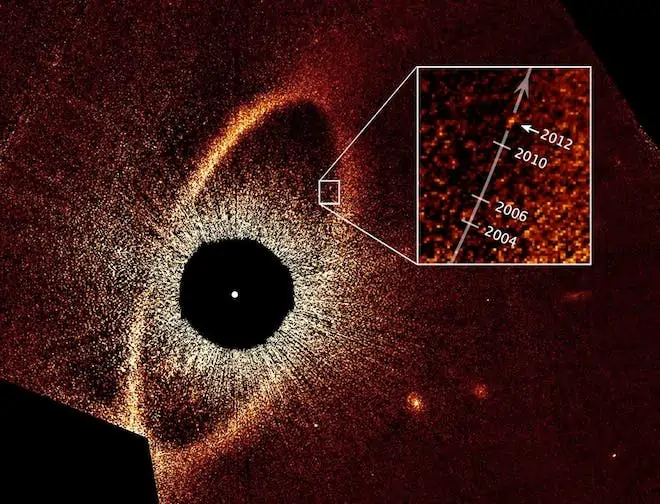
Back in 2008, Hubble released a stunning image of a very bright star called Fomalhaut which spanned a huge disk of matter around it. The whole picture bared an uncanny resemblance to the eye of Sauron from the Lord of the Rings movies. Also at the time, scientists caught the glimpse of a tiny speck of light [...]

Closest rogue planet discovered is just 100 light-years away

Thu, Nov 15, 2012

0 Comments

Like in a scene from a Sci-fi novel, about 100 light years away, somewhere in the constellation Doradus, a planet is travelling around the galaxy by itself, without orbiting a parent star. This “rogue planet“, has a temperature of about 400C and a mass between 4 to 7 times that of Jupiter – close to [...]

Stars capture and swap with one another nomad planets

Wed, Apr 18, 2012

0 Comments

Some time ago we told you about one of the most fascinating facts this blog has ever published, namely how there are “nomad” or “rogue” planets outside our solar system, which travel aimlessly through interstellar space without having to circle a certain star. It’s estimated that there are actually more such nomad planets haunting through [...]

Nomad planets may litter Milky Way

Sun, Feb 26, 2012

0 Comments

According to a recent study published by researchers from the Kavli Institute for Particle Astrophysics and Cosmology (KIPAC), our galaxy may be ‘infested’ with nomad planets, which wander aimlessly instead of orbiting a star. Furthermore, the study concluded there may actually be 100,000 times more “nomad planets” in the Milky Way than stars. If this [...]

Subscribe for FREE!

Popular This Week

Drop us a line!

Tip us on news, scientific reports and studies, scientific advances, science art, interesting phenomena or any kind of science related material. Just write to andrei@zmescience.com.