

Astronomers discover intriguing exoplanet with possible water vapor atmosphere
The James Webb comes through again.
The James Webb comes through again.

Astronomers have captured stellar winds emitted by aging stars in unprecedented detail.

Observations suggest that the exoplanet and its parent star are strikingly similar to Earth and the Sun.

The exoplanet orbits a star in the habitable zone and may be covered in oceans.

It's a small chance, but having a small chance of something wiping out all of life on a planet still ...
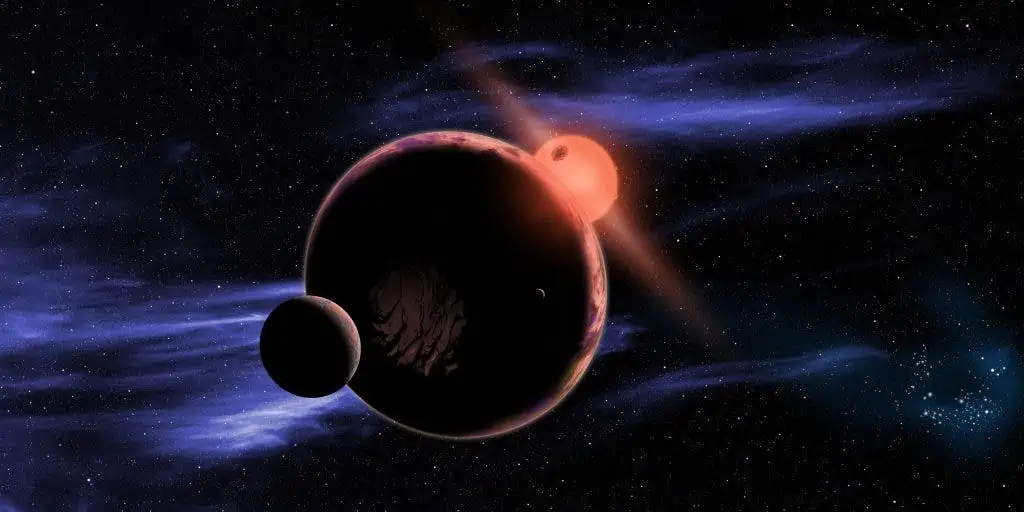
We might be too early for the party. Darn!

Exoplanet GJ581d is the first potentially habitable world astronomers have discovered, but some astronomers believed that the planet wasn't actually ...

Too close for comfort - a team of astronomers from the US, Europe, Chile and South Africa concluded that a ...

Astronomers hunting for habitable Earth-like planets now believe that the best place to look is not around stars like our ...

A new study has concluded that virtually all red dwarfs, the stars which make up at least three quarters out ...

ESA’s XMM-Newton space telescope has found a star and a black hole that orbit each other at the whopping rate ...
After researchers surveyed data from the Kepler mission tasked with identifying possibly habitable planets outside our solar system they found ...
One of the most outstanding dreams astronomers and other scientists hope to accomplish is to someday encounter proof that extraterestrial ...
A supernova is a stellar explosion of cosmic proportions, that often can outshine the entire galaxy it is located in, ...