Nanotechnology (sometimes shortened to "nanotech") is the manipulation of matter on an atomic and molecular scale. The earliest, widespread description of nanotechnology[1][2] referred to the particular technological goal of precisely manipulating atoms and molecules for fabrication of macroscale products, also now referred to as molecular nanotechnology. A more generalized description of nanotechnology was subsequently established by the National Nanotechnology Initiative, which defines nanotechnology as the manipulation of matter with at least one dimension sized from 1 to 100 nanometers. This definition reflects the fact that quantum mechanical effects are important at this quantum-realm scale, and so the definition shifted from a particular technological goal to a research category inclusive of all types of research and technologies that deal with the special properties of matter that occur below the given size threshold. It is therefore common to see the plural form "nanotechnologies" as well as "nanoscale technologies" to refer to the broad range of research and applications whose common trait is size. Because of the variety of potential applications (including industrial and military), governments have invested billions of dollars in nanotechnology research. Through its National Nanotechnology Initiative, the USA has invested 3.7 billion dollars. The European Union has invested 1.2 billion and Japan 750 million dollars.[3]
Finding ways to diagnose cancer earlier could potentially save millions of lives, improving the chances of survival for many patients. This is why researchers have developed nanoparticles which amplify tumor signals, making them much easier to detect. Nanotech to the rescue The new technology was developed by researchers from MIT and it makes biomarker detection [...]
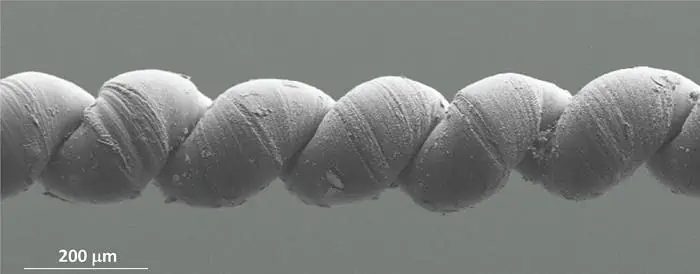
Scientists at University of Texas Dallas have made artificial muscles capable of supporting 100,000 times their own weight and generate 85 times more mechanical power than natural muscle of the same size. Applications for this kind of technology are quite numerous, ranging from extremely strong and intelligent textiles to high-temperature applications since the fabric has [...]
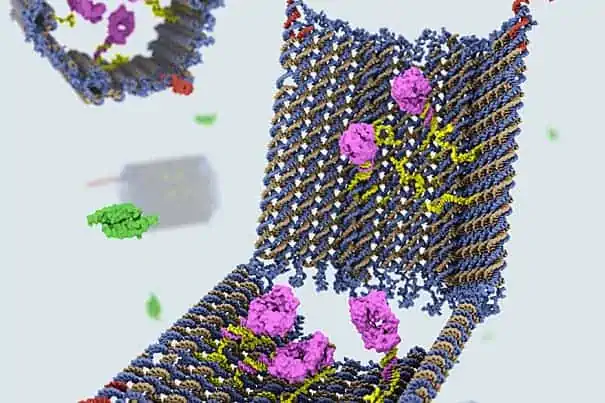
In what can only be hailed as a breakthrough in the “smart drugs” field, scientists at Harvard University have successfully managed to create nanorobots made out of strands of DNA, folded together by the DNA origami method. These act like drug-carrying recipients, which specifically target various types of cells and deliver complex molecular instructions – [...]
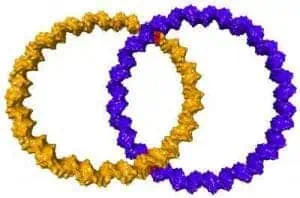
DNA nanotechnology is one of the most exciting branches of nanotechnologies, especially because it uses the ability of natural DNA strains to self assembly. Prof. Alexander Heckel and his doctoral student Thorsten Schmidt of Goethe University set out with exactly that thought in mind when they created two DNA rings with the size of only [...]
Batteries ? Ha, no way, batteries are so last century. Nanogenerators, that’s the future. At least that’s what Apple believes. Nanogenerators powered by nothing more than your heartbeat could replace the classic battery in no more than five years, according to researchers working on the matter. In a world ruled by 4G smartphones, touchscreens, portable [...]
Hello! I’ve been running ZME Science for more than 2 years now, and the support you’ve shown has been increasingly amazing! However, much to my shame, I’ve rarely thanked you like you deserve it. I rarely have time to write as much as I want, I make grammar mistakes (non English speaker, btw), and I [...]
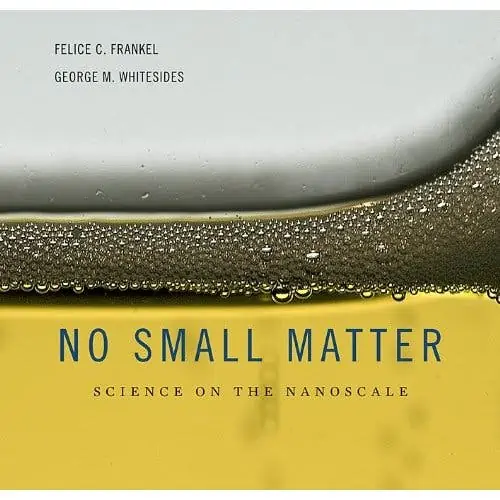
Nanotechnology is perhaps the field with the most spectacular development over the past years, but it can be really hard to understand what’s going on at that scale, mostly because we can’t see it (doh!), but also because the laws that apply there are slightly different. No small matter: Science on the nanoscale is the [...]
Researchers at at the U.S. Department of Energy’s Brookhaven National Laboratory have achieved something that many people call the Holy Grail of Nanoscience; this in fact reffers to the fact that they have used for the first time DNA to guide the creation of three-dimensional, ordered, crystalline structures of nanoparticles (particles with dimensions measured in [...]
Nanotech could be applied in just about everything. With time scientists find out ways to apply it to various fields; building small, efficient electronics could be very useful in further use of nanotechnology. A University of Arkansas physicist and her colleagues have examined the response of the nanostructures polarization to electric fields which is known [...]
Mon, Dec 17, 2012
0 Comments