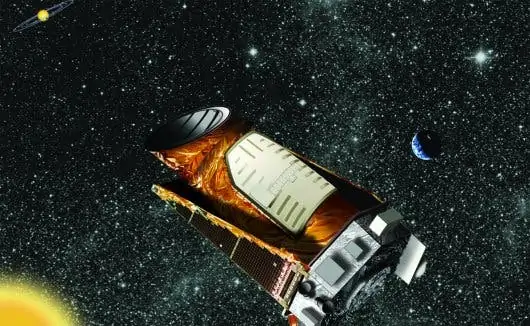
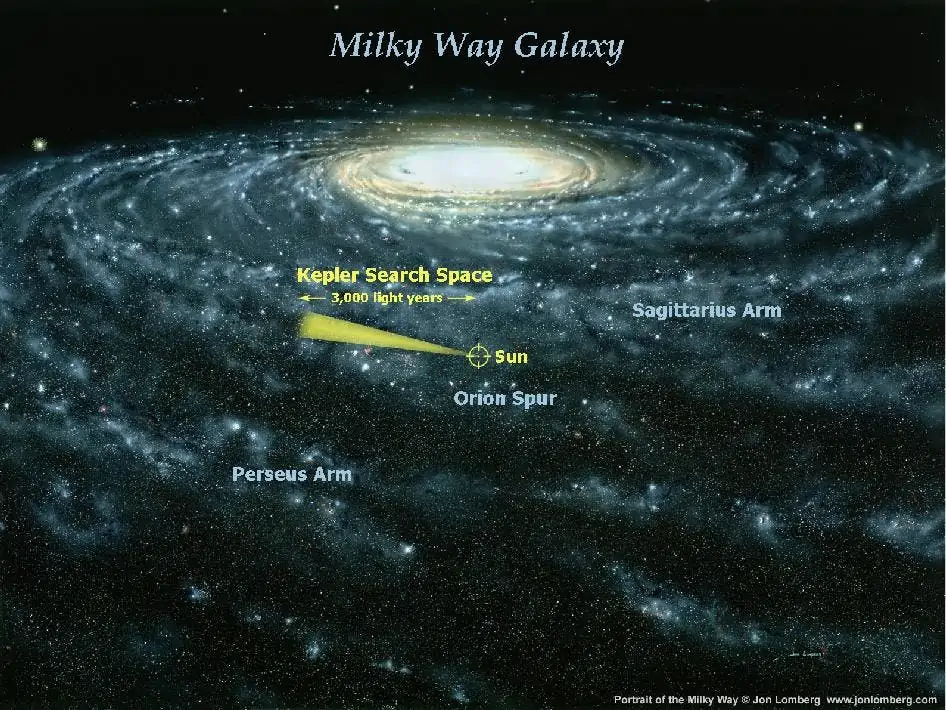
Kepler telescope

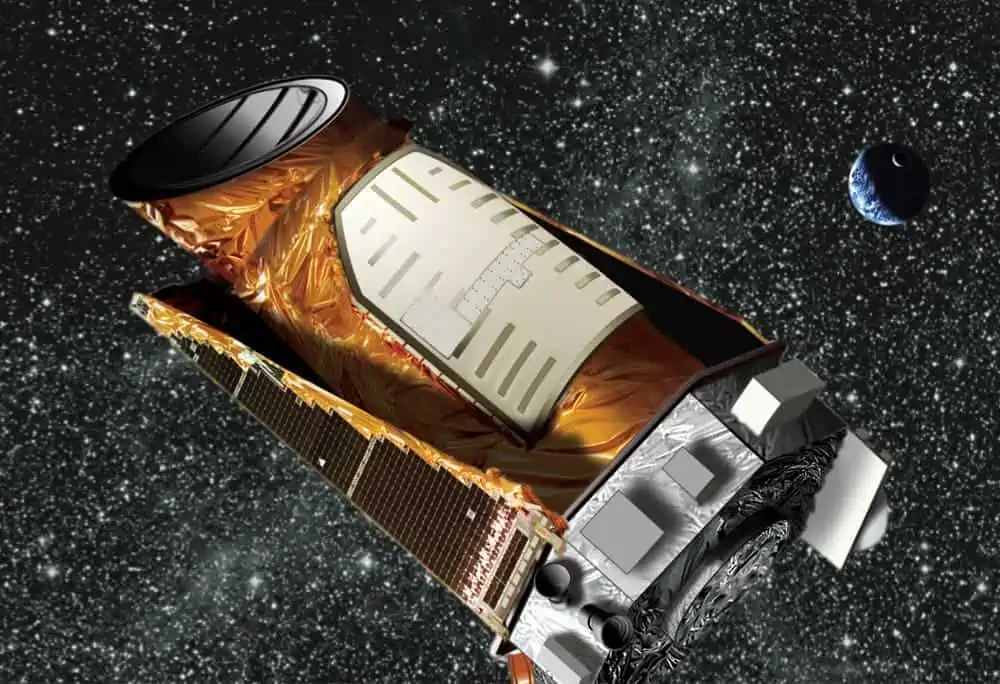
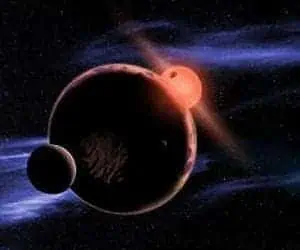
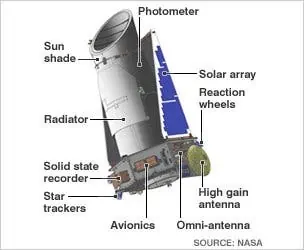
Kepler is a space observatory launched by NASA to discover Earth-like planets orbiting other stars.[4] The spacecraft, named for the Renaissance astronomer Johannes Kepler,[5] was launched on 7 March 2009.[6]

For more information about Kepler telescope check the Wikipedia article here

ZME Science posts about Kepler telescope

Most promising Earth-like planets found by Kepler

Fri, Apr 19, 2013

0 Comments

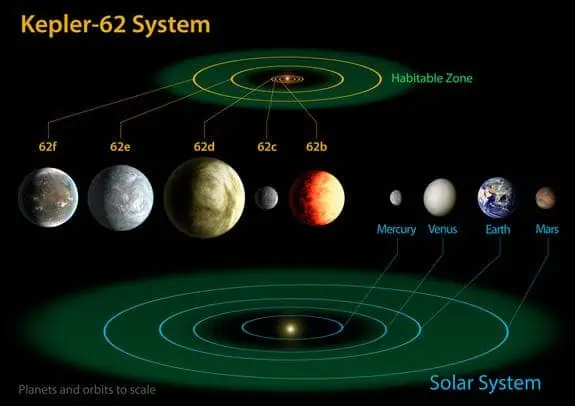
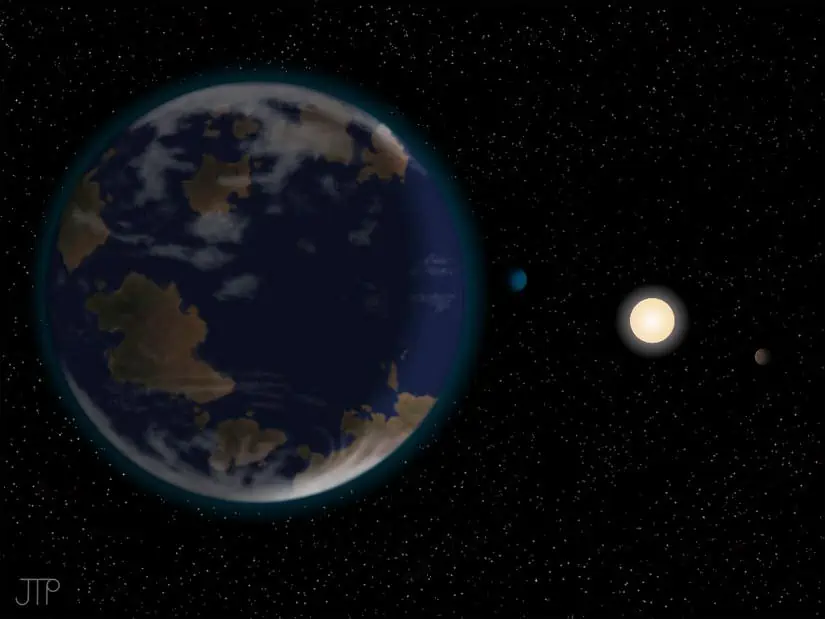
The ever resourceful Kepler mission has recently unveiled several new possible Earth-like planet candidates, two of whom are favored by scientists with the best odds yet of supporting alien life. The pair actually orbits around the same star, called Kepler 62, after NASA’s Kepler spacecraft, which is smaller and dimmer than our own star. Kepler 62 [...]

Earth-like planets closer than previously thought. Nearest one might lie 13 light-years away

Mon, Feb 11, 2013

0 Comments

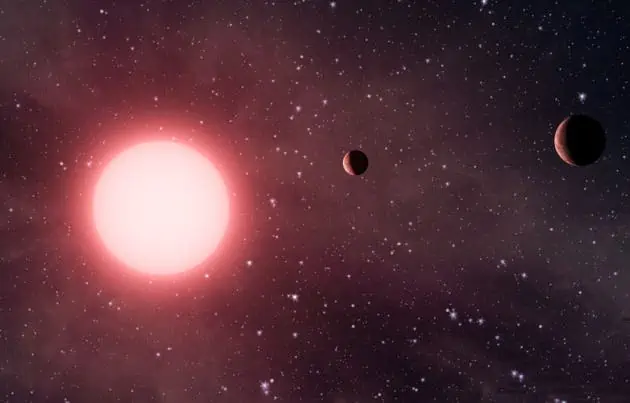
After researchers surveyed data from the Kepler mission tasked with identifying possibly habitable planets outside our solar system they found that 6% of red dwarfs – the most common type of planets – are within this zone. This new adjustment would mean that the nearest Earth-like planet might lie just 13 light years away. Astronomers [...]

Kepler telescope – Earth size planets number ’17 billion’

Tue, Jan 8, 2013

1 Comment

Astronomers working on the Kepler telescope believe that every 1 in 6 stars hosts at least an Earth-sized planet in a close orbit, raising the number of such planets in our galaxy to 17 billion. Finding planets Astrophysicists also announced 461 new planet candidates discovered by the telescope; this raises the number of planets discovered [...]

New super-Earth exoplanet is a mere 46 light-years away

Thu, Nov 8, 2012

0 Comments

Astronomers have used a novel planet hunter instrument to detect a new possible life supporting, Earth-like exoplanet. In fact the new planet is classed as a super-Earth, since it has a minimum mass of 7.1 times that of our planet, and is properly located on its parent star’s orbit to support the presence of liquid [...]

New ESA planet-hunter space telescope slated for 2017

Tue, Oct 23, 2012

0 Comments

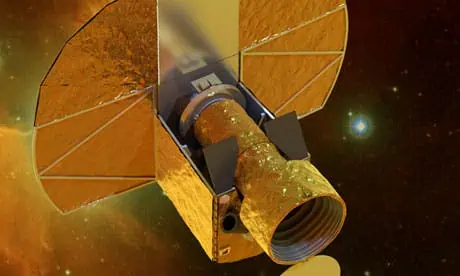
The European Space Agency has officially announced that it will launch a new space telescope tasked with the primary objective of finding Earth-like planets in our neighboring cosmic backyard. Though the mission’s budget is rather small, there’s nothing modest about its goals. Dubbed CHEOPS or CHaracterising ExOPlanets Satellite, at the end of its 3.5 year-long scheduled mission the [...]

Newly discovered solar system is very similar to our own

Thu, Jul 26, 2012

0 Comments

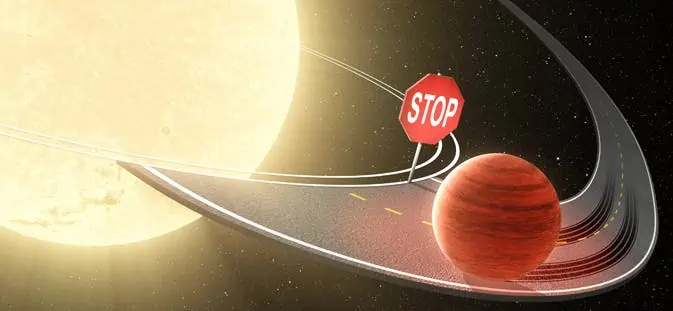
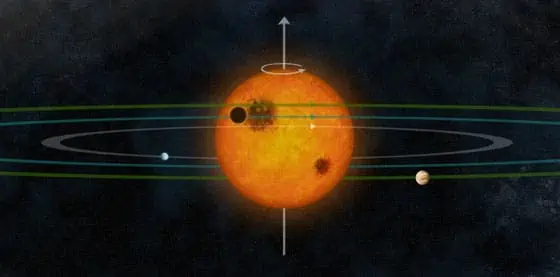
Researchers at MIT, the University of California at Santa Cruz and other institutions have come across the first exoplanetary system, whose planets exhibit a regularly aligned orbit, after analyzing data from NASA’s Kepler space telescope. So far, other discovered exoplanetary systems had planets, particularly hot-Jupiters, which presented  far more eccentric orbits. Our solar system is comprised of eight [...]

Two newly discovered alien planets form closest known pair in the Universe

Fri, Jun 22, 2012

0 Comments

Kepler, a space telescope on a mission to find alien planets by measuring dips in the brightness of more than 150,000 stars, has come across a fantastic discovery. Two planets orbiting a distant star, which are closer to one another than any other two planets discovered thus far. Apparently, from the surface of the smaller planet, [...]

Superflares 10,000 times more powerful than those in our solar system, observed on sun-like stars

Thu, May 17, 2012

0 Comments

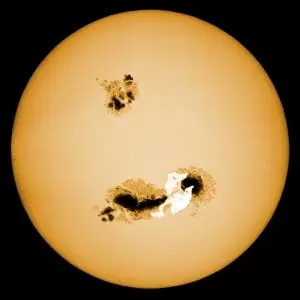
Some stars, most often during their early life, exhibit an intense and energetic behavior, much greater than that of our own sun, despite a similar size, per say. In the first survey of its kind, scientists at Kyoto University have analyzed sun flares erupting on the surface of distant stars through out our galaxy. They found [...]

Turns out, another solar system has more planets than ours

Mon, Apr 9, 2012

1 Comment

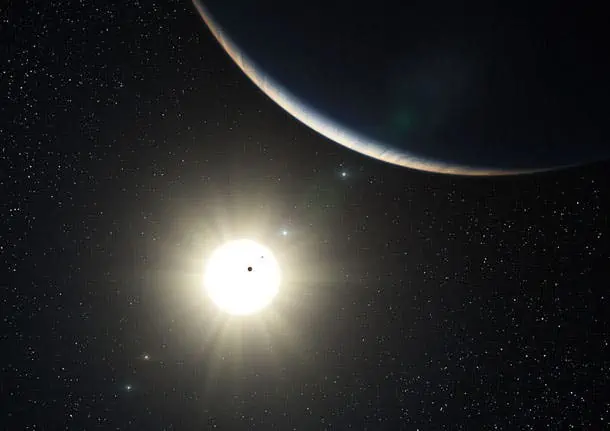
Our solar system is special for two reasons: the first one, obviously – is us. Our solar system is the only one we know of so far that hosts life. The second one is the number of planets – no other solar system that we’ve seen until now had as many planets as ours, but [...]

SETI to check recently discovered Kepler science

Thu, Dec 8, 2011

0 Comments

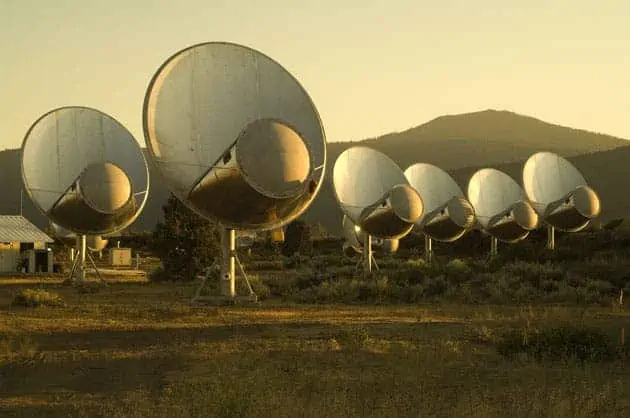
There’s been a lot of buzz around the planets discovered by the Kepler telescope, particularly about Kepler-22b – the planet which, outside Earth, has the biggest chances to host life (that we know of). Now, SETI will tune in and start listening to see if there are any aliens with something to say on those [...]

Newest found planet is just the right temperature for life

Mon, Dec 5, 2011

4 Comments

The race for finding habitable planets outside our solar system is definitely heating up. After we told you about Gliese, a planet which seems habitable enough, researchers have reported finding yet another planet, which is not too hot and not too cold either – Kepler-22b is just the right temperature for life as we know [...]

Kepler star trio is a mystery to astroseismologists

Sun, Apr 10, 2011

0 Comments

It’s not that uncommon for two stars to dance, but when three of them get together, and dance without singing, now that’s something uncommon. What do I mean ? Well, binary star systems are not really only in Star Wars, they’re quite common throughout the galaxy, but as it turns out, trinary systems might not [...]

The Kepler mission: searching for planets in the Goldilocks area

Tue, Feb 1, 2011

0 Comments

The Goldilocks area is one of the most interesting for astronomers throughout the known Universe, as it has great hope for finding planets similar to our Earth. The Kepler 10b planet is not the most hospitable one you could think of: located some 560 million light years away from our planet, and with a surface [...]

140 Earth-like planets discovered in the Milky Way by Kepler

Tue, Jul 27, 2010

3 Comments

Last week at the latest TEDGlobal conference in Oxford, astronomer Dimitar Sassilov, professor of astronomy at Harvard University and a distinguished member of the Kepler space telescope science team, unveiled some incredible results gathered by our eyes and ears in the galaxy. Kepler’s most recent reported downloaded conferred some incredible statistics, among which most importantly the discovery of: [...]

Subscribe for FREE!

Popular This Week

Drop us a line!

Tip us on news, scientific reports and studies, scientific advances, science art, interesting phenomena or any kind of science related material. Just write to andrei@zmescience.com.