galaxy
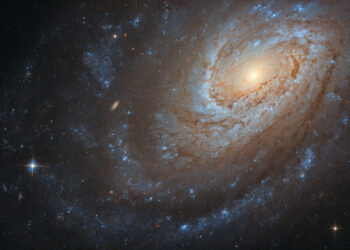
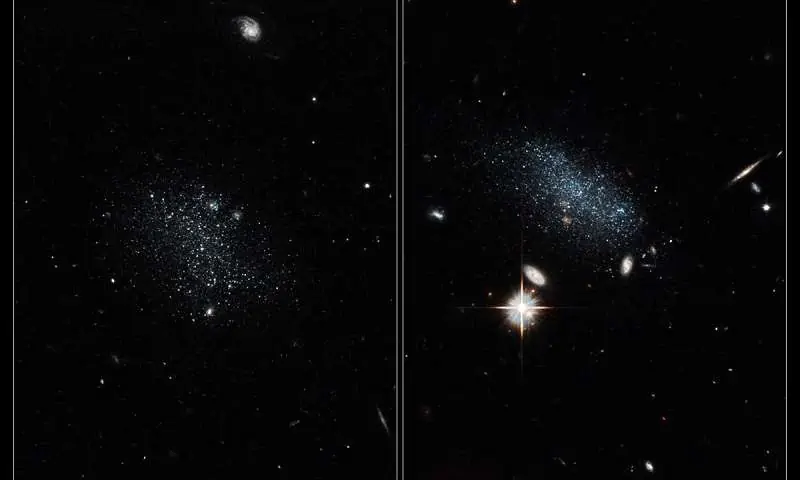
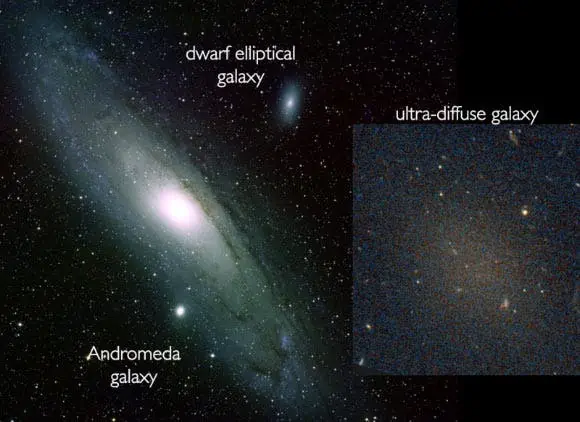
A galaxy is a massive, gravitationally bound system consisting of stars, stellar remnants, an interstellar medium of gas and dust, and, dark matter, an important but poorly understood component.[1][2] The word galaxy is derived from the Greek galaxias (γαλαξίαÏ), literally "milky", a reference to the Milky Way. Examples of galaxies range from dwarfs with as few as ten million (107) stars[3] to giants with a hundred trillion (1014) stars,[4] each orbiting their galaxy's own center of mass.
For more information about galaxy check the Wikipedia article here
ZME Science posts about galaxy
This is the first post in a series about types of galaxies; today, we’ll be finding out more about Seyfert galaxies. This galactic type has been described for the first time by Carl K. Seyfert in 1943, who noted that their central regions have peculiar spectra with notable emission lines. Basically, what makes them special [...]
I was always puzzled by the tentacle-like spiral arms some galaxies (including our own) develop; it just seems so counter intuitive and senseless, that most researchers agreed they are only transient features, which come and go in galactic history. But astronomers working at University of Wisconsin-Madison and the Harvard-Smithsonian Center for Astrophysics claim that these [...]
Researchers have, for the first time, calculated the distance to the Large Magellanic Cloud, a galaxy neighboring the Milky Way. Care to take a guess? According to these calculations, it’s just 163.000 light-years away. For measurements inside our solar system, researchers use a technique called parallax. Parallax is a displacement or difference in the apparent [...]
Astronomers working on the Kepler telescope believe that every 1 in 6 stars hosts at least an Earth-sized planet in a close orbit, raising the number of such planets in our galaxy to 17 billion. Finding planets Astrophysicists also announced 461 new planet candidates discovered by the telescope; this raises the number of planets discovered [...]
A long time ago, in a galaxy far, far away… at about 2 billion light years away from Earth lies radio-galaxy Hercules A, also known as 3C 348. At a first glance it looks just like another massive galaxy out there – at least when looking in the visible spectrum. In the radio wavelengths however, [...]
Using the evergreen Hubble telescope, astronomers from NASA have been able to uncover a previously unseen population of ancient galaxies, observed as they appeared only 350 million to 600 million years after the big bang, when the Universe was still in its infancy. The galaxies are located in a patch of the sky called the [...]
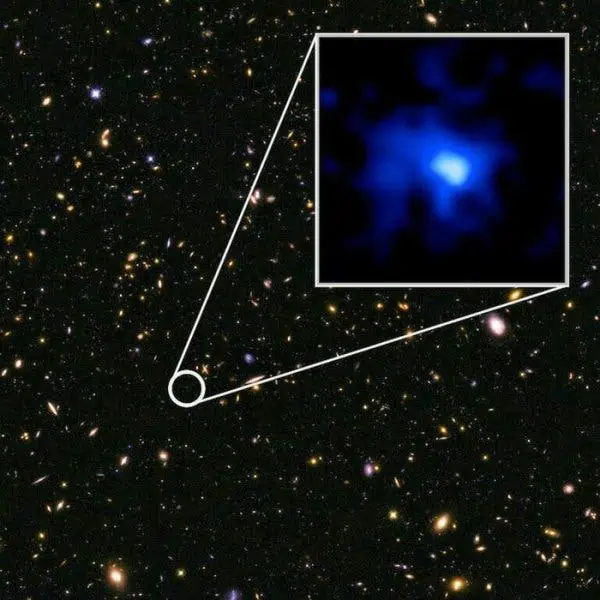
NASA scientists have announced they have discovered the farthest object discovered so far in the Universe, a 13.3 billion old galaxy or a mere 420 million years after the Big Bang. That’s not to say that its 13.3 billion light years away from Earth, since the Universe has expanded greatly since then and the actual [...]
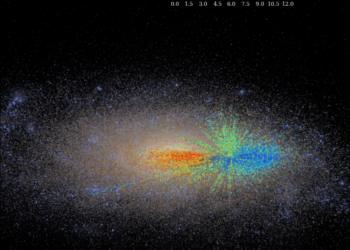
Galaxies like our Milky Way and Andromeda are still evolving in the present Universe, despite reaching a relative equilibrium billions of years ago. In order to illustrate how galaxies were formed and evolved since the Big Bang, NASA created this fantastic simulation – you really should watch it.
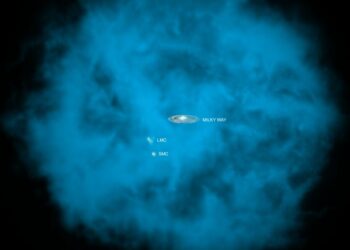
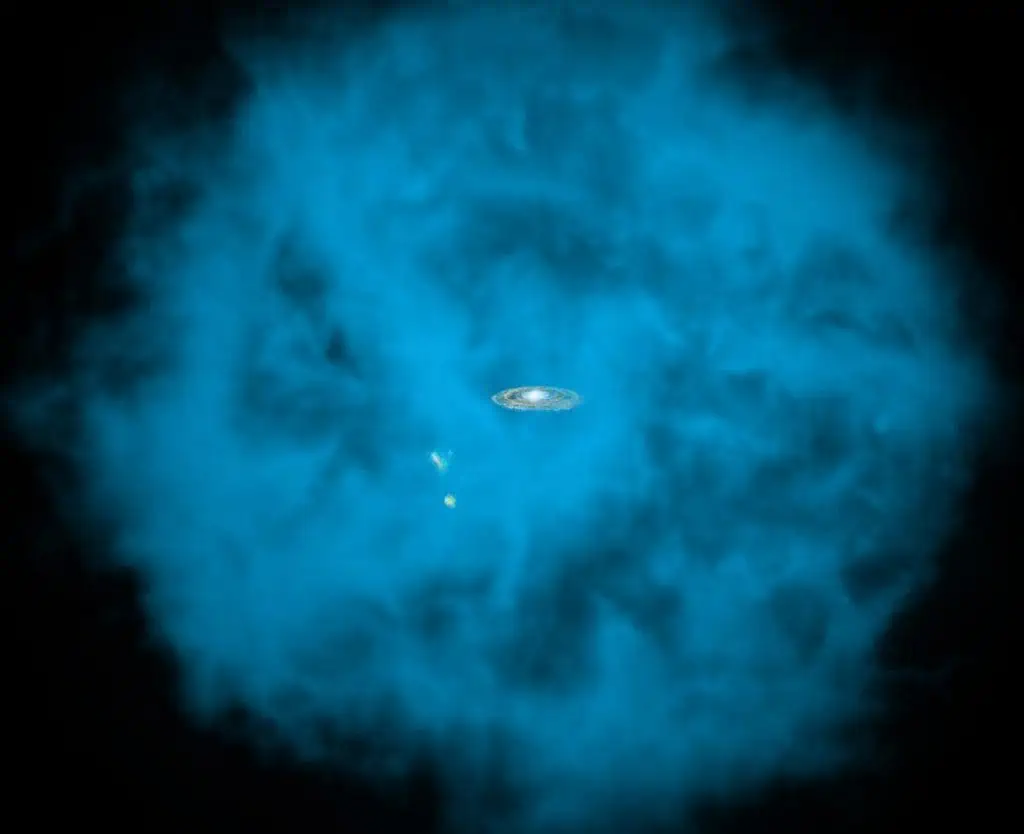
Recent measurements conducted by NASA’s Chandra X-ray Observatory, and observed by other X-ray instruments from around world and in space, suggest that our galaxy is surrounded by hot spherical gas formation that stretches across 300,000 light years and has an equivalent mass of some 60 billion suns or roughly all the stars in the Milky Way. If [...]
An international team of astronomers may have come across the first sound evidence testifying the existence of dark galaxies – cosmic bodies from the early Universe long theorized by scientists in the past, but never before confirmed until now. Dark galaxies are small, gas-rich galaxies that are very inefficient at forming stars themselves. Their name comes [...]
Quasars are some of the brightest objects in the Universe. Their formed after black holes devour captured material, like gas dust and stars that come too close, and release bright light that can be seen across the universe. Most of the popular astronomy today is orientated towards the particularly extremely bright quasars; those formed in a singular [...]
Using the Subaru and Keck optical/infrared telescopes on Hawaii’s Mauna Kea, a 4,200 metre-high summit which houses the world’s largest observatory for optical, infrared and submillimeter astronomy, a team of Japanese astronomers claim in a recently published paper that they’ve discovered the earliest galaxy found thus far in the known Universe – it is 12.91 billion years [...]
Astronomers classify galaxies into three basic types: elliptical (flat, elongated shape), spiral (most easily recognizable and common – described by their disk shape and outward spiraling arms) and irregular (usually described by a irregular shape, typical to very young galaxies). One of the most fascinating galaxies known to man is the Sombrero galaxy, shaped like a hat [...]
Located some 62 million-light years away, the Dorado constellation is home to a galaxy cluster, called the Dorado Group, comprised of around 70 galaxies. A pretty massive figure by all accounts, considering the Local Group, which also include the Milky Way, contains a mere 30 galaxies under its belt. Recently, Hubble captured a splendid photo [...]
Some black holes are just meant to survive, regardless of what they go through. This is probably the case with the HLX-1 black hole, 20.000 times more massive than the Sun, which is practically floating on the outskirts of a galaxy. The problem with this supermassive black hole is that judging by its size, should [...]
An array formed by the greatest space telescopes in the world first discover, then photograph this ancient galaxy from the Universe’s dawn – the brightest such galaxy ever discovered by astronomers at such a distance. How far away you ask? Around 12,9 billion light years away, considering the Universe is estimated at 13.7 billion years [...]
The Hubble telescope has captured through an innovative technique, which harnessed light bent from a distant galaxy in a optical lens-like manner, a direct image of a disk of matter surrounding a black hole. The disk, made out of gas and dust, slowly swirls around a giant black hole’s center gradually getting consumed. Powered by [...]
A new radio telescope array built in the world’s highest and driest desert in the world has just photographed two colliding galaxies for its first public test shots. The Atacama Large Millimeter/submillimeter Array, a joint project between Canada, Chile, the European Union, Japan, Taiwan and the United States was officially opened for business after a [...]
Astronomers have discovered the largest body of water so far known, a reservoir of water floating in space around a ancient distant quasar, holding 140 trillion times the mass of water in the Earth’s oceans. Remarkably enough, the find was dated as being 12 billion light years away, only 1.6 billion light years farther from [...]
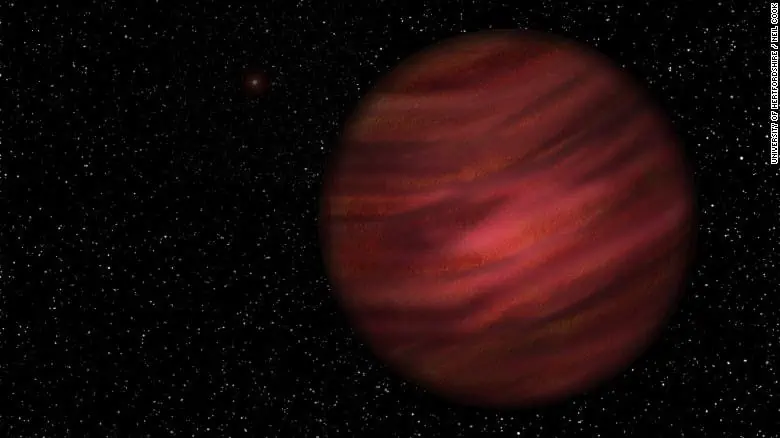
Finding new planets is interesting an remarkable, but finding a whole new class of planets – that’s definitely something extraordinary. University of Notre Dame astronomer David Bennett described just that – a class of planets without stars or a solar system, just wandering around the galaxy all by themselves. The most likely theory is that [...]
If you think that the recent outbreak of tornadoes are bad, boy are you in for a shocker. An international team of researchers from the Max Planck Institute for Extraterrestrial Physics has found that enormous storms of molecular gas are sweeping entire galaxies, destroying everything they come across until they wipe the galaxy clean. Galactic [...]
No comment (click the pic to make it big).
Once again NASA‘s amazing “astronomy picture of the day” feature provides us with pure gold. The above captioned stunning photo (click on it and you’ll understand it’s splendor) was shot by astrophotographer Juan Carlos Casado during a clear night sky – the fully 360 across panorama was imaged by superimposing 9 separate photographs. This how [...]
Our solar system appears to exist inside a “bubble”, inside a network of cavities inside the interstellar medium, which was probably created by massive star explosions millions billions of years ago. Interstellar medium (ISM) is a term coined for the matter that exists in galaxies, between solar systems. This matter includes gas in ionic, atomic, [...]
Yes, you’ve read that right. There are over 50 billion planets in our galaxy alone, according to the Kepler telescope, scientists now estimate that not only there are over 500 bilion planets in the galaxy, but that there are over 500 million life-cable planets out there as well. These numbers obviously come from Nasa’s own [...]
A new study suggests that a blunder of cosmic proportions has been made when estimating the total number of stars in the universe; the research points out that a specific kind of galaxy has 10 times more red dwarf stars than previously estimated. This would not only triple the number of stars throughout the universe, [...]
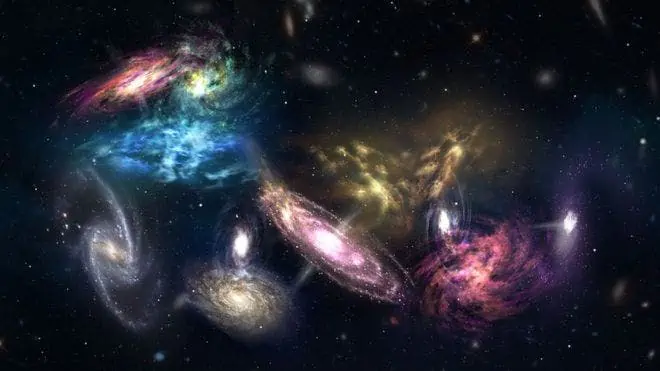
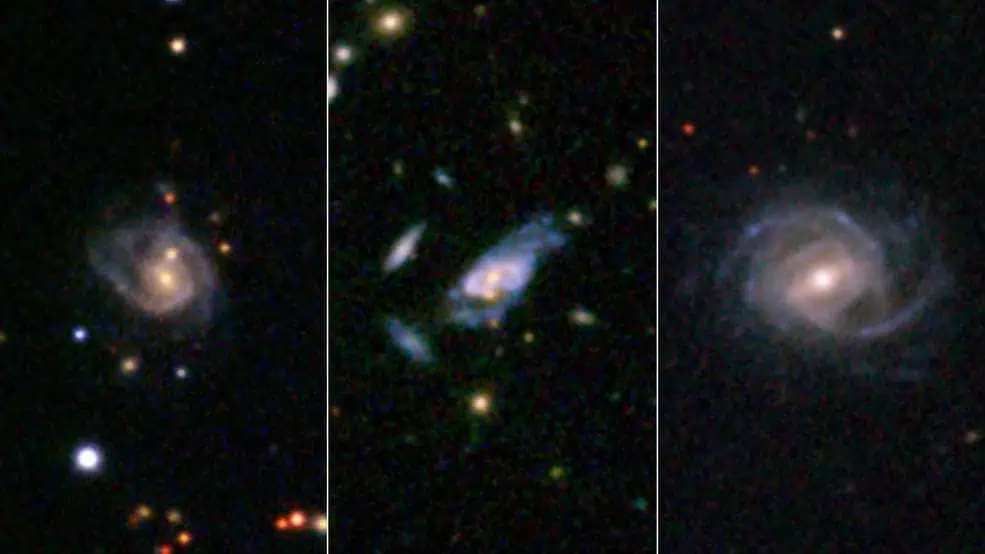
When early galaxies formed, there was a surprisingly high rate of new stars being formed, which was explained by major galactic collisions; however, recent evidence suggests that in fact the answer is much simpler, and not nearly as violent. Astronomers using the European Southern Observatory’s Very Large Telescope in Chile have observed three ancient galaxies [...]
In case you don’t know, APOD is short for Astronomy Picture Of the Day. It’s home of some awesome astronomy pictures. Anyway, recently I came across this software that takes the latest APOD picture and sets is at your background, so you can see these great images each day, without lifting a finger. It also [...]
Just in case you haven’t checked it out, the Hubble site has a very impressive collection of pictures that I warmly recommend you check out. I’ve selected just a few to convince you just how crazy amazing they are: All the pictures are property of the Hubble site
I gotta say, this is one of the most beautiful pictures I’ve seen all year ! This amazing image released by NASA shows a collision betweet two galaxies that began 100 million years ago (when dinosaurs were still kings) and is still happening today. The bright sources you see are in fact produced by huge [...]
This time I’m just going to present you with a little site I stumbled across that allows you to take a look at our galaxy, the Milky Way, in different wavelengths. Great stuff. Here is the link.
The first touchable scientific results of the Herschel infrared space observatory are spectacular indeed; not only is it showing previously hidden details of star formation, but it also shows thousands of distant galaxies “building” stars with incredible energy and covering the Milky Way in wonderfully coloured star clouds. Not only are the images spectacular by [...]
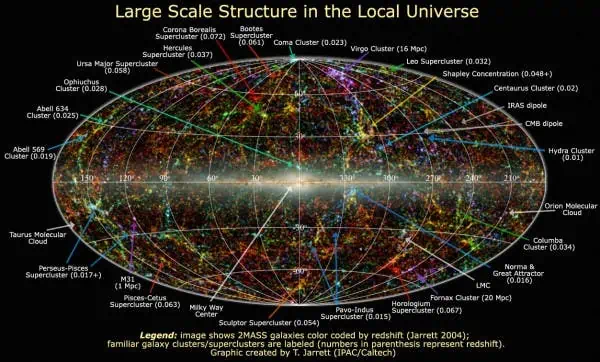
Two years ago, researchers reported the strange movement of hundreds of galaxy clusters moving in the same direction at about 3.6 million kilometers per hour. Current spatial movement models can’t explain this in any way, so at the time, they launched a strange hypothesis: clusters are being tugged by the gravity of something outside our [...]
In case you’re wondering, the biggest ‘guitar’ in our galaxy is in fact a pulsar that was nicknamed The Guitar Pulsar. It’s basically a stellar corpse that emits a beam of electromagnetic radiation that just shreds interstellar gas, creating a wake of hot hydrogen shaped just like a guitar. Little is known about these remnants, [...]
This is a wicked one for sure! Basically, nobody really knows what’s going on there, except for the fact that it probably involves a supermassive black hole. The whole picture seems to be rather a Dali painting of an eye, as the red-in-infrared spiral wraps around the smaller blue companion galaxy. The pink lighting you [...]
Well ladies and gentlemen, you’d better fasten your seat belts, because we’re in for quite a spin. The Milky Way is spinning a bit faster than scientists believed; with about 100.000 miles / hour that is. What does that mean, basically?? Well, we’re faster, heavier, and there’s a bigger chance that we’ll collide with… something. [...]
The supermassive black holes located at the center of galaxies are similar in many ways to hearts, pumping out energy in the similar way our organ pumps blood. They do this at regular intervals of time, to regulate the growth of the black holes themselves, as well as to contribute to the formation of new [...]
Two of the biggest and most impressive stars from our galaxy have been “surprised” in some really amazing poses by the the NASA/ESA Hubble telescope. Until now, a cloud of mystery surrounded them, but these pictures in greater detail than ever before. The pair of colossal stars (named WR 25 and Tr16-244, located within the [...]
According to Murphy’s laws, all great discoveries happen by mistake. This is not the case here, but scientists had the opportunity to observe something they weren’t expecting at all. Astronomers at the University of California-Santa Cruz had the fortune of witnessing the birth of a young galaxy. They were the first to observe the onset [...]
Let’s start with the beginning, shall we ? A black hole is a region of space in which the gravitational field is so powerful that nothing, not even light, can escape its pull after having fallen past its event horizon. That means that electromagnetic radiation (e.g. visible light) is unable to break away from the [...]
Recently, a team of researchers (with the help of the National Science Foundation’s (NSF) Very Long Baseline Array (VLBA) and a host of international telescope partners) have managed to get the clearest observation yet of the “core” of a black hole. A black hole is a region of space in which the gravitational field [...]
A black hole is a weird and fascinating thing. There are few things we know about them. Astronomers are studying them round the clock and they job is made easier by the fact that they have unmasked hundreds of black holes hiding deep inside dusty galaxies billions of light-years away.They are massive and growing and [...]
Thu, Apr 4, 2013
0 Comments