electroencephalogram

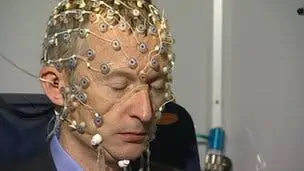
Electroencephalography (EEG) is the recording of electrical activity along the scalp. EEG measures voltage fluctuations resulting from ionic current flows within the neurons of the brain.[1] In clinical contexts, EEG refers to the recording of the brain's spontaneous electrical activity over a short period of time, usually 20–40 minutes, as recorded from multiple electrodes placed on the scalp. Diagnostic applications generally focus on the spectral content of EEG, that is, the type of neural oscillations that can be observed in EEG signals. In neurology, the main diagnostic application of EEG is in the case of epilepsy, as epileptic activity can create clear abnormalities on a standard EEG study.[2] A secondary clinical use of EEG is in the diagnosis of coma, encephalopathies, and brain death. A third clinical use of EEG is for studies of sleep and sleep disorders where recordings are typically done for one full night, sometimes more. EEG used to be a first-line method for the diagnosis of tumors, stroke and other focal brain disorders,[3] but this use has decreased with the advent of anatomical imaging techniques with high (<1 mm) spatial resolution such as MRI and CT. Despite limited spatial resolution, EEG continues to be a valuable tool for research and diagnosis, especially when millisecond-range temporal resolution (not possible with CT or MRI) is required.

For more information about electroencephalogram check the Wikipedia article here

ZME Science posts about electroencephalogram

Your brain detects grammar errors even when you’re not aware of them

Tue, May 14, 2013

0 Comments

A rather debatable theory in psychology says  the brain detects grammar errors even when we don’t consciously pay attention to them, sort of working on autopilot. Now, researchers at University of Oregon have come with  tangible evidence pointing toward this idea after they performed a brain scan study. The team of psychologists, led by Laura Batterink, [...]

Vegetative patients can now communicate with the outside world through fMRI and EEG

Wed, Nov 28, 2012

0 Comments

As amazing as it sounds, communicating with a person in a vegetative state is no longer something we see in sci-fi movies, it is beginning to become a reality. A vegetative state occurs when some patients come out of a come and wake up, but not with their minds, just their bodies. While they are [...]

Dolphins can stay awake for 15 days straight

Thu, Oct 18, 2012

0 Comments

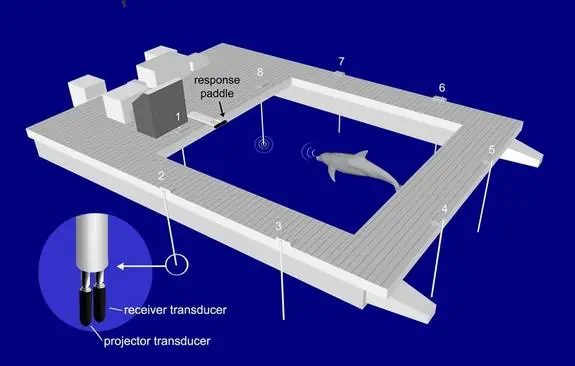
After staying awake for many hours or days at time, humans and other mammals alike are forced to sleep, not because the body asks it, but because the brain inevitably calls for a shut down of the conscious psyche, in order to replenish and function properly when awake. Dolphins, however, have been found to have [...]

DARPA’s new threat detection system: one 120-megapixel camera + one supercomputer + one EEG strapped soldier

Thu, Sep 20, 2012

1 Comment

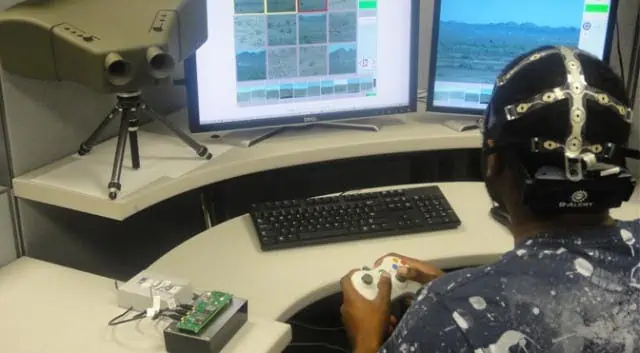
Boy, oh boy. Here’s a run for your dollar – DARPA’s latest ultimate threat detection system seems like it’s stripped from a bad war movie, but crazy as it may sound, it works and very well, according to officials. The system, called Cognitive Technology Threat Warning System (CT2WS), consists of an extremely high resolution camera of [...]

Subscribe for FREE!

Popular This Week

Drop us a line!

Tip us on news, scientific reports and studies, scientific advances, science art, interesting phenomena or any kind of science related material. Just write to andrei@zmescience.com.