cosmic redshift

In physics (especially astrophysics), redshift happens when light or other electromagnetic radiation from an object moving away from the observer is increased in wavelength, or shifted to the red end of the spectrum. In general, whether or not the radiation is within the visible spectrum, "redder" means an increase in wavelength – equivalent to a lower frequency and a lower photon energy, in accordance with, respectively, the wave and quantum theories of light.

For more information about cosmic redshift check the Wikipedia article here

ZME Science posts about cosmic redshift

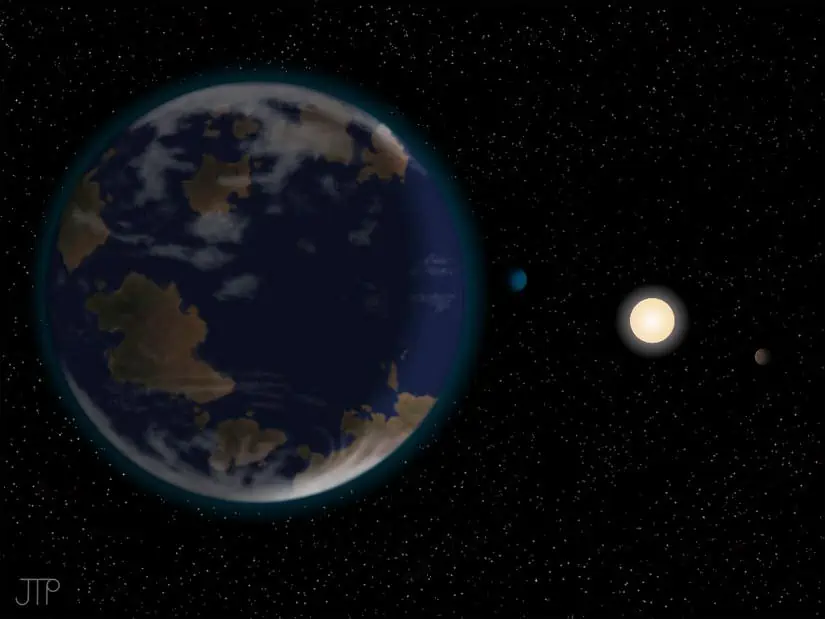
New super-Earth exoplanet is a mere 46 light-years away

Thu, Nov 8, 2012

0 Comments

Astronomers have used a novel planet hunter instrument to detect a new possible life supporting, Earth-like exoplanet. In fact the new planet is classed as a super-Earth, since it has a minimum mass of 7.1 times that of our planet, and is properly located on its parent star’s orbit to support the presence of liquid [...]

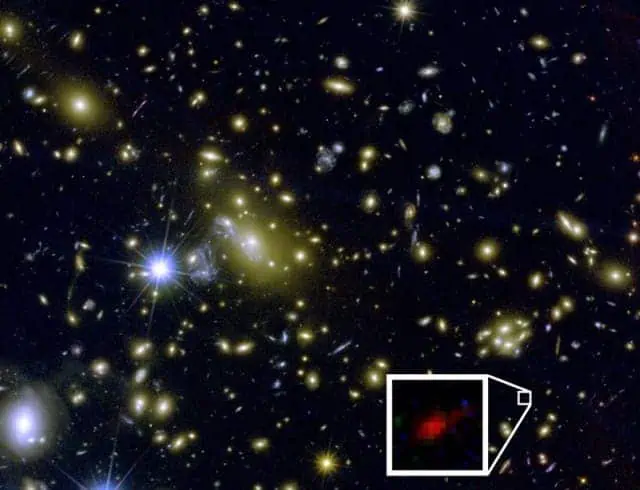
Faint galaxy sheds light on the dawn of the Universe – many more to be found

Thu, Sep 20, 2012

2 Comments

The first galaxies formed very fast after the Big Bang – in cosmic time, that is. It’s estimated that the earliest ones appeared some 500 million years after the Big Bang, a period about which researchers know very little. How they observed it Even though they are typically very bright, such galaxies are quite hard [...]

Subscribe for FREE!

Popular This Week

Drop us a line!

Tip us on news, scientific reports and studies, scientific advances, science art, interesting phenomena or any kind of science related material. Just write to andrei@zmescience.com.