Cosmic rays are very high-energy particles, mainly originating outside the Solar System.[1] They may produce showers of secondary particles that penetrate and impact the Earth's atmosphere and sometimes even reach the surface. Comprised primarily of high-energy protons and atomic nuclei, their origin has, until recently, been a mystery. With data from the Fermi space telescope published in February 2013,[2] it is now known that cosmic rays primarily originate from the supernovae of massive stars.[3]
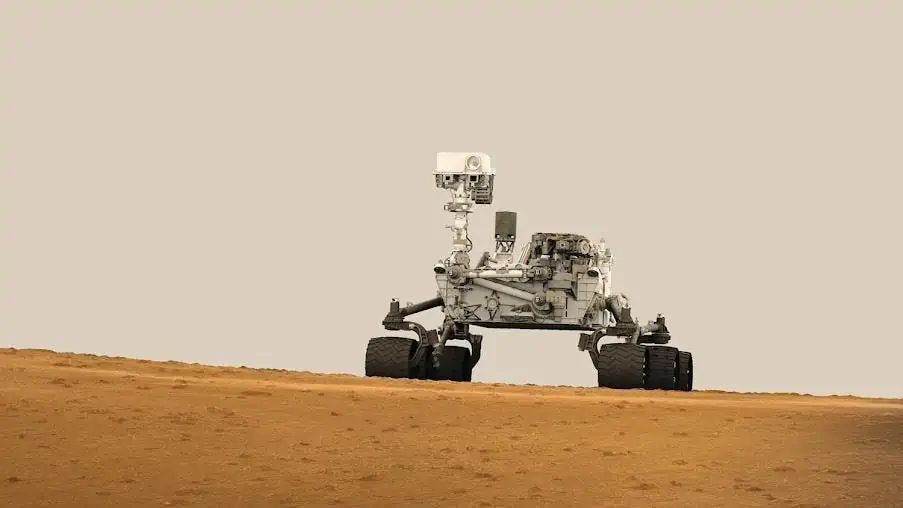
NASA’s Curiosity rover has been put into “safe mode” after some files which it relies on running have defected. Exactly what damaged the files on the robot’s flash memory is not known. “We’re still early on in the process,” said project manager Richard Cook.”We have probably several days, maybe a week of activities to get [...]
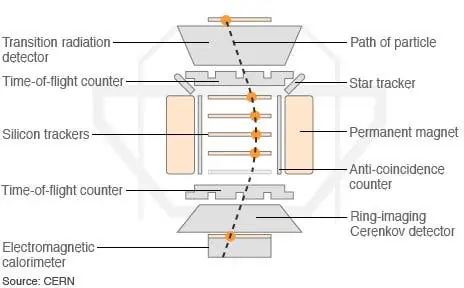
Alright, the analogy might not be the best. The Large Hadron Collider is a high energy particle accelerator, while the Alpha Magnetic Spectrometer is a state of the art particle detector, which traps high-energy charged particles called cosmic rays and analyzes them. You see, the AMS can practically perform the same functions as the LHC, only the high [...]
Mon, Mar 4, 2013
0 Comments