

Chemists use soccer-ball-shaped molecules to form the first one-dimensional gas
University of Nottingham scientists created a one-dimensional gas by trapping krypton atoms in carbon nanotubes, offering new insights into atomic ...
University of Nottingham scientists created a one-dimensional gas by trapping krypton atoms in carbon nanotubes, offering new insights into atomic ...

Calling them 'fatter atoms' is considered rude.

The tale of how an old British cake influenced leading physicists.

From the ancient Greeks to quantum mechanics, the model of the atom has gone through many iterations.

They really tie the room together.


No fat shaming in physics!

A single atom, trapped in time and space.

Aside from the romantic aspect, the study also offers an important scientific perspective.

Scaled up, it will likely lose some efficiency -- but will still leave HDDs in the dust.

It was made from strands made of over 190 atoms coiled around a triple loop which crosses itself eight times.
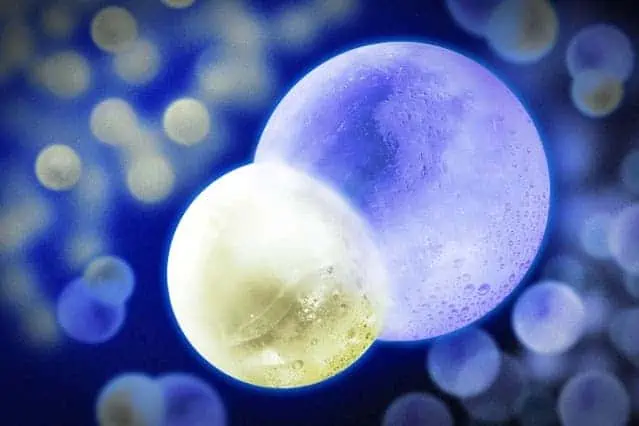
In a breakthrough moment, researchers at MIT successfully cooled sodium potassium gas molecules (NaK) near absolute zero. At this temperature, ...
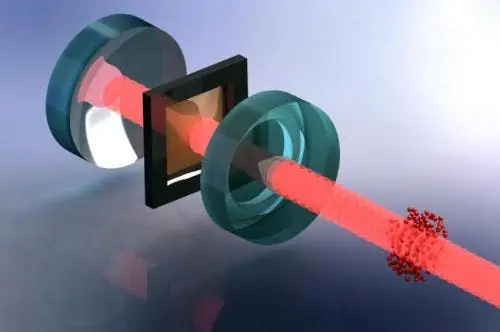
For the first time, researchers at the University of Basel used an ultracool atomic gas to cool a very thin ...
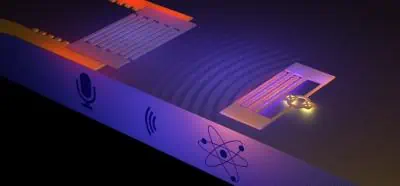
On the right, an artificial atom generates sound waves consisting of ripples on the surface of a solid. The sound, ...
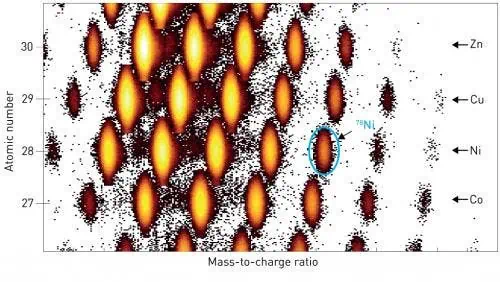
Some atoms are more stable than others, and the same goes for their isotopes - elements that have the same ...
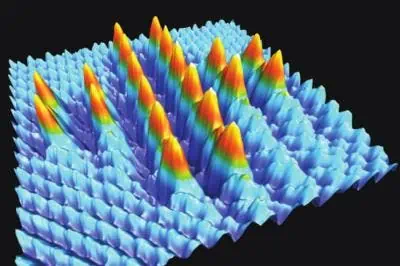
Some applications require such a degree of precision that everything needs to be in exact order at the atom-scale. In ...
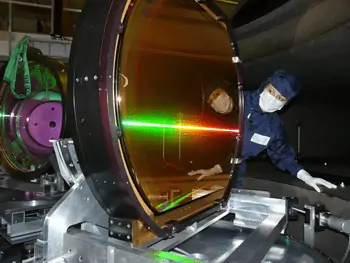
An international team of physicists have used one of the world's most powerful lasers to create an unusual kind of ...
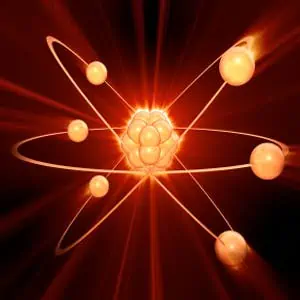
Atom = at·om, noun \ˈa-təm\, from the greek ἄτομος (atomos) meaning "indivisible". Apparently the atom isn't that indivisible after all. Scientists at the University of ...

A Romanian scientist working at the University of Ohio captured the first-ever images of atoms moving within a molecule by ...
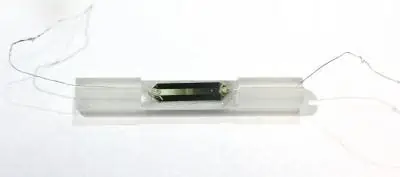
In case you're wondering, what you're looking at is a silicon chip, only 1 millimeter square that was used by ...
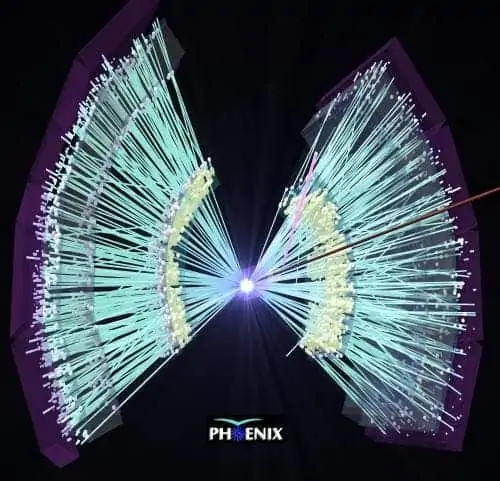
The Large Hadron Collider at CERN has taken another step towards its goal of finding the so called 'god particle': ...
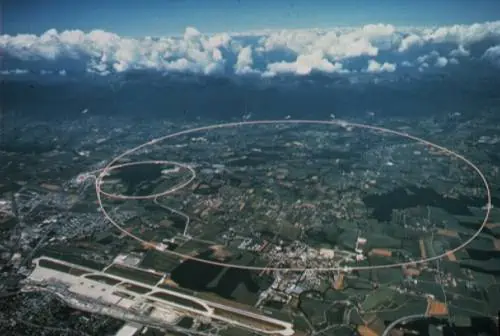
Since the Large Hadron Collider went back in business, all sort of rumors have been circling the scientific circles (and ...
Were you one of those students who used to complain about all those chemical elements you had to study at ...