astrophysics

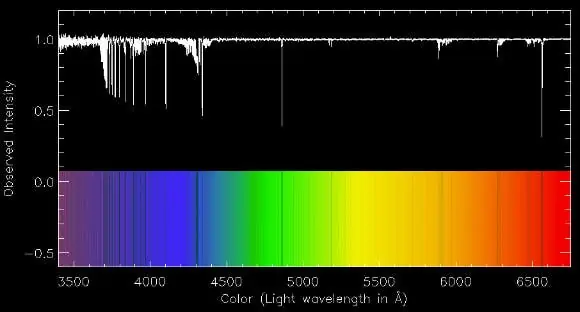
Astrophysics (Greek: Astro - meaning "star", and Greek: physis – φύσις - meaning "nature") is the branch of astronomy that deals with the physics of the universe, including the physical properties of celestial objects, as well as their interactions and behavior.[1] Among the objects studied are galaxies, stars, planets, exoplanets, the interstellar medium and the cosmic microwave background. Their emissions are examined across all parts of the electromagnetic spectrum, and the properties examined include luminosity, density, temperature, and chemical composition. Because astrophysics is a very broad subject, astrophysicists typically apply many disciplines of physics, including mechanics, electromagnetism, statistical mechanics, thermodynamics, quantum mechanics, relativity, nuclear and particle physics, and atomic and molecular physics. In practice, modern astronomical research involves a substantial amount of physics. The name of a university's department ("astrophysics" or "astronomy") often has to do more with the department's history than with the contents of the programs. Astrophysics can be studied at the bachelors, masters, and Ph.D. levels in aerospace engineering, physics, or astronomy departments at many universities.

For more information about astrophysics check the Wikipedia article here

ZME Science posts about astrophysics

New Experiment on to Revalidate Nobel Winning Universe Acceleration Finding

Fri, Nov 2, 2012

0 Comments

This year’s Nobel Prize winning finding that the ‘Universe is accelerating’ is being subjected to another validation test in the USA to confirm whether the expansion is “even or uneven”.   “We are testing the acceleration theory through another experiment to find whether the expansion is even or multi-directional. We are confident it would be [...]

How many Earth-like planets are there in the Milky Way? Billions, according to astronomers

Wed, Mar 28, 2012

0 Comments

One of the most outstanding dreams astronomers and other scientists hope to accomplish is to someday encounter proof that extraterestrial life exists. Intelligent life might be extremely far off, however microbiological life should without a doubt be present elsewhere other than our planet or solar system. For life to blossom, however, the right conditions have [...]

Supercomputer simulation confirms Universe formation model

Fri, Sep 30, 2011

1 Comment

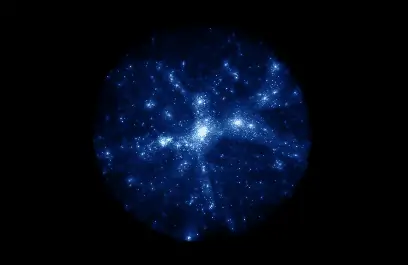
Astronomers at  UC Santa Cruz have set  a new benchmark for cosmological research for decades to come maybe, after successfully simulating the forming of distant galaxies, like our very own Milky Way, under the mysterious forces of dark matter and dark energy. Named Bolshoi – for the Russian word meaning “grand” or “great” – the simulation’s [...]

[VIDEO] The ISS and Atlantis shuttle as seen in broad daylight

Wed, Jul 20, 2011

0 Comments

Incredibly enough, using a a simple, standard issued astrophotography set-up, amateur astronomer Scott Ferguson was able to film in incredible detail the ISS docked together with Atlantis as they both orbited above him – all in clear sky, broad daylight. How did he do this? Well, as equipment goes Scott, like I said, used a simple [...]

Extrasolar hot Jupiter sheds some light on our own solar system

Fri, May 13, 2011

0 Comments

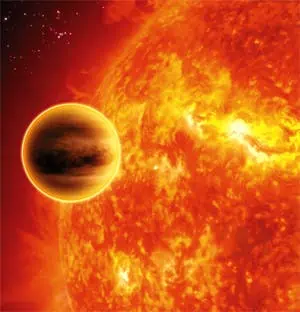
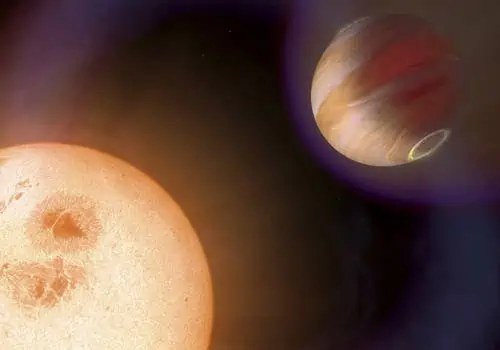
Since 1995, over 500 planets that don’t orbit our Sun have been discovered, with the numbers increasing more and more in the past years. But only recently did astrophysicists observe that in some of these cases, the star seems to be spinning in one direction, and the planet orbits it in the totally opposite direction [...]

Some black holes may be older than time itself

Sat, May 7, 2011

0 Comments

An intriguing hypothesis was brought up by Professor Bernard Carr from Queen Mary University in London and Professor Alan Coley from Canada’s Dalhousie University, who claims that some of the black holes we see today may actually be remnants of a past universe that collapsed into itself after a Big Crunch. I don’t know about [...]

Carl Sagan’s Cosmos

Tue, Mar 8, 2011

2 Comments

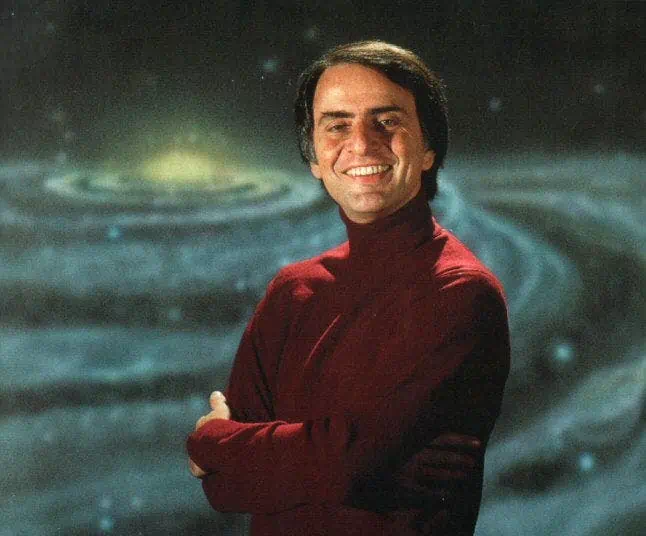
In case you have no idea who Carl Sagan is… well, you should, basically. Carl Sagan is one of those men who brought science to the people, making numerous fields such as astronomy, astrophysics, exobiology, and many, many more accessible for the masses. He published more than six hundred research papers and popular science works, [...]

NASA rejects Russian report: Apophis asteroid extremely unlikely to hit earth

Tue, Feb 8, 2011

0 Comments

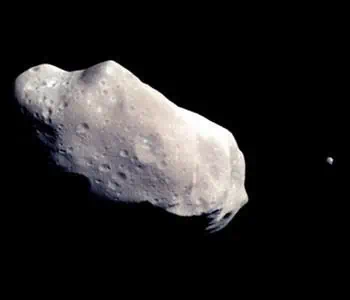
In 2004, NASA researchers identified the Apophis asteroid and after some quick calculations they states there is a chance the asteroid will hit our homey planet in 2029. A few observations and some other calculations later, they explained that that chance is extremely small for 2029, as well as other years to come. However, reports [...]

Astronomers upset the theory of planetary formation

Wed, Apr 14, 2010

1 Comment

The discovery of 9 new planets raises some serious questions on the matter of how planets are formed. Two astronomers from the University of California, Santa Barbara reported the discovery, and of them, two are spinning in the opposite direction the planets in our solar system are spinning. This, along with other recent studies of [...]

Saturn’s moon full of geysers

Wed, Feb 24, 2010

1 Comment

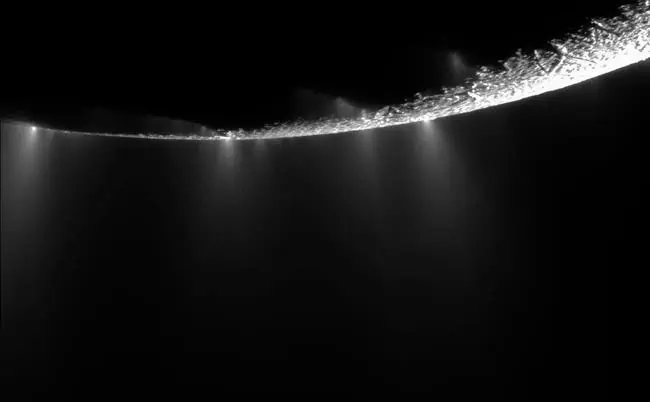
There are many things we have yet to find out about Saturn, but the Cassini probe has definitely shed some light on the planet, and will surely do the same in the following years. The most recent flyby showed a significant number of geysers just waiting to pop out from under the surface – even [...]

New planet close to size of Earth found

Thu, Jan 14, 2010

2 Comments

The Planet Researchers have long been interested in finding other planets that have approximately the same size as our mother earth, because it’s estimated that they have the biggest odds of hosting life in a significant diversity. However, out of the over 400 planets that have been discovered so far, the vast majority resembles Jupiter [...]

‘Fossil’ fireballs found from supernovae

Sun, Jan 10, 2010

0 Comments

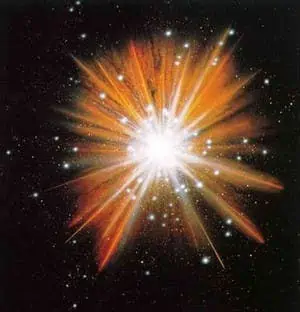
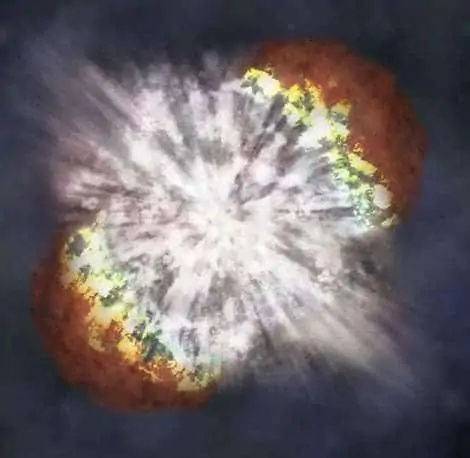
The US-Japan Sukazu observatory reported the finding of some never-before seen embers from the high temperature fireballs that immediately follower the supernovae explosions. Even after thousands of years in which they haven’t been exposed to any heat source, gas within these stellar wrecks is 10.000 hotter than the Sun’s surface. “This is the first evidence [...]

The symphony of science

Wed, Jan 6, 2010

1 Comment

I was quite stunned to stumble across this video. As the name says, it’s a… well it’s not quite a symphony, but it’s definitely musical, and you can definitely learn a lot of things, or re-hear them in an unique way, if you already know them. Did I mention it’s featuring Carl Sagan, Richard Feynman, [...]

Water and fog found on Titan, Saturn’s moon

Fri, Dec 18, 2009

2 Comments

As I was writing in a previous post, Titan is quite unique, in that aside from our planet it’s the only place in our solar system where significant quantities of liquid are to be found (though most are liquid ethane and methane). That doesn’t seem to make much of a difference considering the chemistry of [...]

Stellar ‘cannibalism’ is the key to giant stars

Thu, Jan 15, 2009

0 Comments

You may or may not have heard about blue stragglers; they are blue stars that are hotter and bluer than other stars with the same luminosity. Until now, it seemed that these stars defied most if not all of the standard stellar theories, but scientists now believe they have finally solved this stellar mistery. The [...]

Subscribe for FREE!

Popular This Week

Drop us a line!

Tip us on news, scientific reports and studies, scientific advances, science art, interesting phenomena or any kind of science related material. Just write to andrei@zmescience.com.