

A A
RSS

The 10% of the brain myth

Wed, Nov 7, 2007

Post filled in: Anthropology, Health

brain

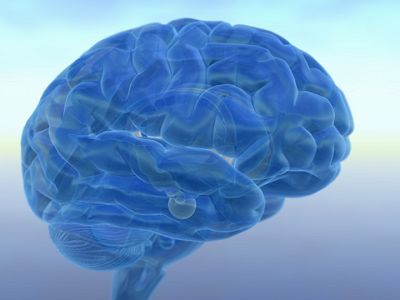
The media seems to be repeating the idea that we use just 10% of our brains and taking it as a given. Scientists have tried for years to change this misconception and they have clearly stated that there is no scientific evidence to suggest that we use only 10% of our brains. In fact it is very hard to say what using just 10% of your brain means. It could mean that you could cut 90% of your brain and be just fine or that you just use only one out of every ten nerve cells is essential or used at any one time.Start with the beginning. This is a myth. It is hard to track down where it started from; it probably originates in the work that Karl Lashley conducted in the 1920s and 1930s when he removed large areas of the cerebral cortex in rats and found that these animals could still relearn specific tasks. But we know for a fact that even a tiny damaged area of the brain could have devastating effects which shows that his work was misunderstood.

Brain scans show that the regions which are activated when we move or think or do any activity are spread in every part of the brain. This goes to show that the brain activity is not limited to 10% of the brain and not even to 10% of the neurons. There may be some areas which have no particular tasks or whose tasks we have not fully understood but they are not inactive. Neurons are permanently stimulated because without stimulation they would just die. So 90% of the neurons would die. But the intriguing thing is that in most cases we are not able to perform a number of activities at the same time.

So the good thing is that without using every neuron we have we can improve our brains because it matters not how many neurons we have but how many connections they have between each other. And note that evolution has never created a species whose organ with the biggest energy consume was 90% useless.


24 Comments For The 10% of the brain myth

  1. shivam dhawan Says:

    Thank god, that was a myth… I was hardly disturbed by the theory, I could not carry a kg of wieght in my brain that is just useless and making my brain a pile of organic shit.

    thanks,
    Cipher

  2. Jean Zaions Says:

    The First time i heard that, wasn`t 10% of the brain, but 10% of the mind. I think both are wrong anyway.

  3. R Keene Says:

    The thing the 10% rule misses is that the neurons that are NOT firing are just as important as the ones that are. A good analogy is a type written page. If you only count the black parts, then we ‘use’ only a few percent of the page. If you remove all the white parts you would get a black rectangle about the size of a postage stamp, and all meaning would be lost. Likewise, in the brain the non-firing neurons serve as the white background that make the firing neurons have meaning.

  4. Izabael Says:

    I’d say that most people are hovering under 10% of their mental *potential* however. Anyone who watches mainstream television for example.

  5. Flipz Says:

    I’m pretty sure that they originally thought that the human being was only capable of using a maximum of 10 percent of the brain at a time. At least that’s what I was told if I remember right.

  6. Bob Says:

    Your English needs some work.

  7. Dan Says:

    I was under the impression that the idea was that we only ever use 10% of our total capacity, meaning that we could theoretically learn 10 times the amount of stuff we already know and still have the capacity for it. Of course this would have to be an “on average” kind of thing.

  8. kristarella Says:

    Yup, this sounds like a strange myth that we’ve accepted for too long.

    R Keene - great analogy. I love!

    Izabael - could be true, but increasing potential doesn’t increase actual brain activity, I think it just changes it.

    Bob - don’t be an ass! Why don’t you give “constructive criticism”? You bothered to take the time to say “Your English needs some work.” You should have taken an extra couple of minutes to give examples; for example, a comma at the end of the third line “In fact, it is…” wouldn’t go astray and the “which” at the top of the second paragraph is misplaced (it should probably be a “that”). I don’t know if these are the sorts of things you meant. However, the writer (osamik?) conveyed their thoughts clearly and simply and didn’t ramble. They’re doing a lot better than a great number of people on the net.

  9. Dan Says:

    Only the dumb asses who repeat this myth use only 10% of their brains.

    Whenever someone says that to me, I ask them how do they know that and where’s the evidence. They never have an answer. Then I ask them, how would you even measure 100% of the brain’s potential. What are your units? Then they shut up and never talk to me again. And that makes me happy.

  10. Andy Says:

    I’d still rather have a full bottle in front of me . . .

  11. Gab Says:

    Some people seem not to use any percentage of their brains most of their lives, but of course they use it. I would rather not see this happening, but what can I do…

  12. puttputt Says:

    I always knew that was wrong, because most people use 1% of their brain and Aristotle was correct in stating that the brain’s function is to cool the blood.

    In fact I have proof

    Man Lives Normal Life with Tiny (Egg-sized) Brain
    http://www.techdo.com/man-lives-normal-life-with-tiny-egg-sized-brain/

  13. Tom Says:

    my .sig file for years has been
    “Gullible people only use 10% of their brain” :)

  14. kaspar Says:

    The “E” in english should not be capitalized.

  15. wordnerd Says:

    You’re wrong, English is capitalized.

  16. Havvy Says:

    The “E” in ‘English’ should be capitalised [British spelling] kaspar as dictated by the rules of the English language. It’s different in Spanish though.

  17. Chris Jones Says:

    I think that statement that the majority of us only us 10% of our brains isn’t talking about the actual firing of neurons and nerve cells, but rather that the capacity of our brains that is being used is only 10% meaning that while we are using all our neurons and nerve cells, we aren’t using them to full capacity, which I would say is totally correct.

  18. laughcatcher Says:

    Thank you R Keene. Your analogy was very well stated I thought. I don’t think the % of the brain we use is that important but, how we use it. If we use it properly, the capacity of usage is unlimited. Our goals and concerns should be addressed likewise.

  19. Change Bond 008 Says:

    I agree with the last two comments. There seems to be a perceptive difference in the interpretation of physical and mental use of brain & mind. 20 years ago, I was shocked to learn as a student that I would spend my entire life using only 0.1% of my brain but I used that information to positively drive myself to become a trainer, teacher & coach motivating others to maximize their unlimited potential regardless of these percentages.

  20. jam jam Says:

    Maybe most people get the whole what is it.. 90% of our DNA is useless mixed up with that?

    Could be so..

  21. kitty Says:

    jam jam

    most dna is called ‘junk dna’, but its not useless. it just doesnt code for proteins as part of a gene. but i can see how the name could be misleading..

  22. Nick Says:

    Dan is an idiot, 90% of the brain is comprised of neuroglia, these nerugolia are the nourishing cells to the 10% of neurons. The neuroglia do not perform activities that stimulate muscles, rather support the neurons that do. By saying we only use 10% is saying that only 10% can be used for neural function

  23. Rogerscottq Says:

    I’m not so sure about any conclusions as to ‘what per centage’
    of our brains we are supposedly TYPICALLY
    using.

    I’m equally unsure of the original source
    of the proposition that we use only 10 per cent.

    I’m just mindful of observations in two different
    ways that MIGHT support that:

    1) That certain people who otherwise seemed
    completely normal and were
    even deemed very intelligent found to
    have only a small layer of gray matter
    and most of the brain-case was filled with
    fluid.

    2) that ‘cross connexions’ of dendrites and
    synapses or whatever have mathematically
    potentials hard to quantify or even estimate.

    Seems like we don’t have a fully corroborated
    concept of memory or where it is stored or how
    and how much mass of brain-matter must
    be present to be deemed either ‘functional’ or
    if that potential is ‘fully used’.

    I don’t know. I’m just going on vague
    memory of stuff I’ve read.

    Maybe someone knows much more as to these
    two points and can expand or critique them.

    I doubt it though. I willingly admit, I get by
    on 2.5 per cent.

  24. Rogerscottq Says:

    Ooops!

    I missed puttputt’s post referring to
    at least one such case of ‘minimal’
    brain-matter:

    http://www.techdo.com/man-lives-normal-life-with-tiny-egg-sized-brain/

    I used about .03 per cent of my brain-power
    to re-read the postings and caught that!

Leave a Reply

Subscribe

RSS

Subscribe via RSS or e-mail just by entering your address bellow. Learn more about subscribing here.

For a good cause